
Dog flea vs Human flea
These two are easy to mix up. Here's how to tell a dog flea from a human flea, and whether either one bites or stings.
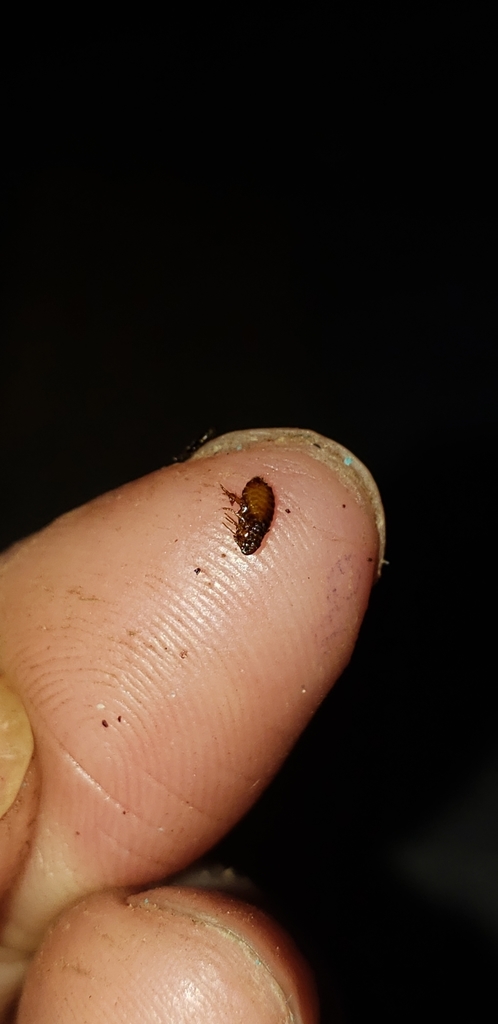
Dog flea
Ctenocephalides canis
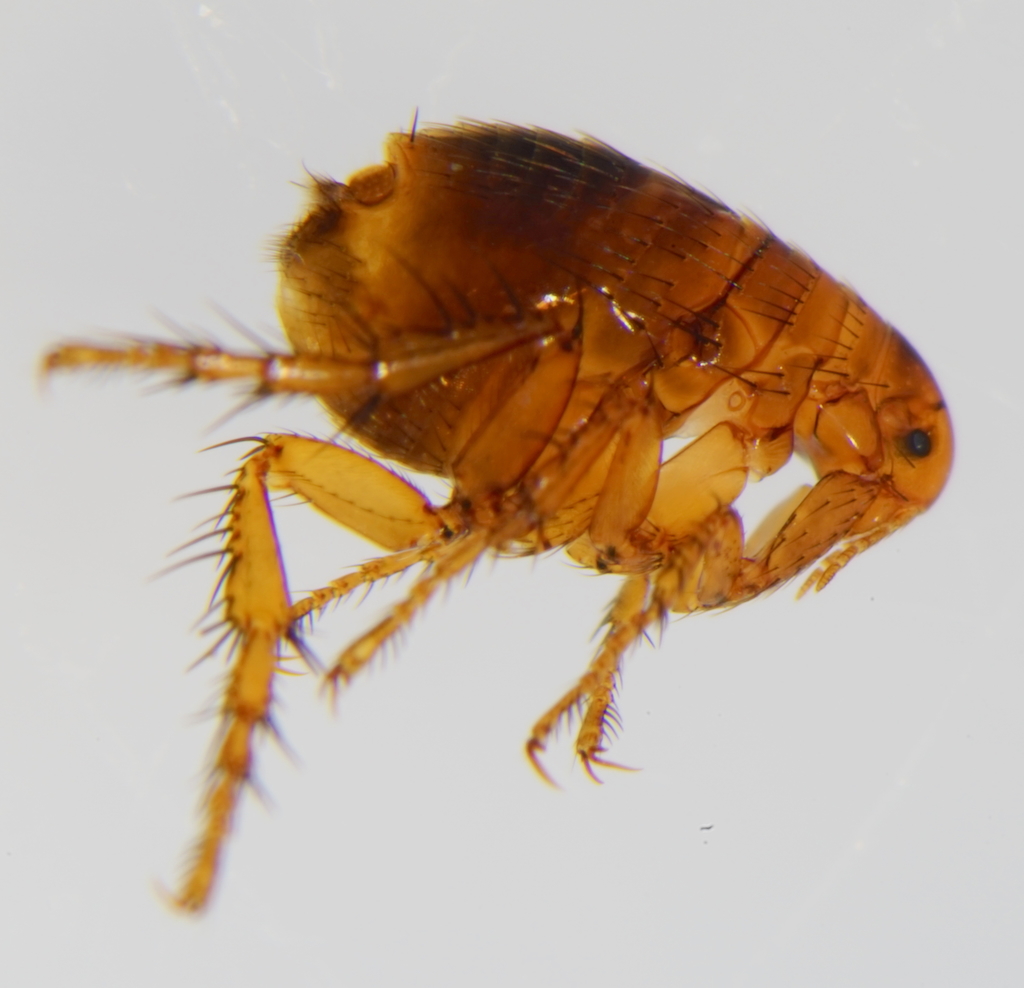
Human flea
Pulex irritans
≠The key differences
Pulex irritans lacks the pronounced head and genal combs seen in Ctenocephalides species and has different body bristle patterns visible under a microscope
Similar to cat flea but generally has different comb spine arrangement; both Ctenocephalides species possess pronotal and genal combs unlike Pulex irritans.
⚖︎Side by side
| Dog flea | Human flea | |
|---|---|---|
| To humans | Bites and allergies | Biting pest |
| Size | 1.5-4 mm long | 1.5-3.0 mm long |
| Colours | Reddish-brown, Dark brown | Dark brown, Blackish brown |
| Family | Pulicidae | Pulicidae |
| Habitat | On mammal hosts (dogs, wild canids, sometimes cats, humans) and off-host in bedding, carpets, cracks, soil and animal resting areas | Human dwellings, animal resting areas, nests and burrows; larvae develop in carpets, bedding, cracks in floors, soil and detritus near hosts |
| Range | Worldwide in association with domestic dogs and wild canids, though prevalence relative to the cat flea varies by region | Cosmopolitan; recorded worldwide in association with humans and a variety of mammals |
| Active | Year-round in warm indoor environments; peak activity in warmer months outdoors | Active year-round in heated buildings; outdoors most active in warm months; adults bite any time of day but often feed when hosts are resting |
| Pest? | Yes | Yes |
🔍How to spot a dog flea
- Very small (1.5-4 mm), wingless, laterally flattened reddish-brown insect that jumps readily
- Look for rapid movement on the host, flea dirt (small black pepper-like fecal specks that turn red when moistened) and multiple insects on a heavily infested animal
- Microscopic examination of ctenidia (combs) and male genitalia is required to distinguish Ctenocephalides canis from Ctenocephalides felis and other flea species
🔍How to spot a human flea
- Small (1.5-3.0 mm), wingless and laterally flattened insect that jumps strongly
- Dark brown to black and shiny with backward-directed bristles
- Lacks genal and pronotal combs (rows of spines) that are present on cat and dog fleas (Ctenocephalides spp.)
- Short head compared with some other flea genera
?Frequently asked questions
What is the difference between a dog flea and a human flea?
Pulex irritans lacks the pronounced head and genal combs seen in Ctenocephalides species and has different body bristle patterns visible under a microscope Similar to cat flea but generally has different comb spine arrangement; both Ctenocephalides species possess pronotal and genal combs unlike Pulex irritans.
Is a dog flea or a human flea more dangerous?
Dog flea: Bites and allergies. Human flea: Biting pest. Dog fleas bite humans and cause itchy bites; sensitive people can develop allergic reactions. Pulex irritans bites cause itchy, irritating welts and can trigger allergic dermatitis in sensitive people.
Identification from photos is never certain: don't handle insects you can't identify, and get medical advice for bites, stings or allergic reactions.