
Head louse vs Crab louse
These two are easy to mix up. Here's how to tell a head louse from a crab louse, and whether either one bites or stings.
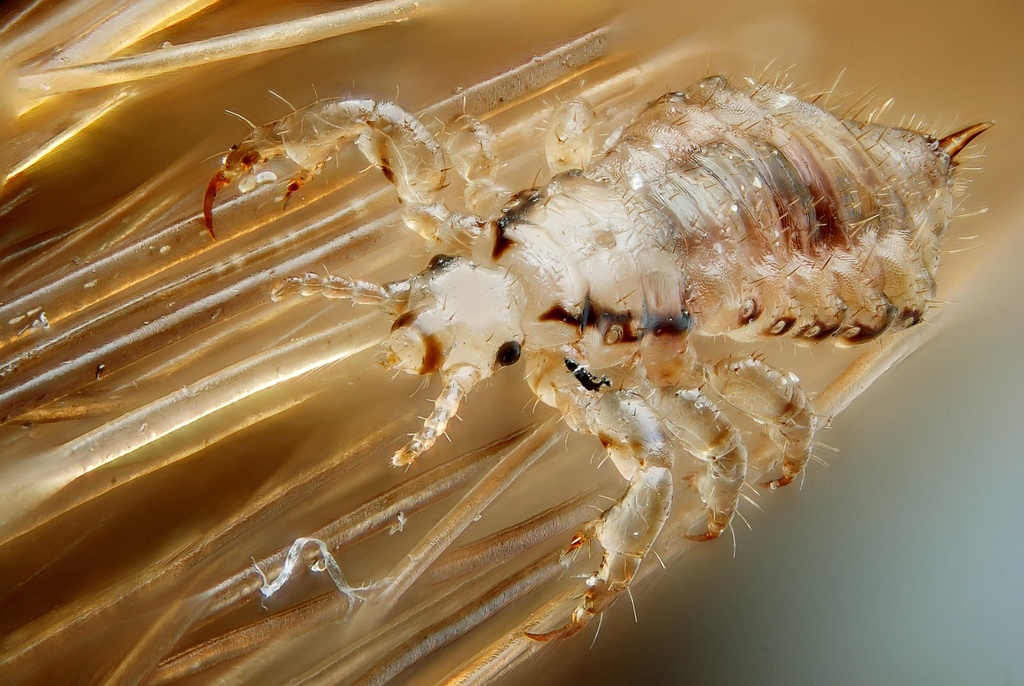
Head louse
Pediculus humanus capitis
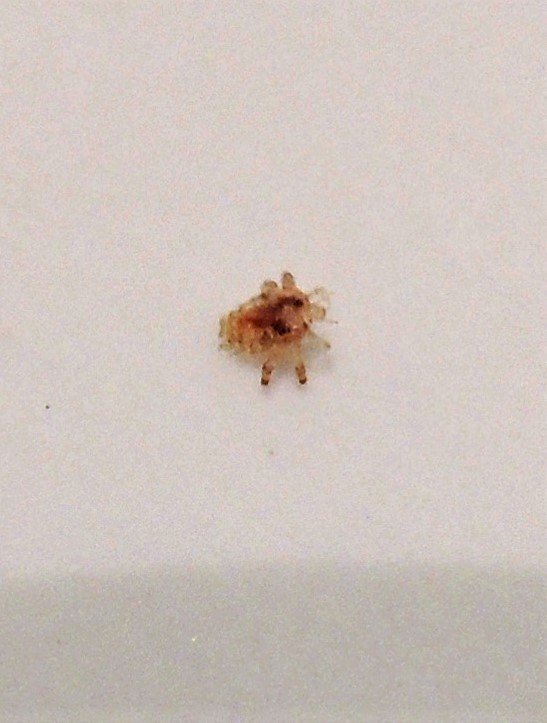
Crab louse
Pthirus pubis
≠The key differences
Shorter, broader body and claws adapted to coarse hair. Usually found in pubic and coarse body hair rather than scalp hair.
Head lice are more elongated, slightly larger, and inhabit scalp hair rather than coarse body hair; claws are adapted to thinner hairs.
⚖︎Side by side
| Head louse | Crab louse | |
|---|---|---|
| To humans | Bites, itching | Itchy parasite |
| Size | 2-4 mm long | About 1-2 mm body length |
| Colours | Grey-brown, Pale cream (nit) | Pale brown, Grey-brown, Whitish (nits) |
| Family | Pediculidae | Pthiridae |
| Habitat | Human scalp (preferentially behind ears and at nape of neck); occasionally on pillowcases, hats or brushes for short periods | Coarse human body hair: pubic region most commonly; can also inhabit armpits, chest, beard, moustache, and eyelashes/eyebrows in some cases. |
| Range | Worldwide, common in communities with close head-to-head contact | Worldwide wherever humans live; prevalence varies with sexual behavior, hygiene, and public health factors. |
| Active | Year-round; active day and night while on host | Active year-round; most active when feeding at night or when the host is at rest. |
| Pest? | Yes | Yes |
🔍How to spot a head louse
- Look close to the scalp behind the ears and at the nape of the neck for small moving insects 2-4 mm long
- Find nits: tiny pearly eggs glued to hair within 1-3 cm of the scalp that do not brush off easily
- Use a bright light and a fine-toothed nit comb on wet hair to comb out lice and nits
- Adult lice crawl—if a specimen jumps or flies, it is not a head louse
🔍How to spot a crab louse
- Look for tiny crab-shaped insects about 1-2 mm long clinging to coarse hairs, especially in the pubic area.
- Find oval nits glued firmly to hair shafts close to the skin; nits do not wipe off easily.
- Intense itching in the pubic region, visible crawling insects, or blue-gray skin spots from bites (maculae caeruleae) can indicate infestation.
?Frequently asked questions
What is the difference between a head louse and a crab louse?
Shorter, broader body and claws adapted to coarse hair. Usually found in pubic and coarse body hair rather than scalp hair. Head lice are more elongated, slightly larger, and inhabit scalp hair rather than coarse body hair; claws are adapted to thinner hairs.
Is a head louse or a crab louse more dangerous?
Head louse: Bites, itching. Crab louse: Itchy parasite. Head lice bite to feed causing itching and secondary skin irritation. Crab lice bite to feed on blood and cause itching, irritation, and sometimes secondary skin infection from scratching.
Identification from photos is never certain: don't handle insects you can't identify, and get medical advice for bites, stings or allergic reactions.