
Striped bark scorpion
Centruroides vittatus · Bark scorpions
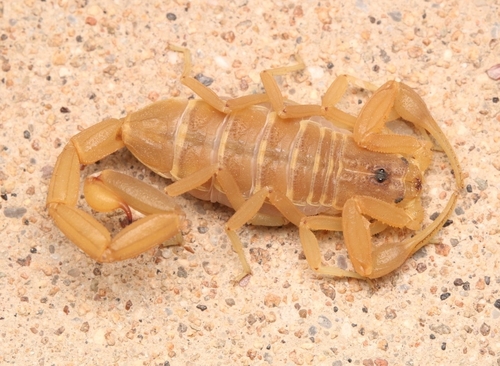
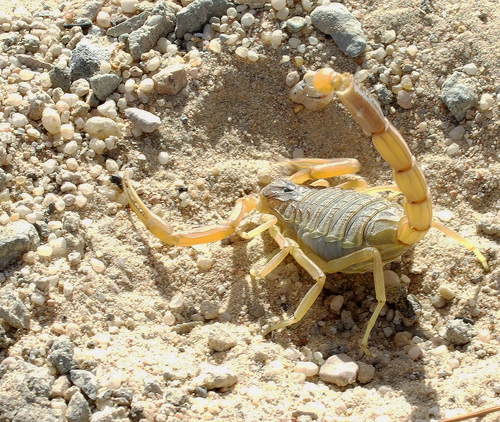
A light tan, nocturnal bark scorpion with two dark stripes on its back, common in the southern United States and northern Mexico.

!Is the striped bark scorpion dangerous?
Only mildly. Stings are painful and may cause localized swelling, numbness, tingling, nausea or sweating. Severe systemic reactions are uncommon but can occur in young children, the elderly, or allergic individuals. First aid: clean the site, apply a cold pack to reduce pain and swelling, keep the patient calm and immobile, and seek medical attention if symptoms are severe or progressive, or if a young child is stung. Call emergency services immediately for breathing difficulty, swelling of the face or throat, or collapse, and use an epinephrine auto-injector if one has been prescribed. Antivenom is rarely required but may be used in severe cases.
Pets
Pets (dogs and cats) can be stung and may show pain, pawing at the site, drooling, weakness or shaking. Small pets and young animals are at higher risk of serious reaction. Seek veterinary care if symptoms appear severe or do not improve.
📖Overview
Centruroides vittatus is a medium-sized bark scorpion often found on tree trunks, under bark, in rock crevices and inside buildings in warm, dry parts of North America. It is primarily nocturnal and feeds on insects and other small arthropods. Females give birth to live young and carry the young on their backs for a period after birth. While not usually life-threatening to healthy adults, its sting is painful and can cause medical symptoms in children, the elderly, or sensitive individuals.
🔍How to identify a striped bark scorpion
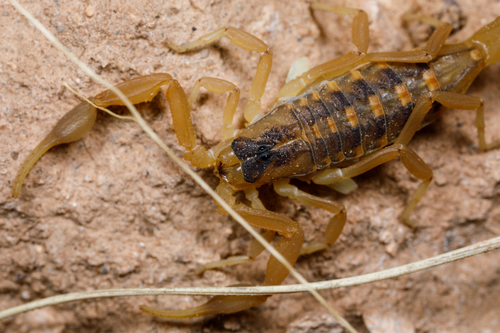
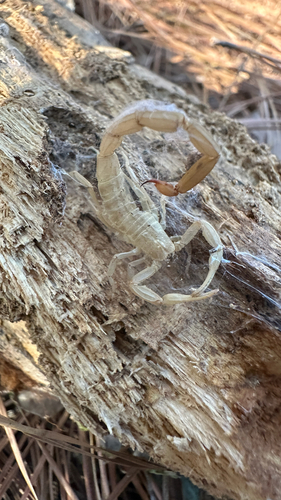
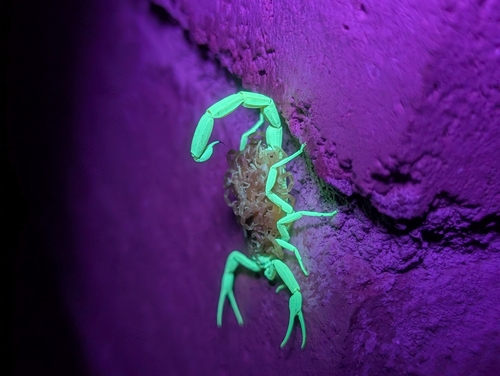
Adults are typically light tan to yellowish with two darker longitudinal stripes running along the dorsal surface of the mesosoma (the 'back'). They have a slender, segmented metasoma (tail) ending in a curved telson (stinger) and relatively narrow pedipalps (pincers) compared with more robust scorpion species. When seen under ultraviolet light they fluoresce a bright blue-green color.
- Light tan to yellow body with two dark longitudinal stripes along the dorsum
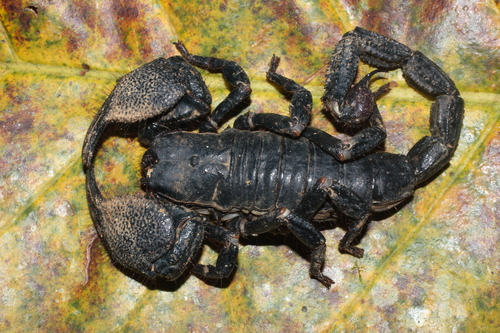
- Slender tail and narrow pincers (pedipalps) compared with thick-clawed scorpions
- Nocturnal—more active and visible at night; fluoresces under UV light
Lookalikes
Arizona bark scorpion Centruroides sculpturatus
C. sculpturatus (southwestern US) has more potent neurotoxic venom and finer morphological differences; range and severe sting risk help distinguish it from C. vittatus.
Southern devil scorpion Vaejovis carolinianus
Smaller, darker brown and mottled, with thicker pincers and no pair of distinct dark stripes; its sting is milder.
↻Life cycle
Gestation and birth
Females are viviparous; embryos develop internally and the female gives birth to live young after a gestation period that varies with temperature and species.
Juveniles (instars)
Newborn scorpions (called 'scorplings') climb onto the mother's back and remain there for several days to weeks, molting multiple times as they grow.
Adult scorpion
After several molts juveniles reach adulthood and become independent; adults reproduce and continue the life cycle.
🍃Diet and predators
Young eat
Small insects and arthropods suitable for their size
Adults eat
Insects, spiders and other small arthropods; active hunters using the pedipalps and sting
Predators of the young
Spiders, ants, centipedes, small lizards and birds
Predators of adults
Bats, birds, larger lizards, rodents, centipedes and some larger spiders
🌱Effect on plants and gardens
Does not feed on plants; helps control insect populations
📍Where and when to find it
Look at night on tree trunks, under loose bark, inside cracks, rock crevices, woodpiles, garages and basements. Juveniles are often on the mother's back shortly after birth.
Best time
Warm months (spring to early fall) and at night; they are most active after sundown.
Observation tips
Use a UV flashlight at night to detect scorpions quickly; wear gloves and closed shoes when searching; photograph from a safe distance.
✨Fun facts
- Scorpions fluoresce blue-green under ultraviolet light because of chemicals in their exoskeleton.
- Females give birth to live young and carry the young on their backs until after the first few molts.
- Bark scorpions are skilled climbers and often rest on vertical surfaces or tree bark.
?Frequently asked questions
Do striped bark scorpions sting?
Yes. They will sting if threatened or handled. Stings are painful and can cause localized or systemic symptoms.
Are striped bark scorpion stings deadly?
Deaths are rare. Healthy adults usually recover with basic first aid and pain control; children, elderly or allergic people have higher risk and should get prompt medical care.
Why is a scorpion in my house?
They seek shelter, moisture and prey (insects). Homes with clutter, cracks, stacked wood, or vegetation touching walls are more inviting.
How can I keep them out of my house?
Seal gaps and cracks, screen vents, remove woodpiles and debris near foundations, trim vegetation away from walls, reduce insect prey, and consider professional pest control for heavy infestations.
Can I remove one myself?
Use long-handled tongs or a jar with a lid; avoid bare-hand handling. If unsure or there are many, call a professional.
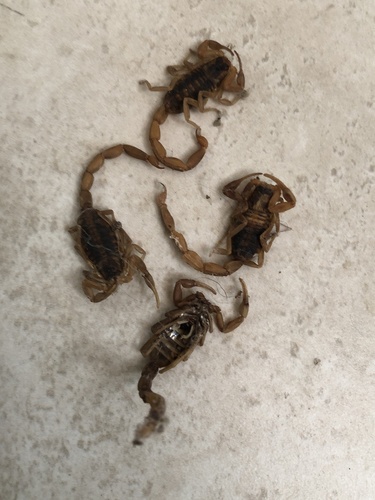
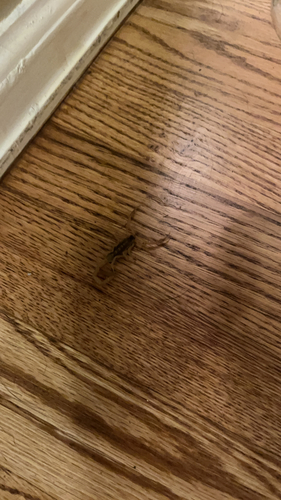
📷Photos of the striped bark scorpion
More scorpions & other arachnids
This guide was written with AI assistance and fact-checked, last updated 2026-10-10. Identification from photos is never certain: don't handle insects you can't identify, and get medical advice for bites, stings or allergic reactions. More about the striped bark scorpion: iNaturalist, Wikipedia.