
Arizona bark scorpion
Centruroides sculpturatus · Bark scorpions
A small, pale, nocturnal scorpion found in the southwestern US and northern Mexico; its sting can be medically significant, especially for children.
!Is the arizona bark scorpion dangerous?
Yes, it can be. The sting is painful and can cause numbness, tingling, muscle twitching, drooling, difficulty speaking or breathing, and in severe cases respiratory failure or cardiovascular effects. Adults often experience localized pain and swelling; young children, the elderly and medically fragile people are at higher risk for severe systemic reactions. First aid: stay calm, immobilize the affected area at heart level, wash with soap and water, apply a cool (not freezing) compress to reduce pain, and seek medical attention promptly (in the US you can also call Poison Control at 1-800-222-1222). Get emergency care right away for a young child, or for anyone with breathing difficulty, drooling, roving eye movements or uncontrolled muscle twitching. Do not cut, suction, or attempt to extract venom. Antivenom is available and used for severe cases.
Pets
Pets (dogs and cats) can be stung and may show pain, drooling, tremors, difficulty breathing, or collapse. Small pets and puppies are at higher risk for severe effects and should see a veterinarian immediately if stung.
📖Overview
Centruroides sculpturatus, the Arizona bark scorpion, is a slender, pale scorpion adapted for climbing trees, walls and rocky crevices. It is primarily nocturnal and feeds on insects and other small arthropods. This species is best known because its venom can produce severe pain and, in rare cases—especially in young children, the elderly or medically vulnerable people—life-threatening symptoms.
🔍How to identify a arizona bark scorpion
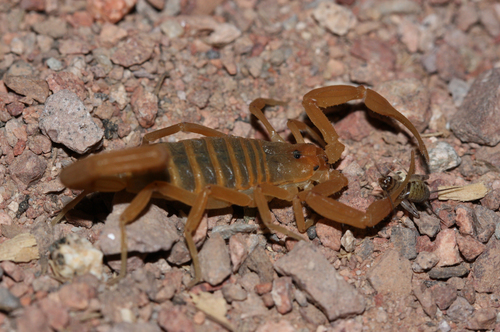
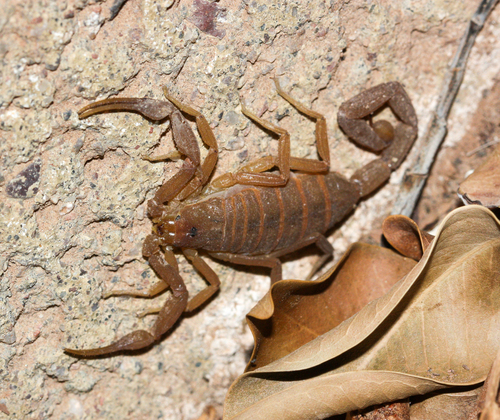
Adults are relatively small and slender with long, thin pincers and a narrow metasoma (tail) that ends in a curved stinger. Color is generally pale yellow to tan, sometimes with slightly darker tail or carapace markings. The body is flattened compared with many desert scorpions, which helps it climb vertical surfaces and hide in narrow cracks.
- Small to medium size (6-9 cm) with a pale yellow-tan body and sometimes slightly darker tail segments
- Slender pedipalps (pincers) and a narrow, elongated tail topped by a curved stinger
- Flattened body adapted for climbing walls, bark and hiding in narrow crevices
- Nocturnal: more likely to be seen active at night on walls or in homes
Lookalikes
Striped bark scorpion Centruroides vittatus
C. vittatus often has darker longitudinal stripes on the back and a slightly different geographic range; Arizona bark scorpion tends to be paler and differs in subtle morphological features used by specialists.
Desert hairy scorpion Hadrurus arizonensis
Much larger, darker and bulkier with large pincers and a hairy metasoma; H. arizonensis is not a bark climber and is less likely to be found on walls.
↻Life cycle
Internal development (embryo)
Females carry developing young internally; there are no externally laid eggs. Gestation varies with temperature and season.
Scorpling (juvenile)
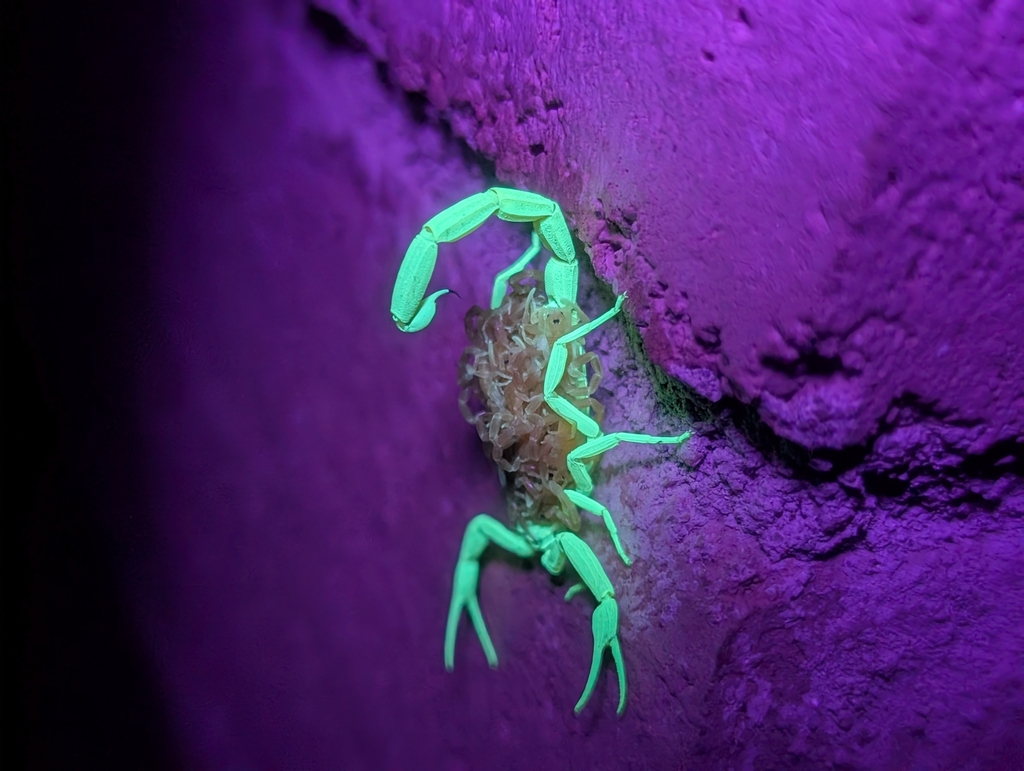
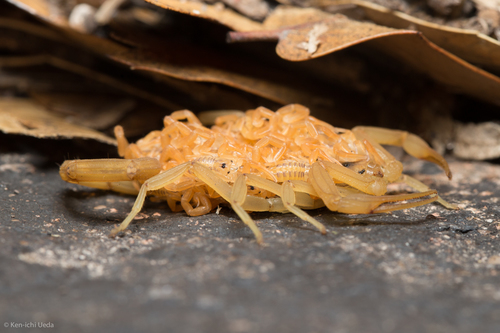
Females give live birth to 25-35 young on average. Newborn 'scorplings' climb onto the mother's back and remain there through their first molt, then disperse to live independently.
Adult scorpion
After several molts juveniles reach adulthood in about 1-3 years depending on food and climate; adults mate and the cycle continues.
🍃Diet and predators
Young eat
Small insects and arthropods available near their shelter
Adults eat
Insects, spiders and other small arthropods; active nocturnal hunters that use the sting to subdue prey
Predators of the young
Spiders, centipedes, ants, small vertebrates and birds
Predators of adults
Owls, foxes, grasshopper mice, larger centipedes, roadrunners and other scorpion-eating predators
🌱Effect on plants and gardens
Does not feed on plants; predators of insects and other arthropods, so can reduce populations of pest insects around buildings.
How to get rid of arizona bark scorpions
Reduce attractants and entry points: seal gaps in doors, windows and foundation; caulk cracks and screen vents; remove piles of wood, rock and debris near the house; trim vegetation away from walls; store firewood off the ground. Inside, reduce clutter, use sticky traps near likely entry points, and remove sheltering sites. For heavy infestations or if you need rapid removal, contact a licensed pest control professional experienced with scorpions. Use of pesticides should follow label instructions and local regulations.
📍Where and when to find it
Look at night on exterior walls, under rocks, in woodpiles, in sheds, under bark, and inside garages and houses in cracks and behind clutter. Juveniles are often found near the mother's retreat until their first molt.
Best time
Warm months (spring to fall) and during the night after sunset
Observation tips
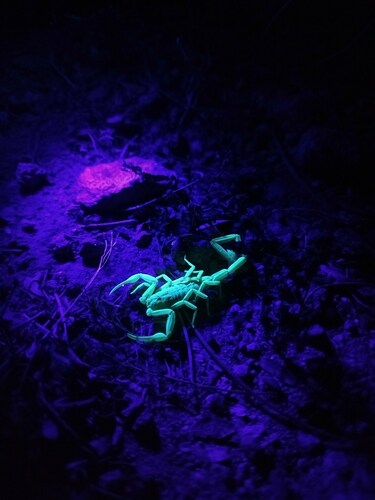
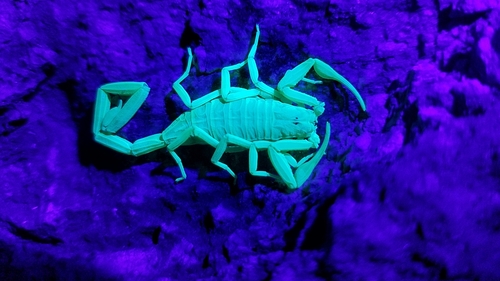
Use a UV flashlight at night to spot their fluorescence; be cautious and keep distance—do not attempt to pick them up. Wear gloves and closed shoes when checking crawl spaces or moving debris.
✨Fun facts
- Bark scorpions can climb smooth vertical surfaces and are often found on walls, ceilings and tree bark at night.
- They fluoresce blue-green under ultraviolet (UV) light, a characteristic useful for night surveys.
- Unlike many scorpion species, Arizona bark scorpions are relatively slender and adapted to arboreal or crevice-dwelling life.
?Frequently asked questions
Are Arizona bark scorpions deadly?
Fatalities are rare with modern medical care, but their venom can cause severe systemic symptoms in young children, the elderly or medically vulnerable people. Seek prompt medical care for stings that cause troubling symptoms.
Do Arizona bark scorpions come into houses?
Yes. They seek shelter, prey and cooler microclimates and commonly enter homes through small gaps, under doors, or where walls meet the ground.
How can I keep them out of my house?
Seal entry points, remove debris and wood piles near the foundation, trim vegetation away from walls, reduce clutter inside, and consider professional exclusion services or pest control if problems persist.
Will a scorpion bite or sting more than once?
Yes. A scorpion can sting more than once if it is provoked, trapped or handled. Avoid handling them.
Is there an antivenom?
Yes. Antivenom exists and is used for severe systemic reactions; doctors will decide based on symptoms and patient risk factors.
📷Photos of the arizona bark scorpion
This guide was written with AI assistance and fact-checked, last updated 2026-10-09. Identification from photos is never certain: don't handle insects you can't identify, and get medical advice for bites, stings or allergic reactions.