
Deathstalker
Leiurus quinquestriatus · Scorpions
A small, pale yellow desert scorpion with highly potent venom; medically significant and found across North Africa and the Middle East.
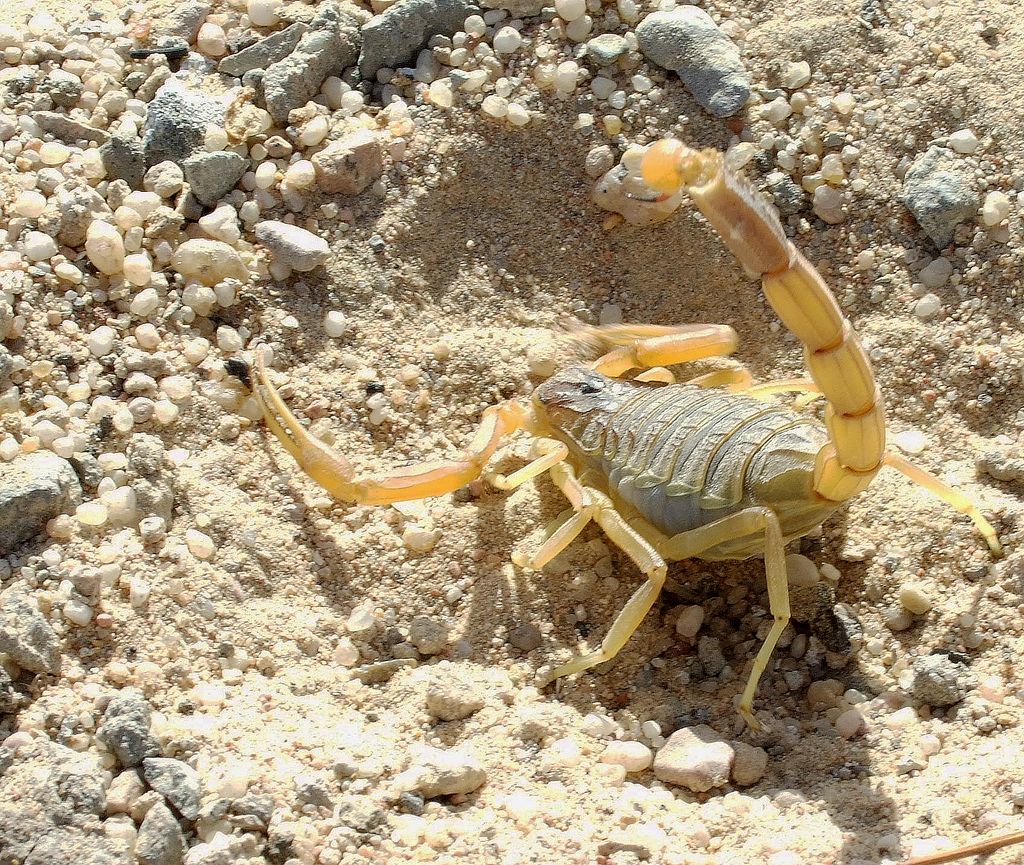
!Is the deathstalker dangerous?
Yes, it can be. Stings are medically significant. Venom contains potent neurotoxins that can cause intense pain, numbness, sweating, vomiting, high blood pressure, breathing difficulties, convulsions and in severe cases respiratory failure or death—especially in young children and elderly people. First aid: keep the person calm and immobile, wash the site with soap and water, apply a clean dressing, seek emergency medical care immediately and request antivenom where indicated. Do not apply tourniquets or attempt cutting out venom; do not delay professional treatment.
Pets
Pets (dogs, cats) can be seriously affected; signs include pain, drooling, weakness, trembling, seizures or collapse. Seek veterinary emergency care promptly; antivenom or supportive treatment may be necessary.
📖Overview
Leiurus quinquestriatus, commonly called the Deathstalker, is a small to medium-sized scorpion adapted to arid and semi-arid habitats. It is primarily nocturnal and hides under stones, in crevices and inside buildings during the day. The species is medically important because its venom contains powerful neurotoxins that can produce severe systemic effects, especially in young children and the elderly. Adults feed on insects and other small arthropods and use their sting to subdue prey and for defence.
🔍How to identify a deathstalker
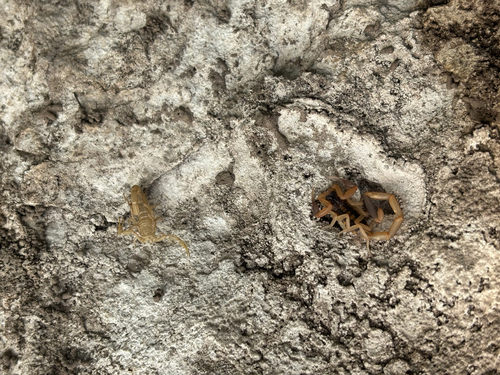
Adults are typically pale yellow to straw-coloured with a slender build, relatively thin pedipalps (pincers) and a long, fairly slender metasoma (tail) ending in a bulbous telson with a curved sting. The last tail segment and the telson are often darker, brownish. The body has rows of granular ridges (keels), including five on the carapace that give the species its name quinquestriatus ("five-striped").
- Pale yellow to straw colour overall with thin pincers and a long, slender tail whose last segment is often darker.
- Slender pedipalps (pincers) and slender tail, unlike the thick, broad tails of fat-tailed scorpions (Androctonus).
- Nocturnal behaviour: likely found under rocks, in crevices or inside buildings at night in appropriate regions.
- Regional distribution: found in parts of North and northeast Africa (related Leiurus species occur in the Middle East); location helps confirm identification.
Lookalikes
Yellow fat-tailed scorpion Androctonus australis
Also a dangerous yellow North African buthid, but its tail is much thicker and broader; the deathstalker has a slender tail.
Deathstalker subspecies / close relatives Leiurus hebraeus (sometimes treated as subspecies)
Some populations are split by authors into closely related species or subspecies; identification to subspecies may require expert examination and locality data.
Yellow scorpions (general) Several Buthidae species
Other yellow buthid scorpions can look similar; precise identification often needs examination of fine anatomical features and known geographic range.
↻Life cycle
Embryo (live birth)
Scorpions do not lay eggs: embryos develop inside the mother, who gives birth to live young.
Juvenile (instars)
Newborn young climb onto the mother's back and remain there for the first one to two weeks until their first moult, then disperse. Juveniles moult several times as they grow to adulthood.
Adult
Sexually mature scorpions capable of mating and producing live young; adults continue to moult occasionally but at much longer intervals.
🍃Diet and predators
Young eat
Small insects and tiny arthropods; feed on prey captured near the shelter site.
Adults eat
Ground-dwelling insects, spiders and other small arthropods; captured and subdued with the sting and pincers.
Predators of the young
Small mammals, spiders, centipedes and larger predatory arthropods.
Predators of adults
Birds (e.g. owls), rodents, mongooses, large lizards and some specialized predators (some birds and mammals) that can tolerate or avoid the sting.
🌱Effect on plants and gardens
Does not feed on plants; predatory on insects and other small arthropods. Not an agricultural pest.
📍Where and when to find it
Look under stones, inside wall crevices, in wood or debris piles, beneath bark and inside buildings at night in its regional range. Juveniles are found on the mother's back for the first week or two.
Best time
Warm months and nighttime (after dusk) are best to observe active individuals.
Observation tips
Use a red-filtered light or low-intensity torch to observe without alarming the animal. Wear gloves and sturdy footwear when searching in likely habitats. Do not handle; photograph from a safe distance.
✨Fun facts
- The Deathstalker is named for its potent venom, not because it is especially aggressive; it stings mainly when threatened.
- Venom from Leiurus species is used in medical research for studying ion channels and potential pharmaceutical applications.
- Newborns ride on the mother's back until after their first moult, a behaviour common to scorpions.
?Frequently asked questions
Do Deathstalker scorpions sting?
Yes — they use their sting to subdue prey and in defence. Their venom is highly potent and medically significant.
Are Deathstalker scorpions aggressive?
They are defensive rather than aggressive. Most stings occur when the scorpion is accidentally handled, trapped in clothing or stepped on.
What should I do if someone is stung by a Deathstalker?
Keep the person calm and still, wash the wound with soap and water, apply a clean dressing, and get emergency medical care immediately. Antivenom and supportive treatment may be required.
Why is there a Deathstalker in my house?
They enter buildings seeking shelter, cooler microclimates and prey (insects). Houses in arid regions with cracks, piles of debris or open doors/windows are more likely to have scorpions.
How do I get rid of Deathstalkers around my home?
Reduce shelter by sealing cracks, removing rock and wood piles, clearing debris, screening openings and using sticky traps or professional pest control if infestations occur. In regions with medically significant scorpions, contact experienced pest control for safe removal.
📷Photos of the deathstalker
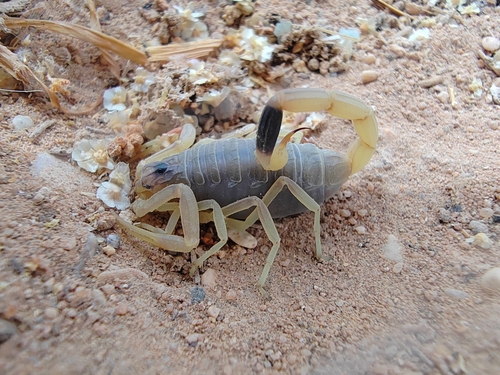
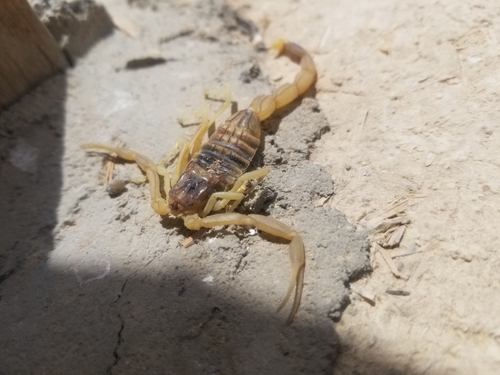
More scorpions & other arachnids
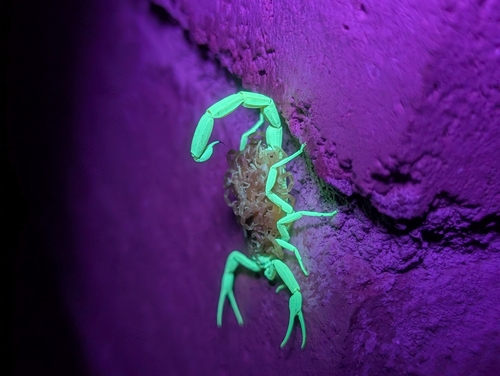
This guide was written with AI assistance and fact-checked, last updated 2026-10-10. Identification from photos is never certain: don't handle insects you can't identify, and get medical advice for bites, stings or allergic reactions. More about the deathstalker: iNaturalist, Wikipedia.