
Camel spider
Galeodes arabs · Solifuges
A fast, ground-dwelling arachnid of deserts and drylands; not venomous but capable of a painful bite and large chelicerae.
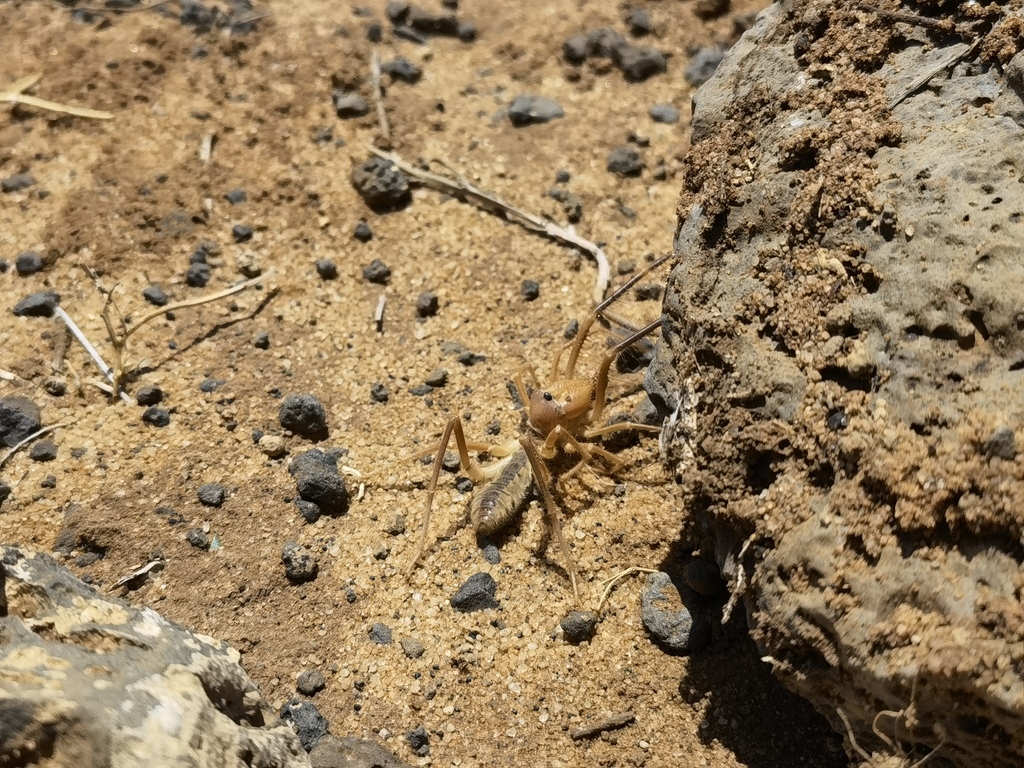
!Is the camel spider dangerous?
Only mildly. Galeodes arabs are not venomous. Bites can be painful because of the strong chelicerae and may cause lacerations or puncture wounds. Treat bites by cleaning with soap and water, apply antiseptic, and seek medical attention if bleeding is heavy, if the wound appears deep, or if signs of infection develop (increasing pain, redness, swelling, fever).
Pets
Unlikely to be dangerous to dogs or cats, but a bite could cause local pain or a wound; monitor pets for signs of pain or infection and consult a veterinarian if concerned.
📖Overview
Galeodes arabs is a species of solifuge (order Solifugae) found across dry regions of North Africa, the Middle East and nearby arid areas. These nocturnal predators are active hunters that run quickly over sand and rocky ground to catch insects and other small animals. They are solitary, sheltering by day under stones, in burrows or in crevices and emerging at night to hunt.
Despite common myths, camel spiders are not spiders (they are close relatives in the class Arachnida), and they are not venomous to humans. Their large chelicerae (jaws) can deliver a painful bite and can tear prey apart, which is why encounters sometimes result in wounds or secondary infection if not cleaned and cared for.
🔍How to identify a camel spider
Galeodes arabs have a compact, segmented body with a distinct prosoma and opisthosoma, very large forward-facing chelicerae that look like pincer-like jaws, and long legs adapted for rapid running. They lack a silk-producing spinneret and do not have venom glands like many true spiders. Adults appear stout and somewhat hairy; the chelicerae are obvious and can be as large as the front part of the body.
- Large, forward-facing chelicerae that look like strong pincer jaws.
- Fast, crab-like running with long anterior legs and a low body profile.
- Sandy to reddish-brown coloration suited to arid habitats.
- No silk, no visible spinnerets, and overall appearance distinct from true spiders.
Lookalikes
Eremobates solifuge Eremobates spp.
Eremobates (North American solifuges) differ in details of chelicerae, leg proportions and geographic range; key differences usually require close examination by an expert.
Rhagodid solifuges Rhagodes spp.
Rhagodes species share the same deserts but have a stockier, broader body, shorter legs and are often darker; Galeodes are slimmer, longer-legged and paler.
↻Life cycle
Egg
Females lay clusters of eggs in a chamber or burrow; eggs are guarded until they hatch.
Nymph
Young solifuges hatch as miniature versions of adults (no metamorphosis) and molt several times as they grow.
Adult
Adults are sexually mature and continue the cycle; mating often involves complex behaviours and is brief.
🍃Diet and predators
Young eat
Small insects and other tiny arthropods; similar prey to adults but smaller items.
Adults eat
Insects, spiders, scorpions, and occasionally small vertebrates; they use chelicerae to seize and macerate prey.
Predators of the young
Birds, lizards, small mammals and larger arthropods.
Predators of adults
Nocturnal birds, larger reptiles, small mammals and some predatory arthropods; humans sometimes kill them out of fear.
🌱Effect on plants and gardens
Solifuges are predators and do not damage plants. They can benefit ecosystems by reducing populations of insects and other small arthropods.
📍Where and when to find it
Look at night on the surface of sand, rocky ground, under stones, in crevices and near buildings in arid regions. Search under debris or logs to find daytime refuges.
Best time
Warm months and at night; after sundown is best for observing hunting behaviour.
Observation tips
Use a flashlight at night and move slowly; solifuges flee quickly. Photograph from a distance or capture with a container if you need a closer view; wear gloves when handling to avoid bites.
✨Fun facts
- Solifuges can run extremely fast for their size; observers often notice rapid, jerky movement.
- Their impressive chelicerae are used both for feeding and for manipulating objects, not for injecting venom.
- Common names like 'camel spider' come from myths and local stories rather than actual attacks on camels.
?Frequently asked questions
Are camel spiders venomous?
No. Galeodes arabs and other solifuges do not have venom glands that are harmful to humans. Bites are mechanical injuries from the chelicerae, not envenomation.
Do camel spiders eat people or camels?
No. They are predators of insects and small animals. Stories of attacks on large animals or humans are myths and exaggerations.
Do camel spiders bite?
They can bite if handled or cornered. Bites can be painful and may cause cuts; clean wounds and seek medical care if necessary.
Why did I find one in my house?
They may enter homes seeking shelter, cooler microclimates, or prey (insects). In arid regions they sometimes appear in houses at night.
How do I get rid of camel spiders?
Use exclusion: seal cracks, doors and windows, reduce debris and woodpiles near buildings, remove insect prey sources. Capture and release outdoors using gloves or a container; avoid handling by hand.
Are camel spiders dangerous to pets?
They are not poisonous to pets, but a bite could cause local pain or a wound. Monitor the pet and consult a veterinarian for severe reactions or infection.
More scorpions & other arachnids
This guide was written with AI assistance and fact-checked, last updated 2026-10-10. Identification from photos is never certain: don't handle insects you can't identify, and get medical advice for bites, stings or allergic reactions. More about the camel spider: iNaturalist, Wikipedia.