
Arizona bark scorpion vs Striped bark scorpion
These two are easy to mix up. Here's how to tell an Arizona bark scorpion from a striped bark scorpion, and whether either one bites or stings.
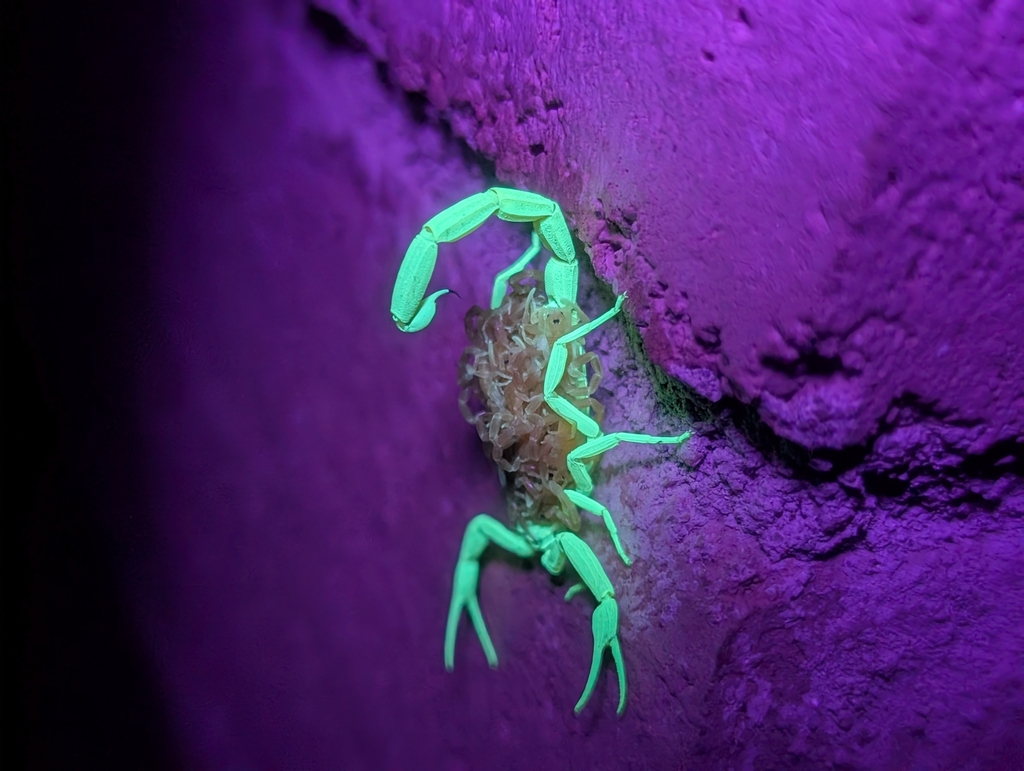
Arizona bark scorpion
Centruroides sculpturatus

Striped bark scorpion
Centruroides vittatus
≠The key differences
C. vittatus often has darker longitudinal stripes on the back and a slightly different geographic range; Arizona bark scorpion tends to be paler and differs in subtle morphological features used by specialists.
C. sculpturatus (southwestern US) has more potent neurotoxic venom and finer morphological differences; range and severe sting risk help distinguish it from C. vittatus.
⚖︎Side by side
| Arizona bark scorpion | Striped bark scorpion | |
|---|---|---|
| To humans | Venomous sting | Venomous sting |
| Size | 60-90 mm (6-9 cm) total length | About 50-70 mm long including the tail |
| Colours | Pale tan, Yellowish, Light brown | Tan, Light yellow, Dark brown (stripes) |
| Family | Buthidae | Buthidae |
| Habitat | Desert and semi-arid habitats, rocky outcrops, Sonoran desert scrub, agave and mesquite, and inside human structures where they find shelter and prey. | Dry woodlands, grasslands, scrub, rocky areas, under bark, inside buildings, woodpiles and crevices |
| Range | Southwestern United States (especially Arizona, southeastern California, southwestern Utah, parts of Nevada and New Mexico) and northwestern Mexico (Sonora and adjacent states) | South-central United States (commonly Texas, Oklahoma, Kansas, Arkansas, Louisiana) and northern Mexico; exact range overlaps with other Centruroides species in some areas |
| Active | Nocturnal; most active spring through fall, especially warm nights | Nocturnal; most active spring through early fall, especially warm nights |
| Pest? | Yes | No |
🔍How to spot an Arizona bark scorpion
- Small to medium size (6-9 cm) with a pale yellow-tan body and sometimes slightly darker tail segments
- Slender pedipalps (pincers) and a narrow, elongated tail topped by a curved stinger
- Flattened body adapted for climbing walls, bark and hiding in narrow crevices
- Nocturnal: more likely to be seen active at night on walls or in homes
🔍How to spot a striped bark scorpion
- Light tan to yellow body with two dark longitudinal stripes along the dorsum
- Slender tail and narrow pincers (pedipalps) compared with thick-clawed scorpions
- Nocturnal—more active and visible at night; fluoresces under UV light
?Frequently asked questions
What is the difference between an Arizona bark scorpion and a striped bark scorpion?
C. vittatus often has darker longitudinal stripes on the back and a slightly different geographic range; Arizona bark scorpion tends to be paler and differs in subtle morphological features used by specialists. C. sculpturatus (southwestern US) has more potent neurotoxic venom and finer morphological differences; range and severe sting risk help distinguish it from C. vittatus.
Is an Arizona bark scorpion or a striped bark scorpion more dangerous?
Arizona bark scorpion: Venomous sting. Striped bark scorpion: Venomous sting. The sting is painful and can cause numbness, tingling, muscle twitching, drooling, difficulty speaking or breathing, and in severe cases respiratory failure or cardiovascular effects. Stings are painful and may cause localized swelling, numbness, tingling, nausea or sweating.
Identification from photos is never certain: don't handle insects you can't identify, and get medical advice for bites, stings or allergic reactions.