
European mantis
Mantis religiosa · Mantises
A medium-sized predatory mantis native to Europe and parts of Asia and Africa, introduced to North America; ambushes insects from a sit-and-wait posture.
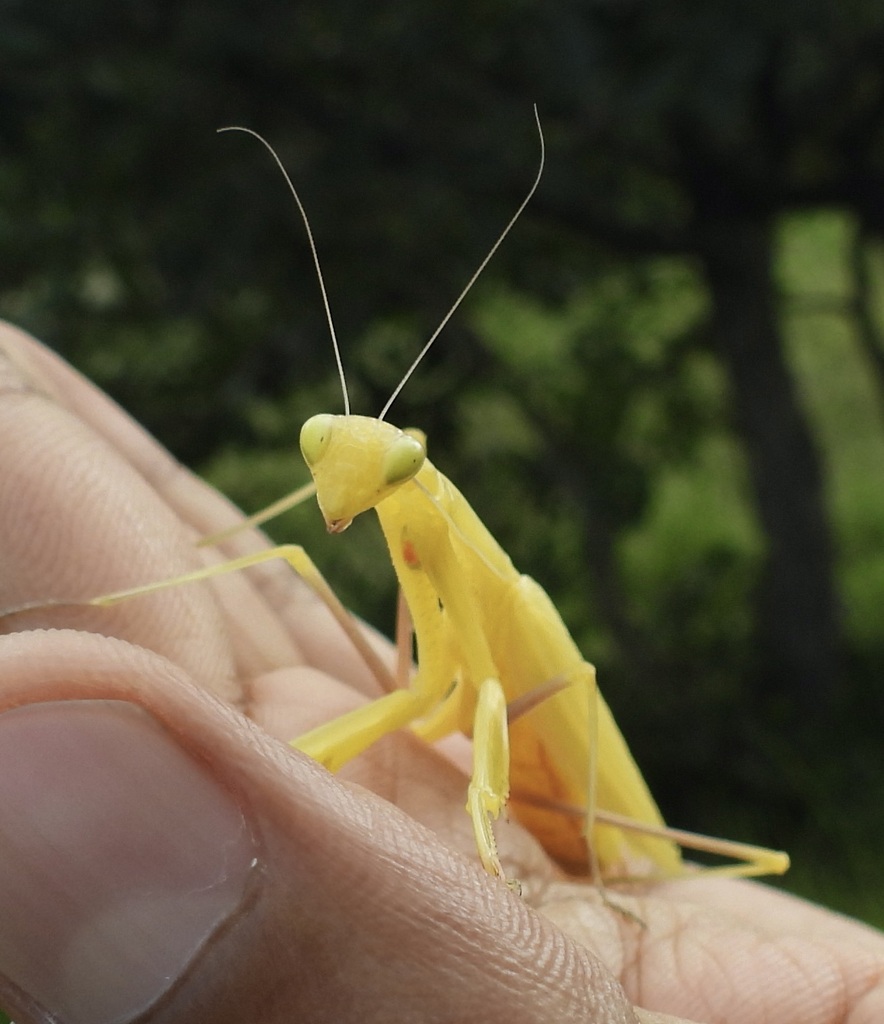
!Is the european mantis dangerous?
No. Not venomous. A mantis may deliver a pinch with its forelegs or a defensive bite if handled roughly; bites are rare and cause only minor, localized pain or small puncture marks. No known medically significant toxin.
Pets
Generally harmless to cats and dogs; could deliver a defensive nip to very small pets or fingers but will not harm larger animals. Keep curious pets and mantids separate to avoid stress to the insect.
📖Overview
Mantis religiosa is a well-known predatory insect that uses raptorial forelegs to capture prey. It is sit-and-wait ambush hunter that feeds mainly on other insects but will take small vertebrates on occasion. Nymphs hatch in late spring and adults are active from mid-summer into autumn; females lay frothy egg cases (oothecae) that overwinter and hatch the following year. This species is often found in gardens, meadows and shrub edges where vegetation provides perches for hunting.
🔍How to identify a european mantis
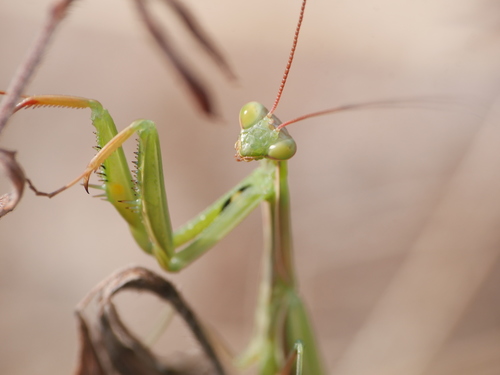
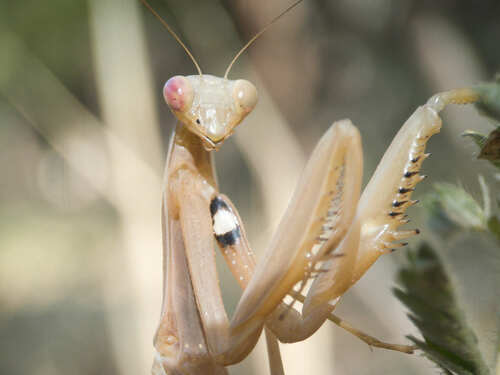
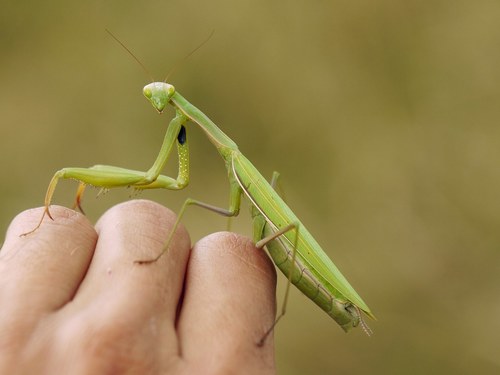
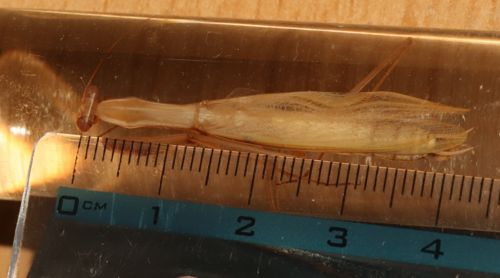
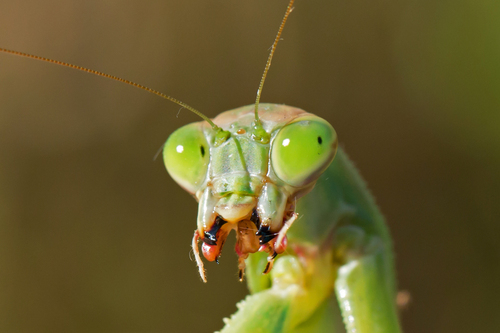
Adults are elongated, with a triangular head capable of swiveling and large compound eyes. The prominent raptorial front legs are held folded in a posture that looks like praying hands. Mantis religiosa occurs in shades of green and brown; some individuals are mottled to match dried vegetation. Females are bulkier with a wider abdomen, while males are more slender with a longer prothorax and longer wings relative to body size.
- Triangular head with large forward-facing eyes that can swivel independently from the body
- Raptorial front legs with spines used to grasp prey; legs folded in a "praying" posture when at rest
- Elongated prothorax (neck) and a long, tapered abdomen; females bulkier than males
- A black spot, often with a pale centre, on the inner side of each front coxa (the base of the raptorial leg) is the best field mark; body colour is green or brown
Lookalikes
Chinese mantis Tenodera sinensis
Generally larger (up to about 10 cm), tan with a green stripe along the front edge of the forewings, and lacks the black spot inside the front coxae.
Carolina mantis Stagmomantis carolina
Smaller (about 5-6 cm) and mottled grey-brown or green; females' wings cover only about two-thirds of the abdomen, and it lacks the black coxal spot. Native to much of the United States.
↻Life cycle
Egg (ootheca)
Female produces a foamy egg case (ootheca) attached to stems or other surfaces; it hardens and protects dozens to hundreds of eggs through winter.
Nymph
Nymphs hatch resembling small wingless adults and go through a series of molts, actively hunting small insects between each stage.
Adult (imago)
After the final molt adults develop wings and reproductive organs; mating and egg-laying occur in late summer and autumn.
🍃Diet and predators
Young eat
Small soft-bodied insects such as aphids, flies, springtails and small caterpillars
Adults eat
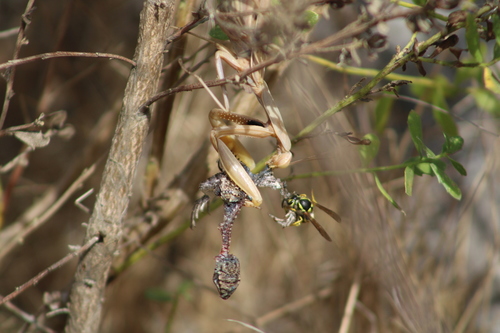
Larger insects including flies, bees, wasps, moths, crickets and occasionally small vertebrates such as tiny lizards or frogs
Predators of the young
Spiders, ants, predatory beetles, and small birds
Predators of adults
Birds, bats, larger predatory insects and small mammals
🌱Effect on plants and gardens
Does not eat plants; helps control pest insects in gardens by preying on aphids, flies, caterpillars and other arthropods. Not generally a pest to crops.
📍Where and when to find it
Perch on stems, shrubs, fences and tall grasses; look for adults on flowers and leaves or nymphs on low vegetation.
Best time
Late spring through early autumn; daytime and dusk are best for sightings.
Observation tips
Approach slowly and photograph from the side to show the triangular head and raptorial forelegs; look for oothecae on stems in late autumn and winter.
✨Fun facts
- Females sometimes eat the male after or during mating; this sexual cannibalism occurs in the wild but is not universal.
- Mantis religiosa can rotate its head about 180 degrees to scan its surroundings with stereoscopic vision from its two large eyes.
- Oothecae are often visible on stems or fences and can be collected and overwintered indoors to rear mantids for study.
?Frequently asked questions
Are European mantises dangerous to humans?
No. They are not venomous and do not pose a medical threat; a defensive pinch is rare and causes only minor pain.
Do mantises bite?
They can nip if handled roughly, but bites are uncommon and not medically significant.
Why is a mantis in my house?
They may enter buildings attracted by light or to hunt insects. Accidental indoor sightings are common in late summer.
How can I get rid of mantises humanely?
Gently capture them in a jar and release outdoors in suitable vegetation. Destroying oothecae will reduce local numbers, but mantids are beneficial predators.
Where do European mantises live?
They prefer sunny, warm habitats with tall grasses, shrubs and garden plants across Europe, parts of Asia and North Africa; introduced populations exist in North America.
Are they good for my garden?
Yes—they eat many pest insects. However, they are generalist predators and will also eat beneficial insects like pollinators.
📷Photos of the european mantis
More mantises
This guide was written with AI assistance and fact-checked, last updated 2026-10-09. Identification from photos is never certain: don't handle insects you can't identify, and get medical advice for bites, stings or allergic reactions.