
Carolina mantis
Stagmomantis carolina · Praying mantises
A small, common North American praying mantis species that ambushes insects in gardens and shrubs; harmless to people and beneficial to gardeners.
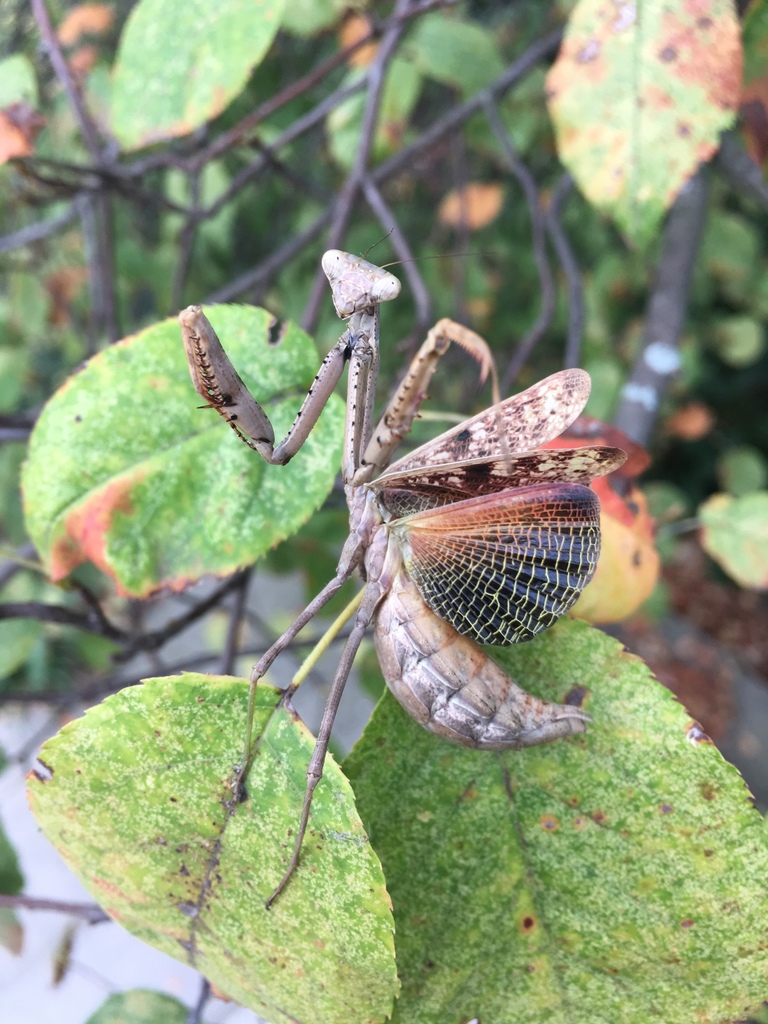
!Is the Carolina mantis dangerous?
No. Not venomous. A Carolina mantis may nip or bite if handled or provoked; bites are mechanical and may cause minor puncture, redness or brief pain. Clean any bite with soap and water and apply antiseptic if needed. Seek medical care if signs of infection or an unusual allergic reaction occur.
Pets
Generally harmless to pets. Small pets might investigate and could receive a defensive nip; mantises are not toxic to cats or dogs. Mantises themselves are fragile and can be killed by larger pets.
📖Overview
Stagmomantis carolina is a medium-small praying mantis native to much of the United States and parts of Central America. It is an ambush predator that waits on vegetation and captures a wide variety of live prey including flies, moths, grasshoppers and other insects. Females are stockier than males and produce foam-like egg cases called oothecae in late summer and fall. This species tolerates a range of habitats and is commonly seen in gardens, edges of woods and shrubbery.
Carolina mantises are considered beneficial predators in gardens because they reduce populations of pest insects, though they are generalists and may also take some beneficial insects like pollinators. They are not dangerous to humans: they can bite when handled roughly but their bite is not venomous and usually only causes minor pain or a small puncture wound.
🔍How to identify a Carolina mantis
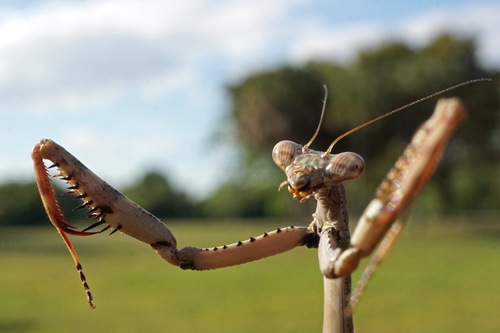
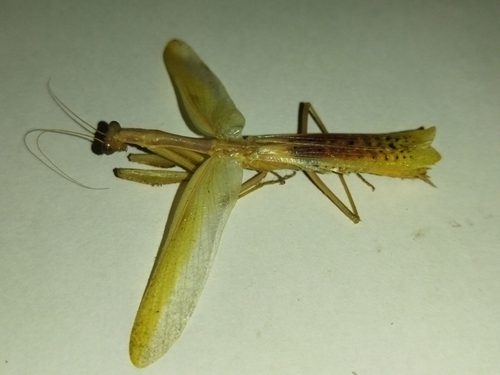
Adults are about 45-60 mm long (females at the larger end). The species shows two main color forms: green and brown or tan, which helps them blend into foliage or dry vegetation. The head is triangular with large compound eyes and grasping, spiny raptorial front legs held folded under the head. Wings are present in adults; males have longer wings relative to their body and are more slender, while females are broader and heavier-bodied. Females usually show a small dark spot on each forewing, and their wings cover only about two-thirds to three-quarters of the abdomen.
- Triangular head with large, forward-facing eyes and a flexible neck that allows head rotation
- Raptorial front legs with noticeable spines for grasping prey
- Two main color forms: bright green or brown/tan, matching surrounding vegetation
- Females stouter with shorter wings relative to body; males slender with wings extending beyond the abdomen
Lookalikes
Chinese mantis Tenodera sinensis
Much larger (often 80-110 mm), with a green stripe along the edge of the brown wings in many individuals; females' wings reach the tip of the abdomen. An introduced species, common in gardens.
European mantis Mantis religiosa
Similar posture but usually larger and has a distinctive black spot on the inner foreleg; European mantis less common in most of the Carolina mantis range.
Ground mantis Litaneutria spp.
Smaller and typically found on the ground in arid habitats; Carolina mantis prefers shrubs and vegetation.
↻Life cycle
Egg (ootheca)
Female deposits a foam-like egg case (ootheca) attached to stems or twigs in late summer or fall; the foam hardens and protects dozens of eggs over winter.
Nymph
Nymphs hatch in spring or early summer and resemble miniature wingless adults; they go through multiple molts, growing larger each instar.
Adult
After the final molt, adults have fully formed wings and reproduce; adults live for weeks to a few months and mating occurs in late summer.
🍃Diet and predators
Young eat
Small soft-bodied insects: aphids, flies, tiny caterpillars, springtails
Adults eat
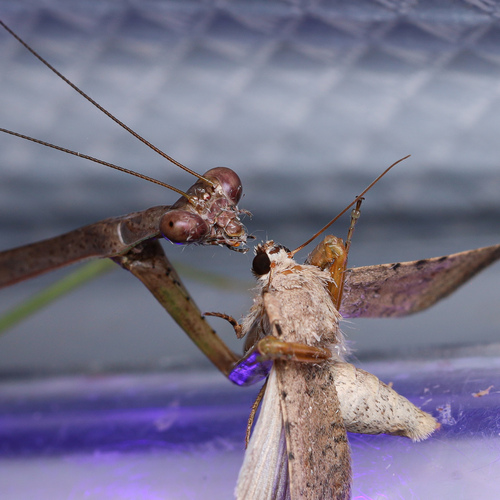
Larger insects: grasshoppers, crickets, moths, butterflies, flies and other arthropods; carnivorous ambush predator
Predators of the young
Spiders, predatory insects, birds
Predators of adults
Birds, bats, larger predatory insects, frogs, and small mammals
🌱Effect on plants and gardens
Does not feed on plants; helps reduce herbivorous insect pests in gardens and crops but will also consume beneficial insects occasionally
📍Where and when to find it
Look on garden plants, flower stems, shrubs, and tall grasses. Eggs are visible as tan foam oothecae attached to twigs and stems.
Best time
Late spring through early autumn for nymphs and adults; daytime and dusk are good for observation.
Observation tips
Approach slowly and photograph from the side to capture the triangular head and raptorial forelegs; oothecae are easiest to spot in winter when leaves are absent.
✨Fun facts
- Females sometimes eat males after or during mating; this behavior occurs in some but not all matings and is not unique to this species.
- Carolina mantis can change posture and remain motionless for long periods, making them excellent ambush predators.
- They have stereoscopic vision for depth perception and can turn their head to track moving prey.
?Frequently asked questions
Are Carolina mantises dangerous to humans?
No. They are not venomous. A defensive bite is possible but it is mechanical and usually causes only mild pain or a small puncture.
Do Carolina mantises bite?
They may bite if handled roughly or threatened, but bites are uncommon and not medically significant for most people.
Why is a mantis in my house?
They may wander indoors seeking prey, shelter, or to overwinter. Young nymphs sometimes end up inside after hatching nearby.
How can I get rid of a Carolina mantis in my house?
Rather than killing it, gently capture it in a jar or cup and release it outside in vegetation where it can hunt. They are beneficial predators in gardens.
Where does the Carolina mantis live?
In gardens, shrubs, hedgerows, forest edges and other vegetation across much of the eastern and central United States into Mexico and Central America.
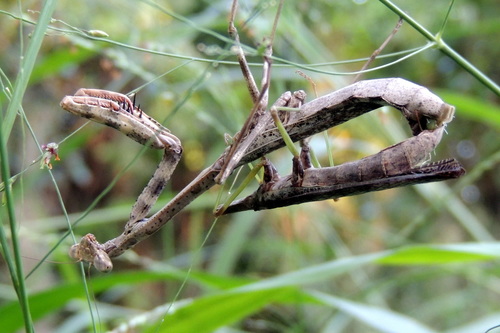
📷Photos of the Carolina mantis
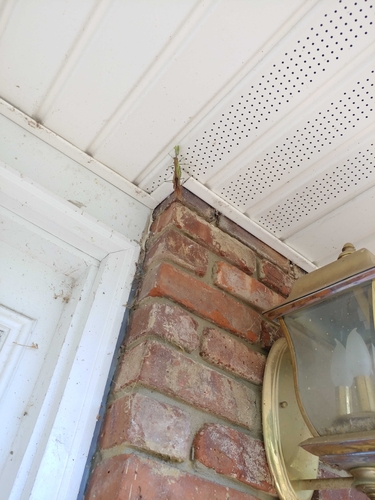
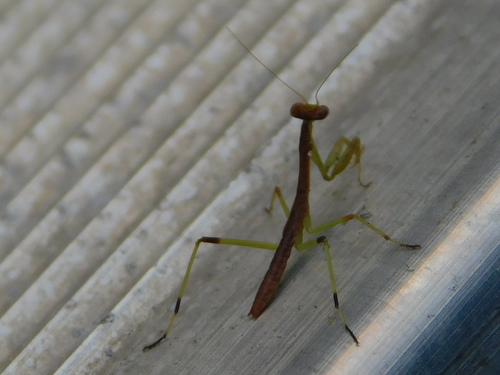
More mantises
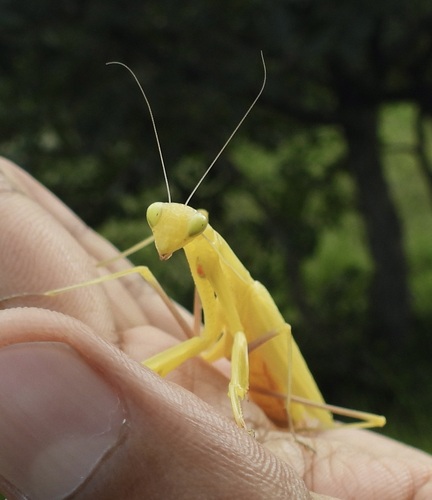
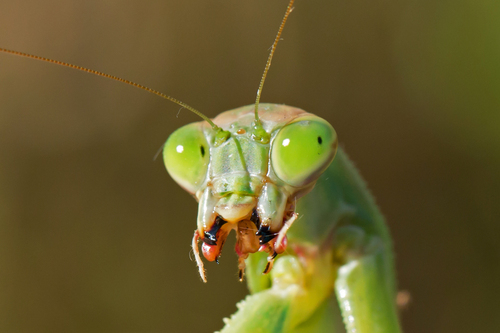
This guide was written with AI assistance and fact-checked, last updated 2026-10-10. Identification from photos is never certain: don't handle insects you can't identify, and get medical advice for bites, stings or allergic reactions. More about the Carolina mantis: iNaturalist, Wikipedia.