
Mediterranean mantis
Iris oratoria · Praying mantises
A medium-sized, ambush-hunting mantis known for its distinctive hindwing eyespots and presence across the Mediterranean and introduced regions.
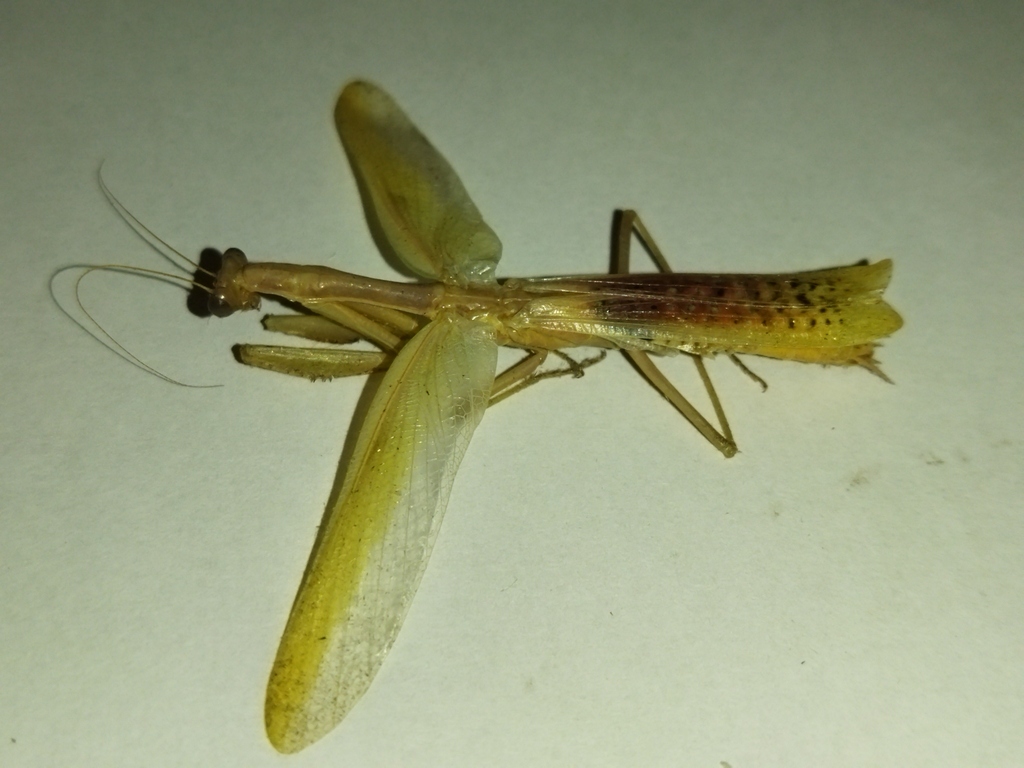
!Is the Mediterranean mantis dangerous?
No. Not dangerous to people. A mantis can give a defensive pinch with its forelegs if handled roughly, but it has no medically significant venom. Wash any minor skin break with soap and water.
Pets
Generally not a threat to dogs or cats. Small pets or very young animals might catch and eat a mantis; a mantis could bite if handled, but bites are not toxic. Avoid feeding wild mantids to pets due to possible pesticide residues.
📖Overview
Iris oratoria is a medium-sized praying mantis native to the Mediterranean region and neighbouring parts of Europe, Asia and Africa. It has also been introduced to parts of North America (including the southern United States) and establishes in warm, dry habitats. Like other mantids it is an ambush predator that captures insects with raptorial forelegs.
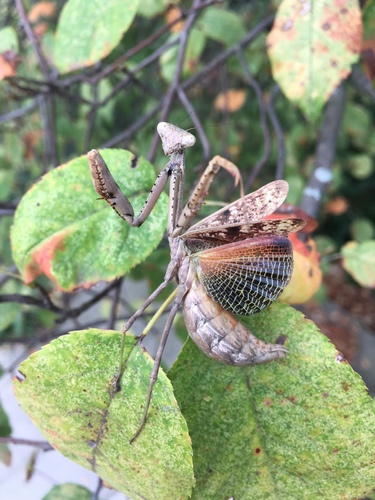
Adults are often found on low shrubs, grasses and garden plants where they wait motionless for prey. Females lay foam-like oothecae (egg cases) that harden and protect dozens of eggs through winter or dry seasons. Iris oratoria is notable for the large, rounded eyespot markings on the hind wings that are flashed when disturbed.
🔍How to identify a Mediterranean mantis
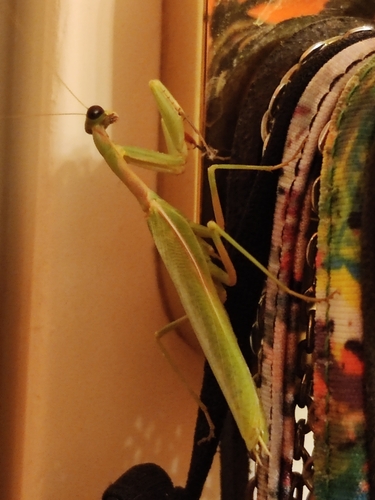
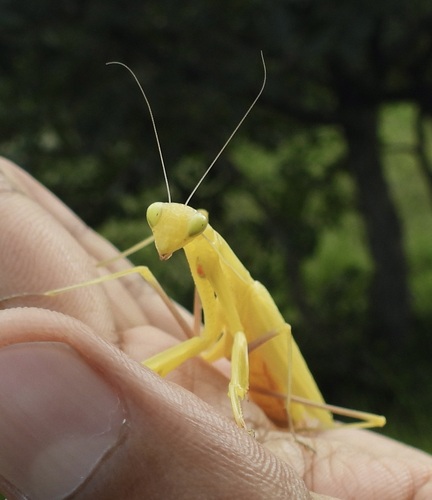
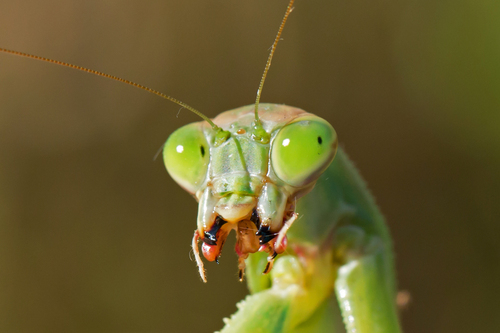
Adult Mediterranean mantises are slender with a typical mantid posture: elongated prothorax, triangular head with large compound eyes, folded raptorial forelegs, and two pairs of wings. Colour varies from green to brown and tan, often with mottling that helps camouflage on stems and leaves. A key identifying mark is the pair of conspicuous rounded eyespots on each hind wing (one on each wing), usually dark-ringed and visible when the mantis spreads its wings. Females are broader-bodied than males and have shorter wings that do not cover the whole abdomen; males are more slender and stronger fliers.
- Look for medium size (4-6 cm) and elongated prothorax with folded raptorial forelegs.
- Flash of the hind wings reveals a pair of rounded eyespot markings — distinctive for Iris oratoria.
- Colour varies between green and brown with mottling; females are stouter, males more slender and better fliers.
- Oothecae are foamy, attached to twigs or stems and persist through winter.
Lookalikes
European mantis Mantis religiosa
Mantis religiosa usually lacks the large rounded hindwing eyespots of Iris oratoria and instead has a black, often white-centred spot on the inner side of each front leg base; it is also larger.
Chinese mantis Tenodera sinensis
Tenodera sinensis is typically larger and more uniformly coloured without the prominent rounded hindwing eyespots; overall shape and size help distinguish it.
Carolina mantis Stagmomantis carolina
Smaller and differently patterned; S. carolina lacks the Iris oratoria hindwing eyespots and often shows more contrasting wing venation.
↻Life cycle
Egg (ootheca)
Female deposits a foamy ootheca on stems or branches; it hardens to protect dozens of eggs through winter or dry periods.
Nymph
Nymphs hatch resembling small adults without wings. They moult several times while growing and are active, voracious predators of small insects.
Adult
Adults have fully developed wings and reproductive organs. Mating occurs in late summer; females lay oothecae and then die as seasons change.
🍃Diet and predators
Young eat
Small flying and crawling insects such as flies, aphids, moth larvae and other small arthropods.
Adults eat
Insects including grasshoppers, crickets, moths, flies and other arthropods.
Predators of the young
Spiders, ants, predatory wasps, birds and larger predatory insects.
Predators of adults
Birds, bats, larger wasps, and occasionally small mammals or reptiles; parasitoids and pathogens can also affect populations.
🌱Effect on plants and gardens
Iris oratoria is a predator of insects and does not damage plants; it can help control pest insects in gardens by eating herbivorous insects.
📍Where and when to find it
Search on flowering plants, shrubs and tall grasses where they sit motionless. Look for oothecae on twigs and stems for eggs.
Best time
Spring through early autumn, daytime and dusk are best for sightings; mornings can be good when they bask.
Observation tips
Use a telephoto or macro lens to photograph without disturbing; watch for the sudden wing flash when threatened, which reveals the eyespots.
✨Fun facts
- Iris oratoria has a defensive behaviour of flashing its hind wings with eyespots to startle predators.
- Females sometimes display cannibalistic behaviour when stressed or in captivity, but this is not a dominant trait in the wild.
- The species has expanded its range through accidental human transport and now occurs outside its native Mediterranean area.
?Frequently asked questions
Are Mediterranean mantises dangerous?
No. They are not venomous and are not dangerous to people; at most they can give a mild pinch if handled.
Do Mediterranean mantises bite?
They can bite defensively with their forelegs, but bites are rare and not medically significant.
Why is a mantis in my house?
Mantises may enter houses attracted by lights that draw prey, or wander in from nearby vegetation; they do not infest homes and usually leave or can be released outside.
How do I get rid of a mantis humanely?
Gently capture it in a jar or container and release it outdoors into vegetation. Avoid killing them; they are beneficial predators.
Where does the Mediterranean mantis live?
In sunny, vegetated areas such as gardens, meadows and scrublands in the Mediterranean region and in introduced warm regions like parts of the southern United States.
Will they eat beneficial insects like bees?
Mantises are generalist predators and may occasionally take pollinators such as bees and butterflies, but they primarily reduce populations of pest insects.
📷Photos of the Mediterranean mantis
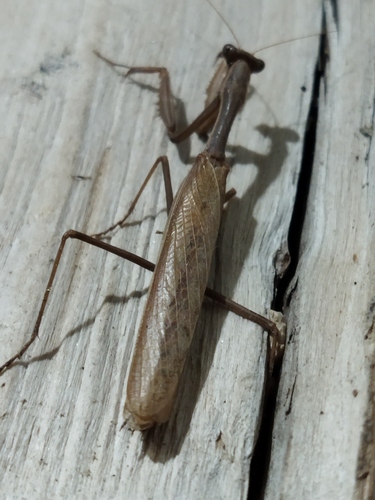
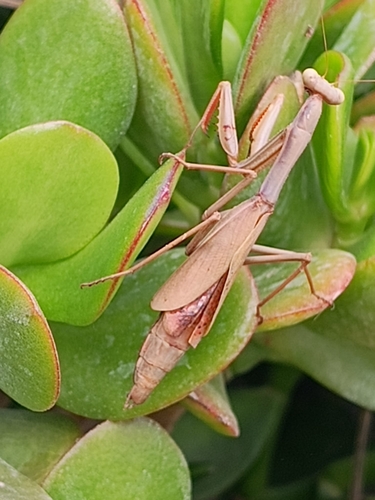
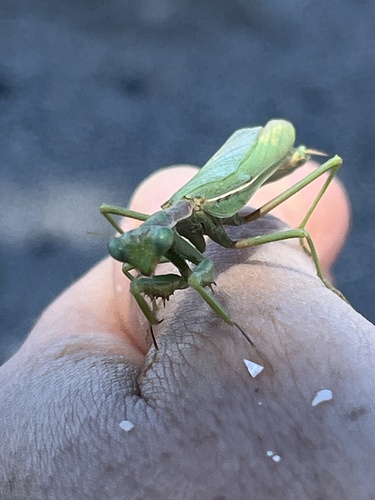
More mantises
This guide was written with AI assistance and fact-checked, last updated 2026-10-10. Identification from photos is never certain: don't handle insects you can't identify, and get medical advice for bites, stings or allergic reactions. More about the Mediterranean mantis: iNaturalist, Wikipedia.