
Chinese mantis
Tenodera sinensis · Mantids
A large, introduced praying mantis often found in gardens; an effective predator of insects but not dangerous to people.
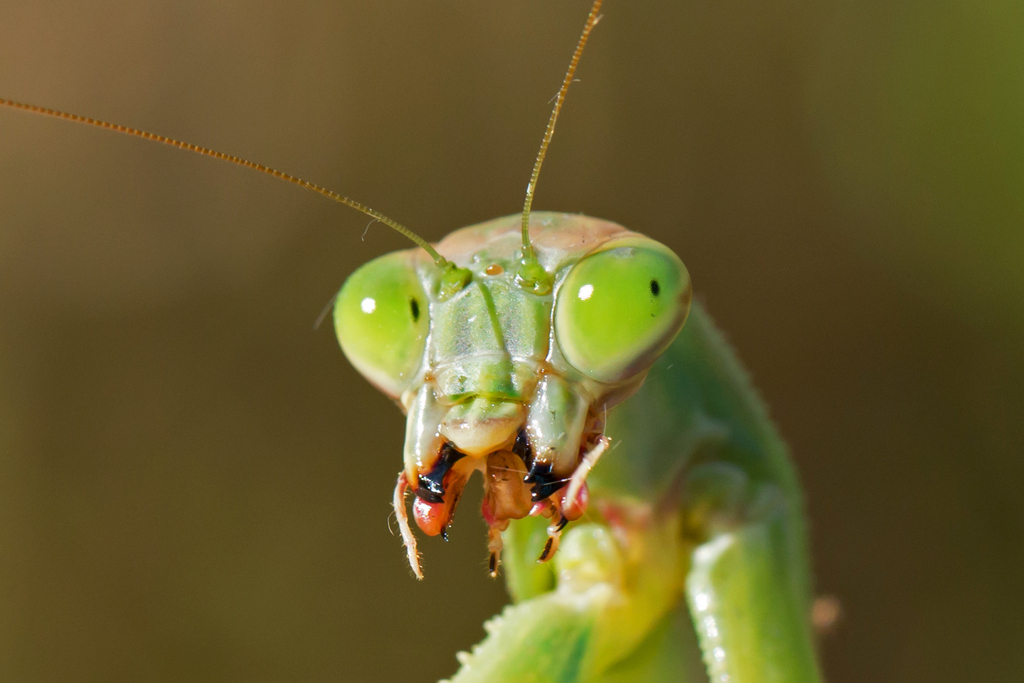
!Is the chinese mantis dangerous?
No. Chinese mantis are not venomous and pose little risk. They can deliver a pinch or a small bite if handled roughly; bites are rare and usually cause only minor skin irritation. If a bite occurs, wash the area with soap and water and apply an antiseptic. Seek medical care if there are signs of infection or an unusual allergic reaction.
Pets
Not toxic to pets. Small pets or very young animals could be caught or startled by a mantis, but mantids do not pose a poisoning risk to dogs or cats. Keep curious small pets from ingesting insects if you are concerned.
📖Overview
Tenodera sinensis is a large mantid native to East Asia and widely introduced elsewhere, including North America. Adults are generalist ambush predators that sit on vegetation and capture prey with raptorial forelegs. They are solitary, sit-and-wait hunters that play a role in controlling insect populations but will take a wide range of prey, including beneficial insects.
They are not dangerous to humans: they do not have venom and rarely bite, though a mantis can give a pinch with its forelegs or a defensive nip if handled. Females sometimes display aggressive behaviour around mating and will occasionally eat males, as is common among mantids. In introduced ranges their impact on native insect communities is not fully documented, but they are generally regarded as garden predators rather than agricultural pests.
🔍How to identify a chinese mantis
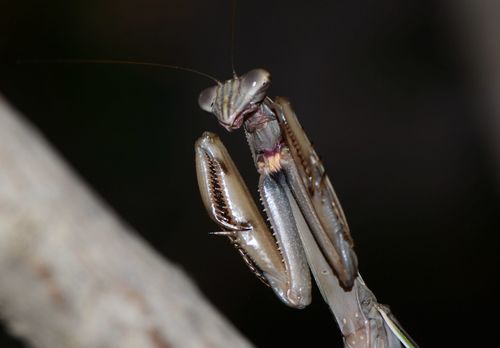
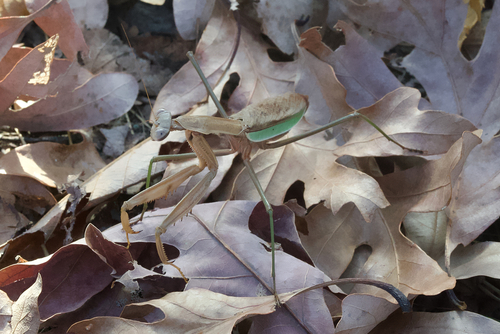
Adults are large and elongated with a triangular head that can rotate, long prothorax creating a 'neck', and prominent raptorial front legs with spines. Colour varies from green to brown or tan, often depending on surroundings; many individuals are mottled or have darker markings along the wings and thorax. Wings cover the abdomen in adults; males are typically slimmer with longer wings relative to body length. Females are broader-bodied and heavier.
Eyes are large and compound; antennae are threadlike. Nymphs resemble small, wingless adults and go through multiple molts before reaching the winged adult form.
- Large, elongated body with a distinct long 'neck' (prothorax) connecting head and body.
- Raptorial front legs held folded in a 'praying' posture with visible spines for grasping prey.
- Colour green, brown or tan, often matching surrounding vegetation; adults have visible wings covering the abdomen.
- Triangular, highly mobile head with large compound eyes that face forward.
Lookalikes
European mantis Mantis religiosa
Mantis religiosa is generally slimmer and has a characteristic dark spot on the upraised forelegs; Tenodera sinensis is usually larger and more robust with different wing venation.
Carolina mantis Stagmomantis carolina
Carolina mantis is smaller and more delicate, often with distinctive green and tan patterning; Chinese mantis is noticeably larger and bulkier.
Giant Asian mantid Hierodula spp.
Hierodula species can be similar in size but often have different head and thorax proportions and slightly different color tones; genus-level ID often requires close examination of morphology.
↻Life cycle
Egg (ootheca)
Females deposit a foam-like egg case (ootheca) on stems, twigs or man-made structures in late summer or autumn; the case hardens and protects dozens to hundreds of eggs through winter.
Nymph (juvenile)
Nymphs hatch in spring and resemble small, wingless adults. They go through multiple molts (instars), growing larger each time and becoming more predatory.
Adult (winged)
After the final molt in summer, adults have fully developed wings and reproductive organs. Adults mate, females produce oothecae, and then die as the season ends.
🍃Diet and predators
Young eat
Small soft-bodied insects such as aphids, flies and caterpillars; very small nymphs may also eat tiny arthropods.
Adults eat
A broad range of insects (grasshoppers, crickets, moths, flies, bees, wasps) and occasionally small vertebrates such as frogs, lizards or hummingbirds if circumstances allow.
Predators of the young
Spiders, ants, predatory beetles, and small birds.
Predators of adults
Birds, bats, larger predatory insects, frogs and small mammals.
🌱Effect on plants and gardens
Chinese mantis do not feed on plants; they are predators of insects and thus generally beneficial for gardens. They can capture pollinators such as bees and butterflies, so their net effect on pollination is context dependent.
📍Where and when to find it
Look on flowering plants, shrubs, tall grasses, vegetable gardens and hedgerows. Nymphs are often on low vegetation; adults may perch higher on stems and branches.
Best time
Late spring through summer and early autumn are best. Daytime and dusk are good for observing; use slow movements to avoid startling them.
Observation tips
Approach slowly, avoid sudden movements, and photograph from the side to capture the triangular head and raptorial forelegs. Look for the distinctive folded front legs and long 'neck' profile.
✨Fun facts
- Females sometimes consume the male after or during mating; this behaviour occurs in the wild but is not guaranteed every mating.
- The mantis can rotate its head about 180 degrees to scan the environment, a rare ability among insects.
- Tenodera sinensis is the largest mantis species in North America, where it was introduced around 1896.
?Frequently asked questions
Are Chinese mantises dangerous to humans?
No. They are not venomous. Bites are uncommon and typically cause only minor pain or irritation.
Do Chinese mantises bite?
They can nip or pinch if handled roughly, but mantis bites are rare and not medically significant for most people.
Why is a mantis in my house?
Mantids may wander into houses in search of prey or resting spots, especially if lights attract insects. They often come in through open doors or windows.
How can I get rid of a mantis in my home?
Gently capture it with a jar and a piece of cardboard and release it outdoors in vegetation. Avoid killing them, as they are beneficial predators.
Are Chinese mantises good for my garden?
Generally yes; they eat many pest insects. However, they are indiscriminate predators and will also take pollinators and other beneficial species.
Where do Chinese mantises lay eggs and when do they hatch?
Females glue oothecae to twigs, stems, fences or buildings in late summer or autumn; nymphs typically hatch the following spring.
📷Photos of the chinese mantis
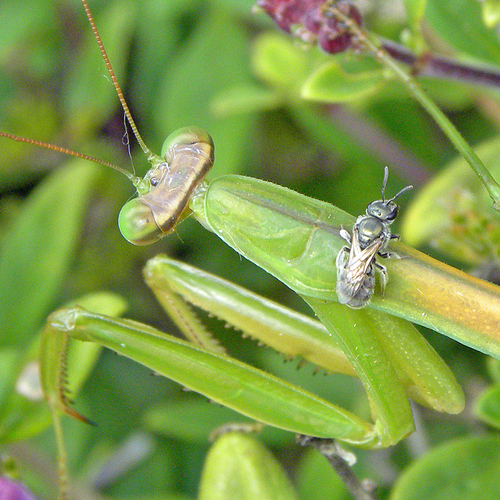
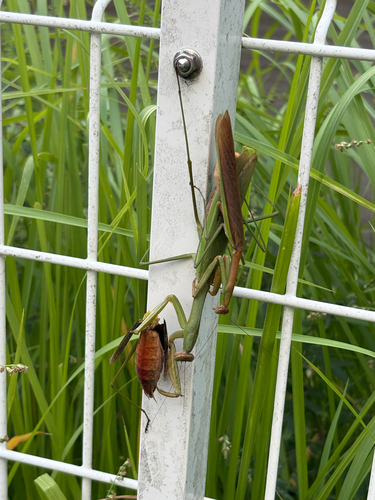
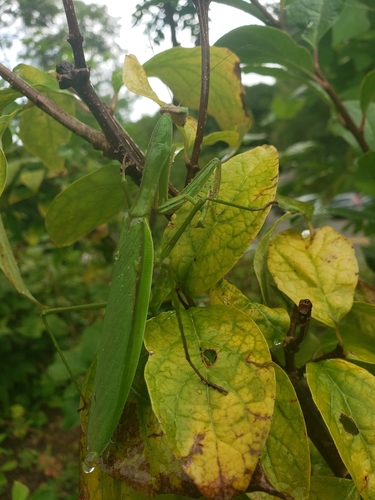
More mantises
This guide was written with AI assistance and fact-checked, last updated 2026-10-09. Identification from photos is never certain: don't handle insects you can't identify, and get medical advice for bites, stings or allergic reactions.