
European mantis vs Carolina mantis
These two are easy to mix up. Here's how to tell an European mantis from a Carolina mantis, and whether either one bites or stings.
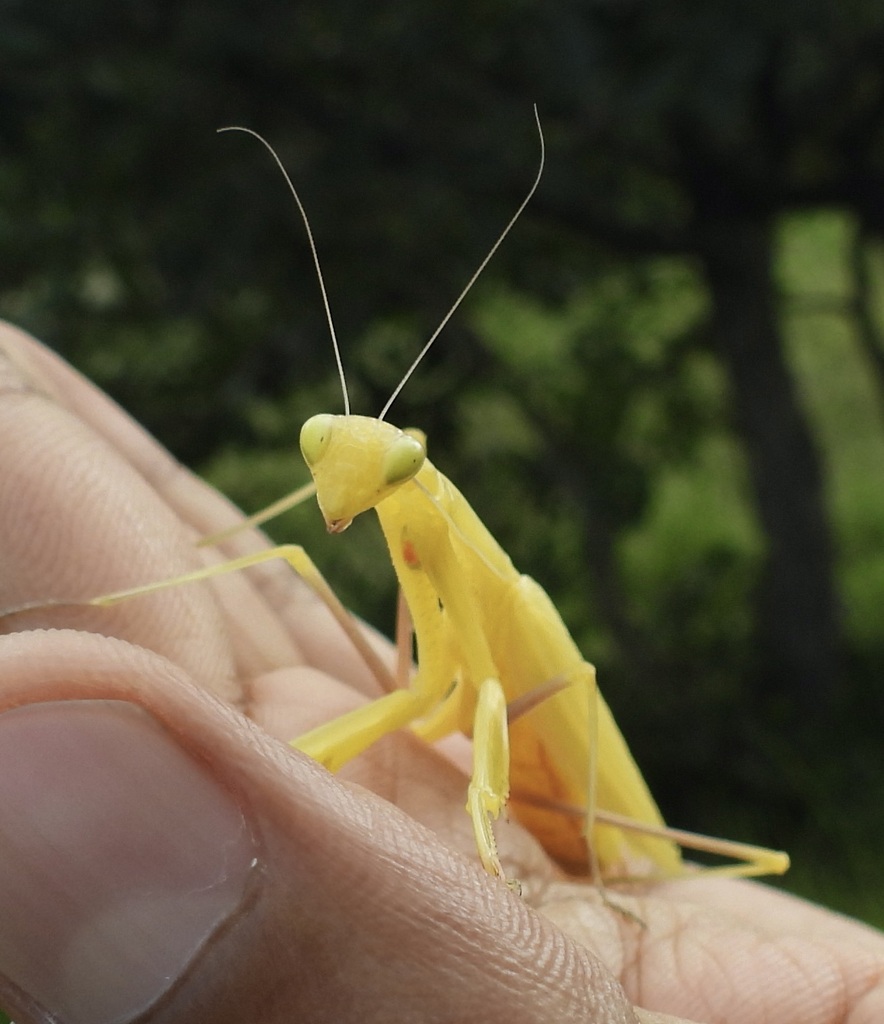
European mantis
Mantis religiosa
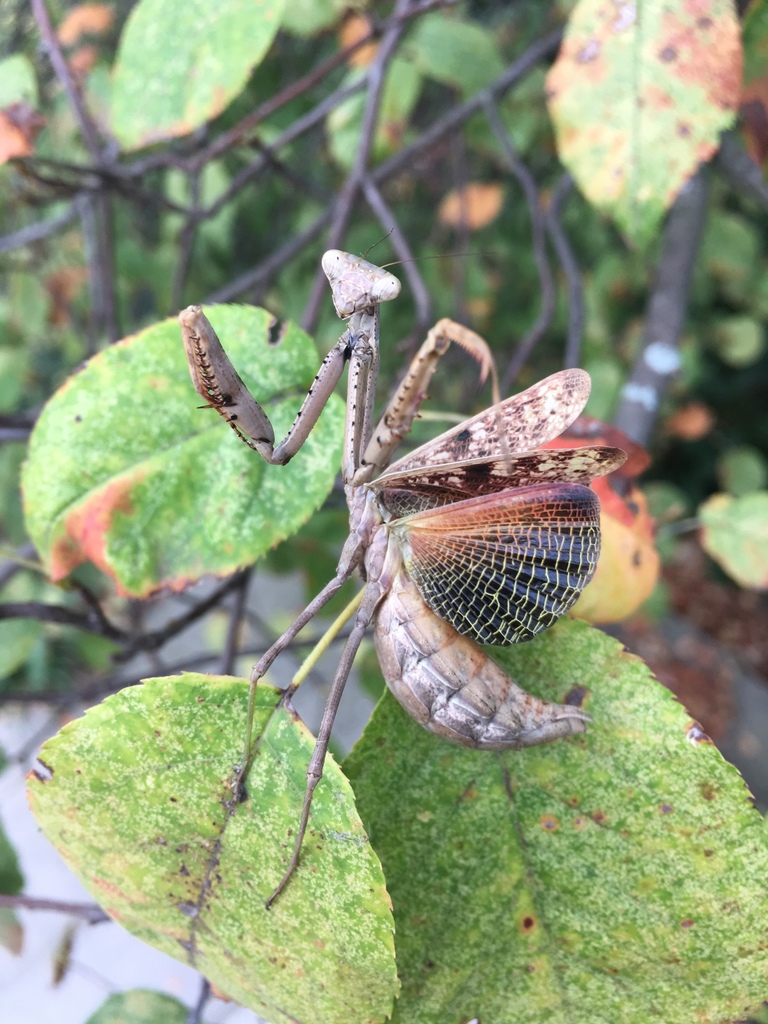
Carolina mantis
Stagmomantis carolina
≠The key differences
Smaller (about 5-6 cm) and mottled grey-brown or green; females' wings cover only about two-thirds of the abdomen, and it lacks the black coxal spot. Native to much of the United States.
Similar posture but usually larger and has a distinctive black spot on the inner foreleg; European mantis less common in most of the Carolina mantis range.
⚖︎Side by side
| European mantis | Carolina mantis | |
|---|---|---|
| To humans | Non-toxic | Non-toxic |
| Size | About 45-75 mm body length (females usually larger than males) | About 45-60 mm body length (females larger than males) |
| Colours | Green, Brown, Beige, Black, Yellow | Green, Brown, Tan, Cream |
| Family | Mantidae | Mantidae |
| Habitat | Meadows, gardens, hedgerows, shrubs and tall grasses—places with perches and abundant insect prey | Gardens, shrubs, hedgerows, forest edges, grassland margins |
| Range | Native to Europe, parts of Asia and North Africa; established introduced populations in North America and other regions | Eastern, southern and southwestern United States (west to Arizona and Utah), south through Mexico into Central America |
| Active | Nymphs from late spring; adults from mid-summer until the first autumn frosts; mostly diurnal but can be seen at dusk | Late spring through autumn (nymphs in summer); diurnal and crepuscular activity |
| Pest? | No | No |
🔍How to spot an European mantis
- Triangular head with large forward-facing eyes that can swivel independently from the body
- Raptorial front legs with spines used to grasp prey; legs folded in a "praying" posture when at rest
- Elongated prothorax (neck) and a long, tapered abdomen; females bulkier than males
- A black spot, often with a pale centre, on the inner side of each front coxa (the base of the raptorial leg) is the best field mark; body colour is green or brown
🔍How to spot a Carolina mantis
- Triangular head with large, forward-facing eyes and a flexible neck that allows head rotation
- Raptorial front legs with noticeable spines for grasping prey
- Two main color forms: bright green or brown/tan, matching surrounding vegetation
- Females stouter with shorter wings relative to body; males slender with wings extending beyond the abdomen
?Frequently asked questions
What is the difference between an European mantis and a Carolina mantis?
Smaller (about 5-6 cm) and mottled grey-brown or green; females' wings cover only about two-thirds of the abdomen, and it lacks the black coxal spot. Native to much of the United States. Similar posture but usually larger and has a distinctive black spot on the inner foreleg; European mantis less common in most of the Carolina mantis range.
Is an European mantis or a Carolina mantis more dangerous?
European mantis: Non-toxic. Carolina mantis: Non-toxic. Not venomous. Not venomous.
Identification from photos is never certain: don't handle insects you can't identify, and get medical advice for bites, stings or allergic reactions.