
Common scorpionfly
Panorpa communis · Scorpionflies
A harmless, distinctive insect with an upcurved 'scorpion-like' tail in males, found in damp hedgerows and woodland edges across much of Europe.
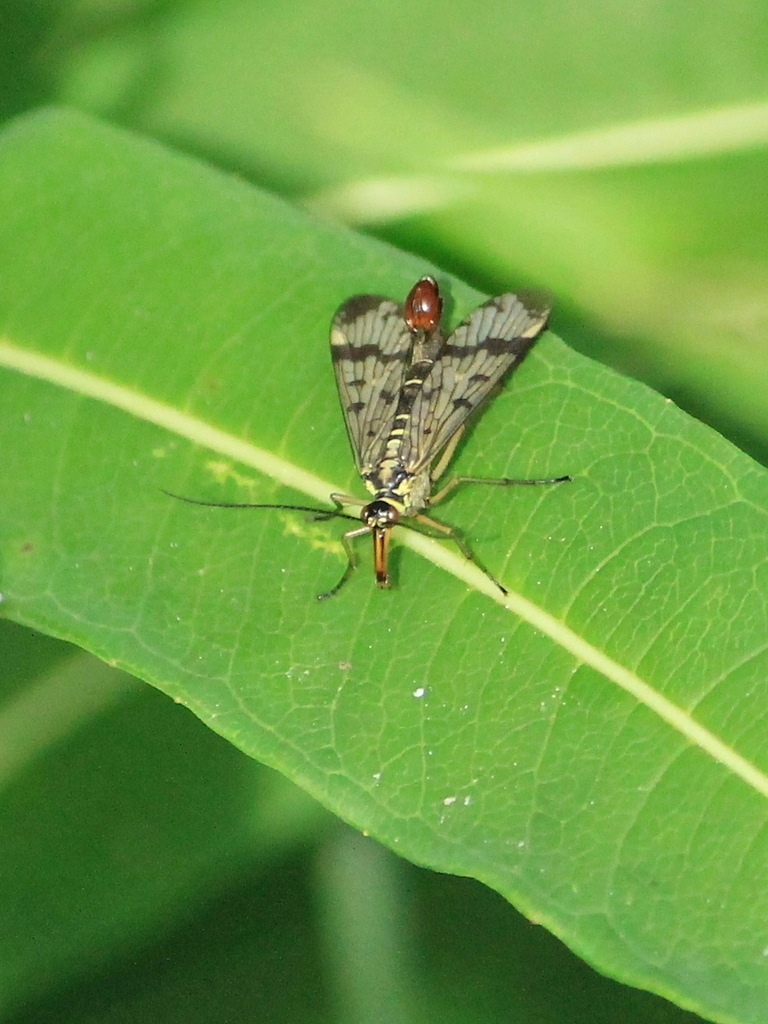
!Is the common scorpionfly dangerous?
No. Panorpa communis does not sting or inject venom. The male's upcurved abdomen may look threatening but is purely reproductive and harmless. They can bite if handled roughly, but bites are rare and not medically significant; wash the area with soap and water if bitten.
Pets
Not known to be harmful to pets. A curious pet might briefly nip an adult, but there is no venom risk.
📖Overview
Panorpa communis is a medium-sized insect in the order Mecoptera known for the males' enlarged, upcurved genital segment that looks like a scorpion's tail. Adults are most often seen in late spring and summer in damp, shaded habitats such as hedgerows, woodland rides and along streams. They are scavengers and predators on small, soft-bodied invertebrates and also feed on nectar and sweet plant fluids. Larvae live in leaf litter or topsoil and feed on decaying organic matter and small invertebrates.
🔍How to identify a common scorpionfly
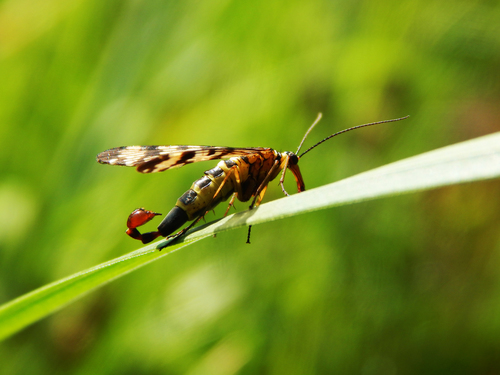
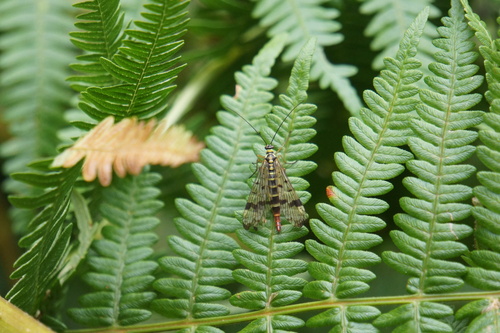
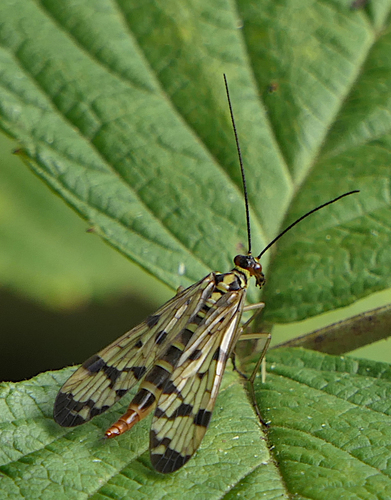
Adults have an elongated body with a relatively large head bearing an elongated rostrum and chewing mouthparts. The wings are narrow, often patterned with dark markings on a paler background. Males have a bulbous, upcurved terminal abdomen that resembles a scorpion tail but is harmless and used for mating; females have a pointed, tapering abdomen tip. Body length is about 15 mm.
- Male with a bulbous, upcurved terminal abdomen that looks like a scorpion 'tail' (harmless).
- Elongated head with a beak-like rostrum and chewing mouthparts.
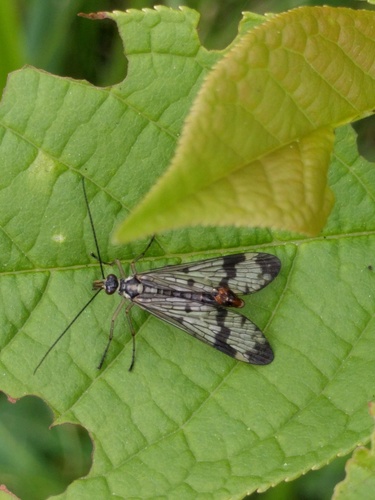
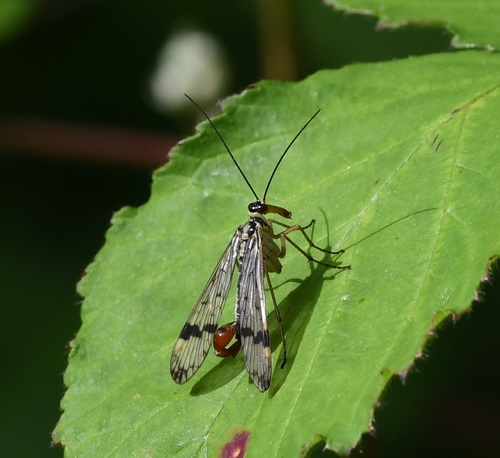
- Narrow wings often with darker mottled markings and pale translucent background.
- Found in damp, shaded vegetation and leaf litter in spring and summer.
Lookalikes
German scorpionfly Panorpa germanica
Panorpa germanica tends to have darker body markings and subtly different wing pattern; genitalia differ but require close examination to confirm.
Scarce scorpionfly Panorpa cognata
A less common relative with similar wing markings; reliable separation from P. communis usually needs examination of the male genital bulb or female genital plate.
↻Life cycle
Egg
Females lay eggs in soil or leaf litter. Eggs hatch after a variable period depending on temperature.
Larva
Larvae are grub-like, live in leaf litter or topsoil, and feed on decaying organic matter and small invertebrates; many populations overwinter as larvae.
Pupa
A short pupal stage occurs in soil or litter before adults emerge.
Adult
Adults are active in spring and summer, feeding on carrion, dead insects, nectar and sugary liquids; males use their distinctive genital bulb to mate.
🍃Diet and predators
Young eat
Detritus and small soil invertebrates (decaying organic matter)
Adults eat
Scavenged dead insects and other invertebrates, nectar, honeydew and sweet plant fluids
Predators of the young
Ground beetles, centipedes, small mammals and birds that forage in leaf litter
Predators of adults
Birds, bats, larger predatory insects and spiders
🌱Effect on plants and gardens
Adults take nectar and sweet plant fluids but do not damage living plants; larvae feed on decomposing plant material and help nutrient recycling
📍Where and when to find it
Adults on low vegetation, flower heads, and near leaf litter; larvae in soil and leaf litter.
Best time
May to September during daylight hours, especially on warm, humid days.
Observation tips
Look in sheltered hedgerows and woodland edges. Photograph the wings and the male tail to help identification; use a shallow depth of field to capture fine wing patterns.
✨Fun facts
- Despite their name and appearance, scorpionflies do not sting; the 'tail' is a male genital structure.
- They often scavenge on dead insects and are sometimes seen feeding on the fluids from dead bees or flies.
- Scorpionflies have chewing mouthparts and a prominent beak-like rostrum that helps them feed on carrion and nectar.
?Frequently asked questions
Are scorpionflies dangerous?
No. Panorpa communis is harmless to people and pets. The male's tail looks like a scorpion but is not a stinger.
Do scorpionflies bite?
They have chewing mouthparts and can nip if handled roughly, but bites are uncommon and not medically significant.
Why is a scorpionfly in my house?
They are attracted to light and to sweet or decaying organic materials. An adult may wander indoors from nearby hedges or vegetation, especially in warm months.
How do I get rid of scorpionflies?
They are harmless and usually leave on their own. To remove one, gently cup it in a jar and release outdoors. To reduce indoor visits, seal gaps, use screens and avoid leaving decaying organic matter or overly ripe fruit accessible.
Where do scorpionflies live?
In damp, shaded habitats with plenty of leaf litter: hedgerows, woodland edges, riverbanks and gardens across much of Europe.
Are scorpionflies pests in the garden?
No. They do not damage living plants and their larvae help decompose organic matter, so they are neither a garden nor household pest.
📷Photos of the common scorpionfly
More other creepy crawlies
This guide was written with AI assistance and fact-checked, last updated 2026-10-10. Identification from photos is never certain: don't handle insects you can't identify, and get medical advice for bites, stings or allergic reactions. More about the common scorpionfly: iNaturalist, Wikipedia.