
Booklouse
Liposcelis bostrychophila · Booklice and barklice
Tiny, wingless psocid often found in damp houses and stored products; feeds on mold, starches and glued bindings but is harmless to people.
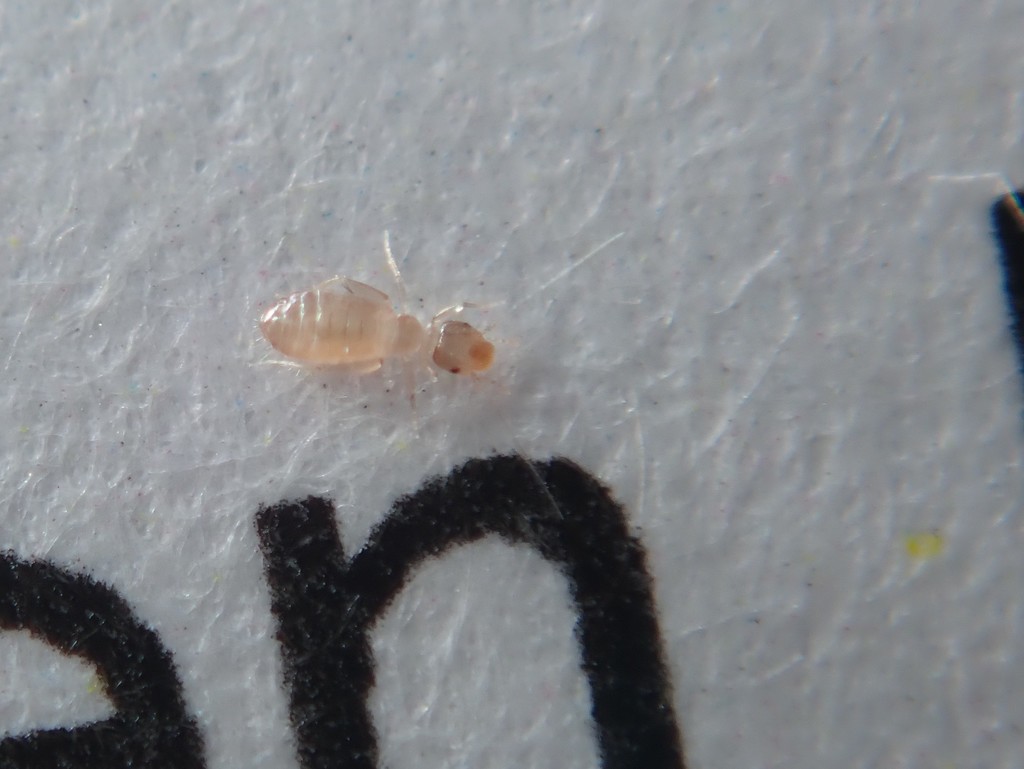
!Is the booklouse dangerous?
No. Booklice do not bite, sting or transmit disease. They can aggravate allergies in sensitive people by producing airborne particles (dead insects, faeces) but this is uncommon. For concerns, remove the infestation and clean surfaces; consult a physician for allergy symptoms.
Pets
Generally harmless to pets. They are not parasitic and do not infest animals.
📖Overview
Liposcelis bostrychophila is a very small, wingless psocid commonly called a booklouse. It thrives in warm, humid indoor environments where mold, mildewed food or starchy adhesives provide food. Populations can build up in stored dry foods, book bindings, wallpaper paste and cardboard. They do not bite or sting and are not venomous, but can be nuisances in homes, libraries and food storage facilities.
These insects prefer damp microhabitats (relative humidity above about 60 percent) and moderate temperatures. They reproduce rapidly under favorable conditions; some populations reproduce parthenogenetically (females produce offspring without mating), which helps infestations grow quickly. Control focuses on reducing humidity, removing moldy material and cleaning or treating infested items.
🔍How to identify a booklouse
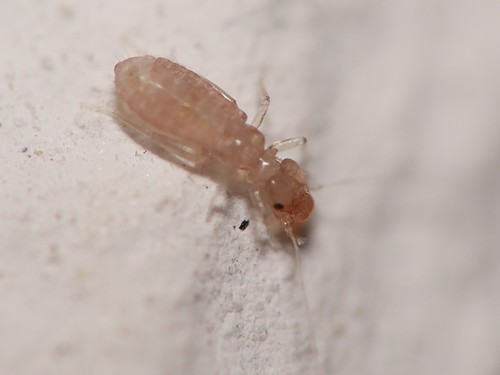
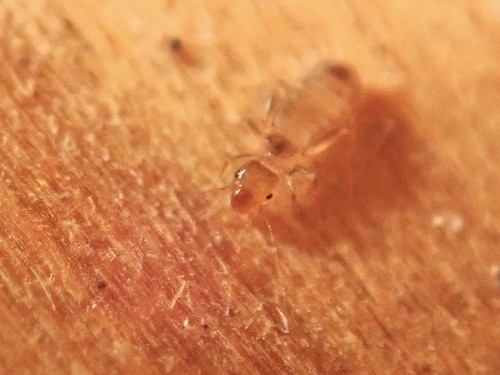
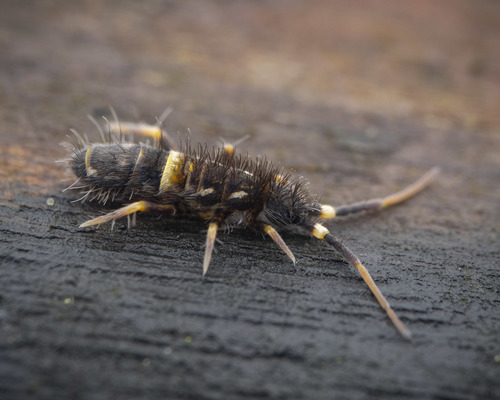
Adults are tiny (less than 2 mm), soft-bodied and usually pale translucent to light brown. They lack functional wings and have a flattened, elongated oval shape with a relatively large head bearing chewing mouthparts. Eyes are small or reduced in some populations. Nymphs look like smaller versions of the adults.
- Very small (under 2 mm), soft-bodied, wingless and flattened
- Pale translucent to light brown color with an elongated oval shape
- Found in damp, moldy areas, inside books, boxes or stored dry foods
- Nymphs look like miniature adults (no distinct caterpillar or grub stage)
Lookalikes
Other booklice Other Liposcelis species
Many Liposcelis species are similar in size and shape; microscopic examination of body setae and genitalia or DNA testing is needed for reliable species-level separation.
Psocids with wings (barklice) Various Psocidae
Winged psocids (barklice) have visible wings and are often found outdoors; L. bostrychophila is wingless and indoor-associated.
↻Life cycle
Egg
Tiny eggs are laid in protected crevices or on food and hatch in days to weeks depending on temperature and humidity.
Nymph
Several nymphal instars resemble small adults and molt repeatedly as they grow; development is faster in warm, humid conditions.
Adult
Wingless adults are capable of feeding and reproducing; some populations reproduce without males (parthenogenesis).
🍃Diet and predators
Young eat
Mildew, fungal spores, microscopic organic films, starches and adhesives
Adults eat
Same as juveniles: mold, starchy materials (book glue, cereals), and other microscopic organic matter
Predators of the young
Predatory mites, small spiders and other tiny arthropod predators
Predators of adults
Small spiders, predatory mites and insectivorous household arthropods
🌱Effect on plants and gardens
Booklice feed on molds, mildews, fungal spores and starchy materials (paper glue, cereal, dried yeast). They do not feed on healthy living plants.
How to get rid of booklice
Reduce indoor relative humidity below about 50 percent and improve ventilation. Remove and discard moldy or damp food and cardboard. Vacuum and clean shelves, book bindings and pantry areas; seal food in airtight containers. For small infested items, freezing at -18 degrees C for several days or heating (above 50 degrees C for a few hours) will kill them. In severe, persistent infestations professional pest control or targeted insecticidal treatments labeled for stored-product psocids may be necessary.
📍Where and when to find it
Look in kitchens, pantries, basements, behind wallpaper, inside cardboard boxes, book bindings and on damp shelving. Eggs and nymphs are in the same hidden microhabitats as adults.
Best time
Year-round indoors; best observed when humidity and temperature are higher (spring to autumn in temperate homes).
Observation tips
Use a bright light and magnifier to spot the tiny insects on the edges of paper or cardboard. Inspect for mold or mildew as an indicator of suitable habitat.
✨Fun facts
- Some populations of L. bostrychophila reproduce by parthenogenesis, so females can produce offspring without mating.
- Despite the common name, booklice are not true lice and are only loosely associated with books because they thrive where paper and glue are damp and mildewed.
- Their small size and preference for hidden, damp microhabitats make them easy to overlook until populations grow large.
?Frequently asked questions
Are booklice dangerous?
No. Booklice do not bite or sting and are not venomous; they are mainly a nuisance and can indicate damp or mold problems.
Do booklice eat books?
They do not eat intact paper but feed on mold and the starchy adhesives in book bindings and wallpaper paste, which can indirectly damage books and paper goods.
Why do I have booklice in my house?
They appear when humidity is high and mold or mildew is present on food, cardboard, wallpaper or book bindings. Damp basements, poor ventilation and leaking plumbing encourage them.
How do I get rid of booklice?
Lower humidity, remove moldy material, clean and vacuum infested areas, store dry foods in sealed containers, and dry or freeze small infested items. For heavy infestations, consult a pest professional.
Can I prevent booklice?
Yes. Keep indoor relative humidity below about 50 percent, fix leaks, increase ventilation, avoid storing paper goods in damp basements and inspect stored foods regularly.
📷Photos of the booklouse
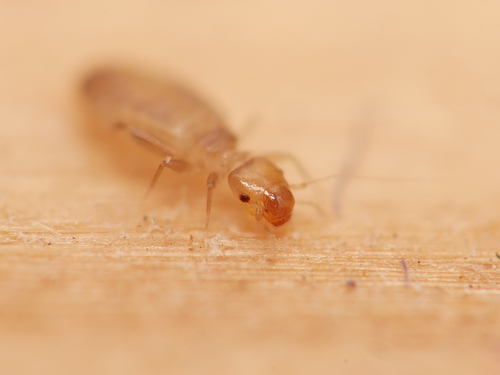
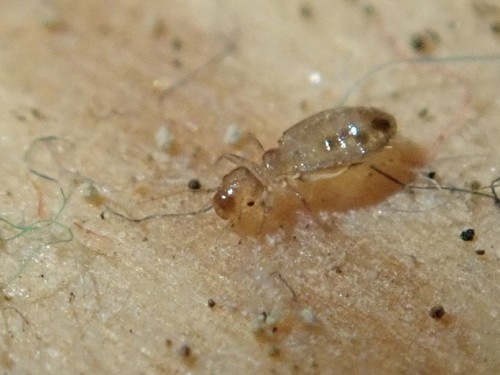
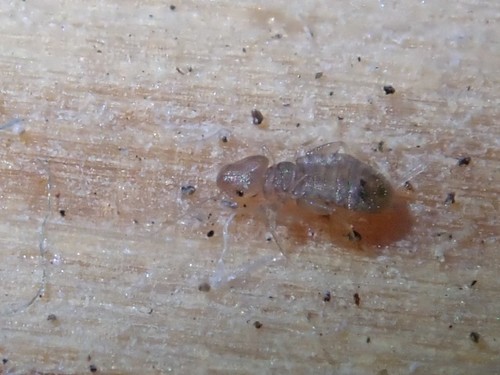
More other creepy crawlies
This guide was written with AI assistance and fact-checked, last updated 2026-10-10. Identification from photos is never certain: don't handle insects you can't identify, and get medical advice for bites, stings or allergic reactions. More about the booklouse: iNaturalist, Wikipedia.