
Oriental cockroach vs Turkestan cockroach
These two are easy to mix up. Here's how to tell an Oriental cockroach from a Turkestan cockroach, and whether either one bites or stings.
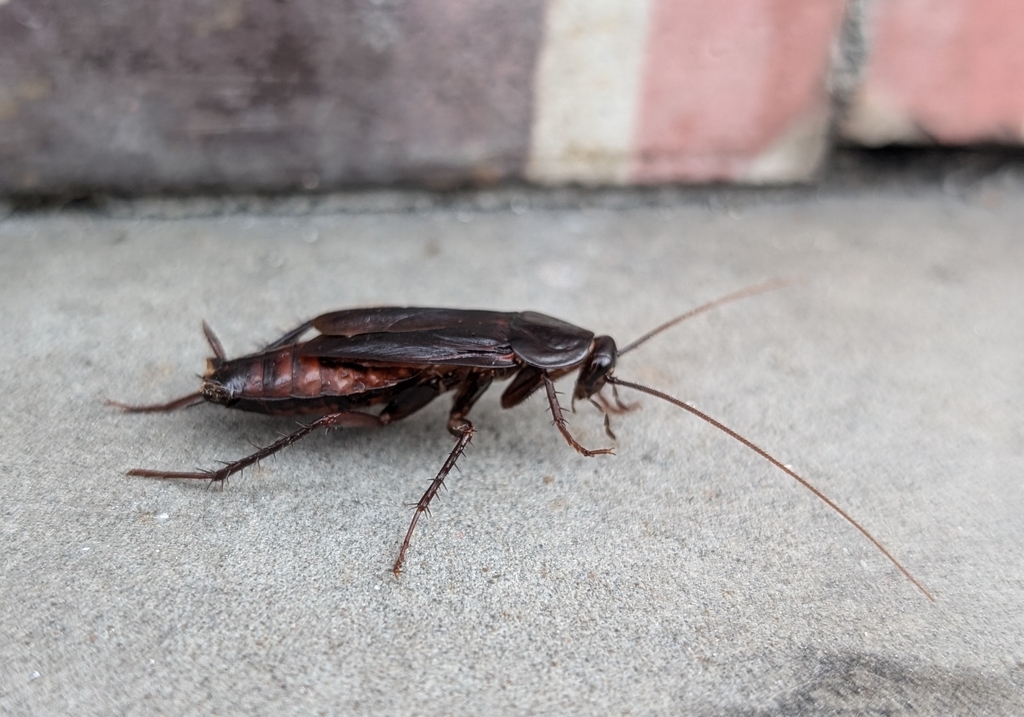
Oriental cockroach
Blatta orientalis
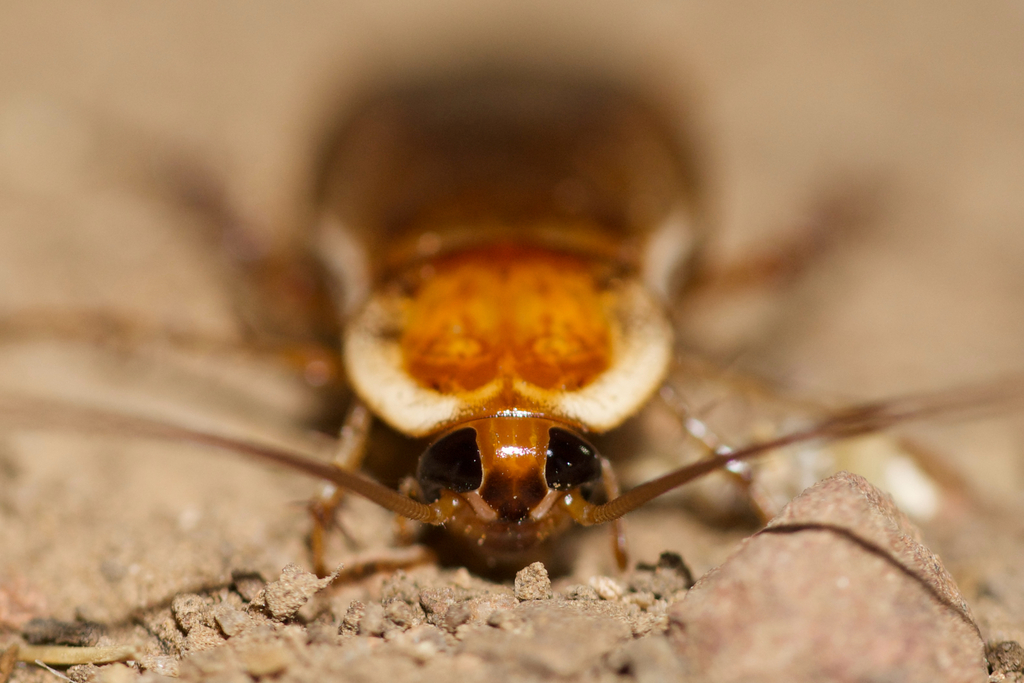
Turkestan cockroach
Shelfordella lateralis
≠The key differences
Oriental cockroaches are larger, darker (nearly black), and have a more sluggish, outdoor/indoor basement preference; Turkestan is lighter and quicker.
⚖︎Side by side
| Oriental cockroach | Turkestan cockroach | |
|---|---|---|
| To humans | Contaminant | Non-toxic |
| Size | Males about 18-25 mm; females about 25-32 mm (body length) | 18-25 mm long |
| Colours | Dark brown, Black, Reddish brown (young nymphs) | Tan, Light brown, Reddish brown, Dark brown |
| Family | Blattidae | Blattidae |
| Habitat | Cool, damp and shaded areas around human buildings: basements, crawlspaces, drains, sewers, leaf litter and compost piles. | Sheltered outdoor sites: water meter and irrigation boxes, cracks in concrete, hollow block walls, mulch, leaf litter and around foundations; will enter buildings. |
| Range | Originally from the Middle East or Mediterranean region; now widespread worldwide in temperate to subtropical regions and commonly established in cities globally. | Native to Central Asia and the Middle East; established in the southern and especially southwestern United States and other warm regions |
| Active | Mostly nocturnal; active year-round in warm buildings, outdoors in temperate climates mainly spring to autumn. | Year-round in warm climates; most active in warm months and at night |
| Pest? | Yes | Yes |
🔍How to spot an Oriental cockroach
- Uniform dark brown to black, glossy, oval body about 18-32 mm long.
- Relatively slow-moving and poor climber; often found at ground level or in drains.
- Males smaller with short wings covering most of abdomen; females larger and broader with only tiny wing pads and no flight.
- Found in cool, damp locations such as basements, crawlspaces, leaf litter, compost and sewers.
🔍How to spot a Turkestan cockroach
- Size 18-25 mm; smaller than many household roaches like the American cockroach
- Males slender and tan with full, cream-edged wings; females dark brown to black with short wing pads and short cream side stripes
- Strong contrast between pale males and dark females found together
- Fast-moving and commonly found outdoors in mulch, leaf litter and near foundations rather than deep inside homes
?Frequently asked questions
What is the difference between an Oriental cockroach and a Turkestan cockroach?
Oriental cockroaches are larger, darker (nearly black), and have a more sluggish, outdoor/indoor basement preference; Turkestan is lighter and quicker.
Is an Oriental cockroach or a Turkestan cockroach more dangerous?
Oriental cockroach: Contaminant. Turkestan cockroach: Non-toxic. Oriental cockroaches do not bite or sting and are not venomous. Turkestan cockroaches do not bite or produce venom.
Identification from photos is never certain: don't handle insects you can't identify, and get medical advice for bites, stings or allergic reactions.