
Spring fishfly
Chauliodes rastricornis · Fishflies
A medium-sized, brown, net-winged insect that emerges in spring near streams; aquatic larvae are predatory and adults are short-lived and harmless to people.
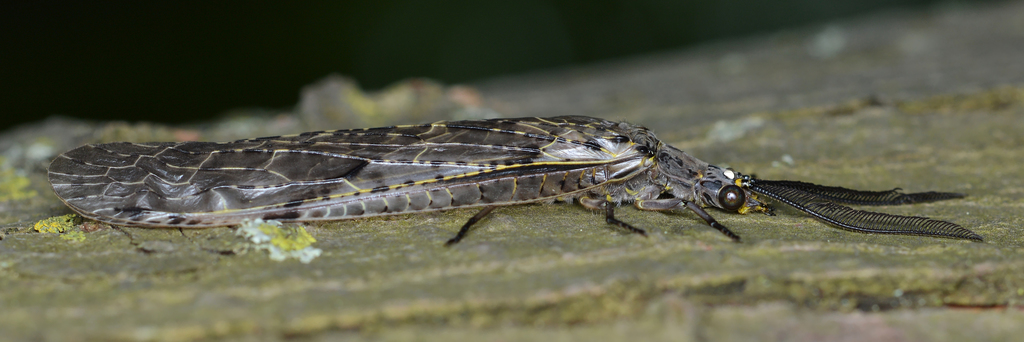
!Is the spring fishfly dangerous?
No. Adults are not venomous and do not pose a health risk. They do not seek to bite people; however, if handled roughly an adult or large larva can give a weak pinch with its mandibles. Standard first aid (wash with soap and water) is adequate for any minor pinch.
Pets
Not toxic to pets. Large larvae could pinch if handled by a pet but serious injury is unlikely. Avoid allowing pets to chew or eat many insects as this can upset their stomach.
📖Overview
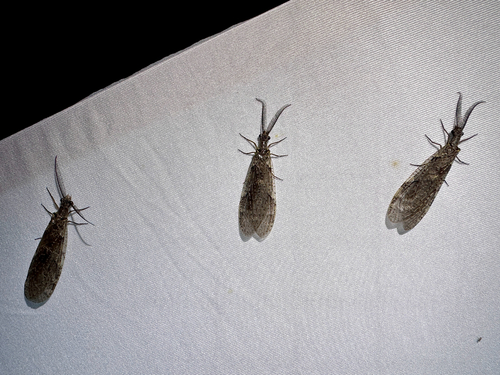
Chauliodes rastricornis is a species of fishfly in the family Corydalidae, found across much of eastern and central North America. Larvae live in ponds, swamps, slow streams and other still or sluggish water and are aquatic predators. Adults emerge in spring (often earlier than other fishflies), are nocturnal, and are commonly attracted to lights. Adults do not feed much and live only a few days to a week, using that time to mate and lay eggs.
This species is not considered dangerous to people. Larvae are ecologically important as predators in freshwater systems. Adults may be a nuisance when attracted to porch lights in spring but are harmless; they can be large and look intimidating because of their veined wings and long bodies.
🔍How to identify a spring fishfly
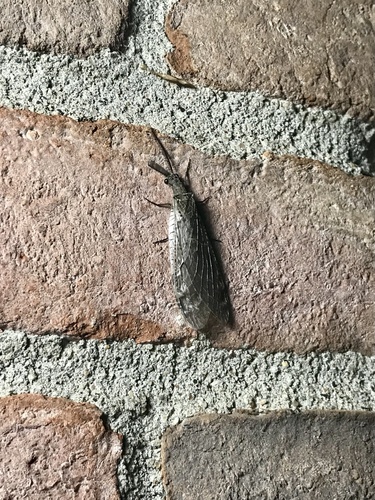
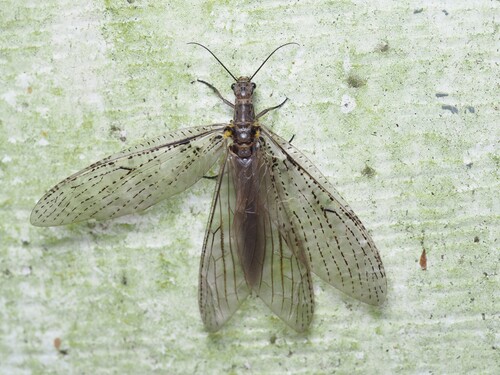
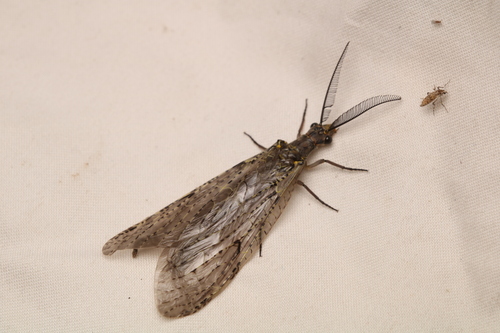
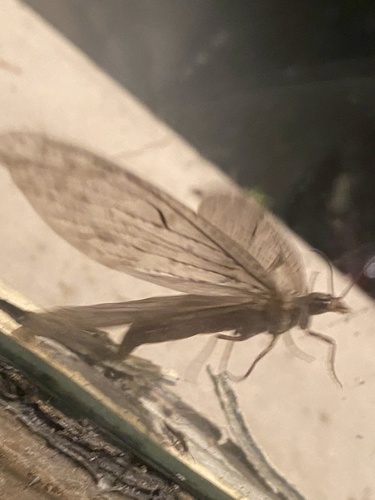
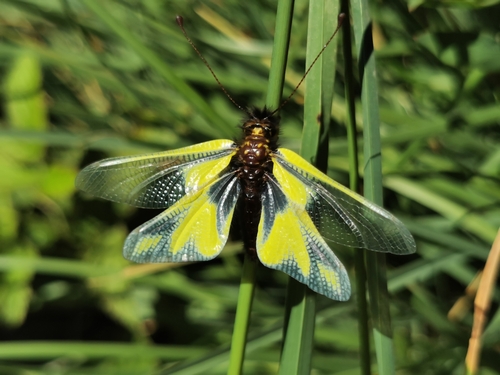
Adults are medium to large (wingspread noticeably broader than body), with two pairs of long, net-veined wings held roof-like over the body when at rest. The overall colour is various shades of brown and tan with mottling and darker veins. Males typically have more strongly comb-like (pectinate) antennae than females. The mouthparts are visible but not adapted for biting people; the body is elongated with slender legs and sometimes short terminal filaments at the tip of the abdomen.
- Mottled brown, net-veined wings held roof-like over the body.
- Wingspan about 55-90 mm with elongated body; males often have comb-like (pectinate) antennae.
- Adults appear in spring and are attracted to lights at night; location near streams supports identification.
Lookalikes
Summer fishfly Chauliodes pectinicornis
C. pectinicornis typically flies later in summer and may have slightly different wing patterning; careful comparison of antennae and flight season helps separate them.
Dobsonfly Corydalus spp.
Dobsonflies (Corydalus) are generally larger with more robust mandibles (males especially) and later seasonal flights; larvae (hellgrammites) are similar but usually larger.
↻Life cycle
Egg
Females lay clusters of eggs on vegetation, rocks or other surfaces near water; eggs hatch in days to weeks depending on temperature.
Larva (aquatic)
Larvae are aquatic predators that live among leaf litter, logs and debris in ponds, swamps and slow streams for 1-3 years, feeding on other aquatic invertebrates.
Pupa
Mature larvae leave the water to pupate in damp soil or under debris near the stream bank; pupation lasts days to weeks.
Adult
Adults emerge in spring, mate, and lay eggs; adults are short-lived (days to about a week) and are mainly nocturnal.
🍃Diet and predators
Young eat
Aquatic predators: other insect larvae, small crustaceans and similar invertebrates
Adults eat
Adults feed little or not at all; if they feed it may be on nectar or nothing significant is recorded for this species
Predators of the young
Fish, larger aquatic insects, amphibians and some wading birds
Predators of adults
Bats, night-flying birds, spiders and predatory insects
🌱Effect on plants and gardens
Adults do not feed on plants in any significant way and have little direct impact on vegetation or gardens.
📍Where and when to find it
Look for adults near ponds, swamps, slow streams and lights at night in spring. Larvae are found among leaf litter and debris in still or slow-moving water.
Best time
Best observed in spring months (roughly April-June in much of its range), mostly after dark when adults are attracted to lights.
Observation tips
Photograph adults against a light background to show wing venation and antennae; when searching for larvae, check leaf litter and debris in ponds and slow streams but handle gently and return specimens to the water.
✨Fun facts
- Fishfly larvae are close relatives of hellgrammites (dobsonfly larvae) and, like them, are sometimes used as fish bait.
- Despite their fearsome look, adult fishflies are harmless to people and live only a few days.
- Chauliodes rastricornis is one of the early-season fishflies, so you may see adults in spring before many other large aquatic insects emerge.
?Frequently asked questions
Are spring fishflies dangerous?
No. They are not venomous and do not spread disease. They can give a minor pinch if handled but are otherwise harmless.
Do spring fishflies bite?
Adults do not normally bite people. Larvae have mandibles for capturing prey but are not known to bite humans except possibly to pinch if handled.
Why are fishflies in my house?
Adults are attracted to artificial lights at night and may fly into porches, garages or homes near streams during their spring emergence.
How do I get rid of fishflies?
Turn off or shield outdoor lights, keep doors and windows screened, and remove attracted insects with a sweep or vacuum. Controlling larval populations is not practical or desirable; they are a natural part of healthy wetlands and streams.
Where do spring fishfly larvae live?
Larvae live among leaf litter, logs and debris in ponds, swamps and slow streams, where they breathe through tubes at the tail end; they are predators of other aquatic invertebrates.
📷Photos of the spring fishfly
More lacewings, antlions & dobsonflies
This guide was written with AI assistance and fact-checked, last updated 2026-10-10. Identification from photos is never certain: don't handle insects you can't identify, and get medical advice for bites, stings or allergic reactions. More about the spring fishfly: iNaturalist, Wikipedia.