
Owly sulphur
Libelloides coccajus · Owlflies
A striking yellow-and-black daytime predatory insect of sunny meadows in southern Europe, harmless to people and helpful as a predator of small flying insects.
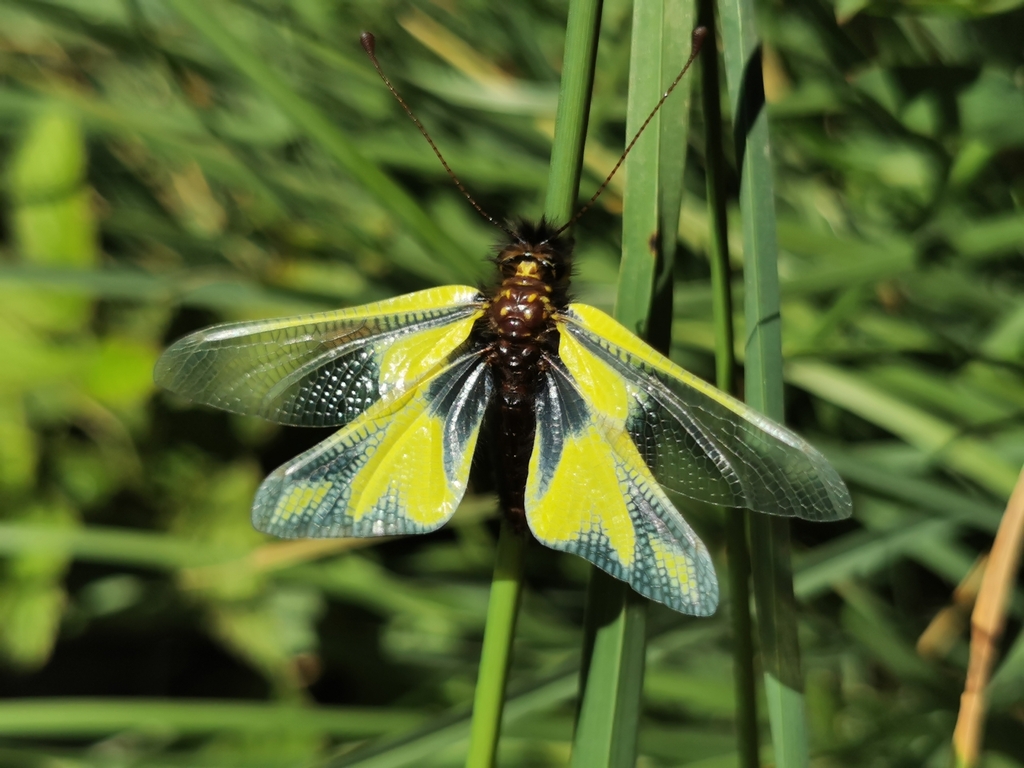
!Is the owly sulphur dangerous?
No. Not venomous and not dangerous. Adults do not sting; they may bite defensively if handled and could cause a mild pinch but no lasting harm. Clean and disinfect any break in skin from a bite as with any minor wound.
Pets
Generally not a threat to pets. A pet that chews or swallows an adult could cause mild mouth irritation or brief gastrointestinal upset, but the species is not known to be toxic to cats or dogs.
📖Overview
Libelloides coccajus, commonly called the owly sulphur, is an owlfly found in southwestern and south-central Europe. Adults are diurnal, often seen flying in sunshine above grassland, open scrub and rocky slopes hunting small flying insects. They have a wasp-like flight and large, clubbed antennae that make them look superficially like a cross between dragonflies and butterflies.
Larvae are ground-dwelling, sit-and-wait predators that capture small arthropods; they pupate in a silken cocoon close to the ground. The species is neither harmful nor a pest to people or gardens — adults and larvae eat other small insects and can be considered beneficial predators.
🔍How to identify an owly sulphur
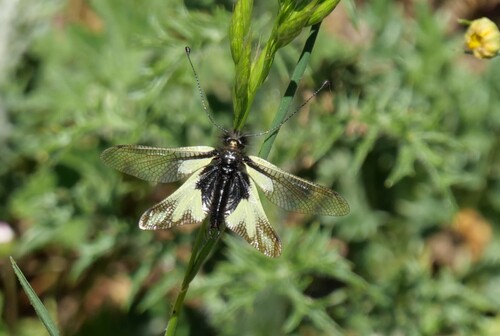
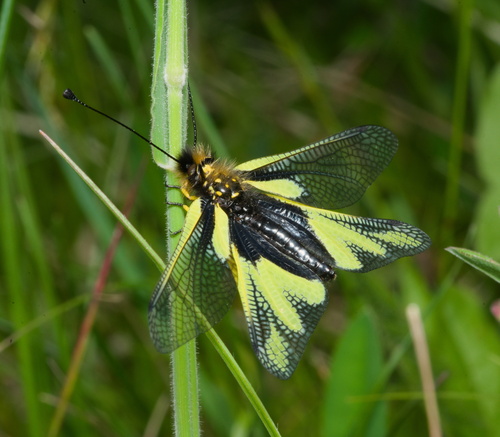
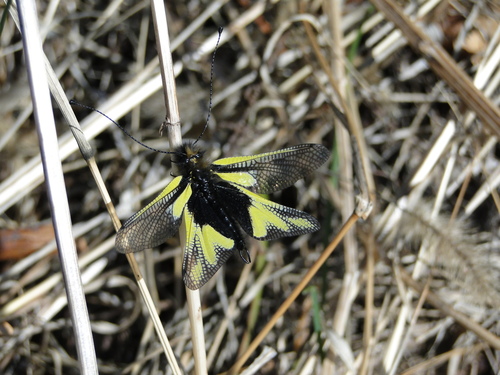
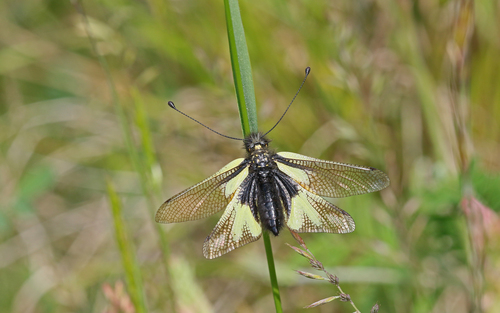
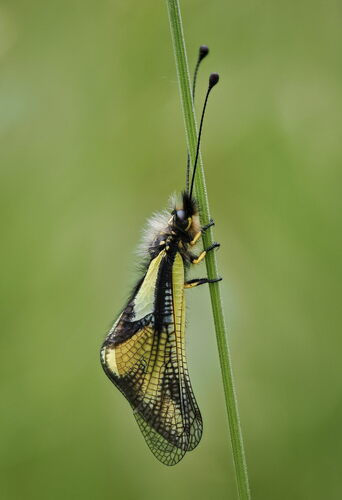
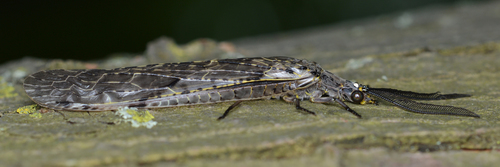
Adults have long, narrow fore- and hindwings with a bright sulphur-yellow background and distinct black markings or spots toward the wing tips and along the veins. The body is slender and typically darker (brown to black) with yellow markings. Antennae are long with a noticeable clubbed tip. At rest they perch on grass stems with the wings folded roof-like over the body. Males and females are similar in colour and pattern; wing markings can vary individually but the yellow-and-black contrast is characteristic.
- Bright sulphur-yellow wings with bold black spots or markings near the wing tips
- Long, clubbed antennae (typical of owlflies) held forward when perched
- Diurnal habit: often seen flying in sunshine above grasses and low shrubs
- When perched, wings are held roof-like over the body; in flight the yellow-and-black wings flash brightly.
Lookalikes
Other Libelloides spp. Libelloides spp.
Several related species, such as L. longicornis and L. ictericus, share yellow-and-black wings; but close comparison of wing markings, location and flight time is needed for exact ID.
↻Life cycle
Egg
Females lay small batches of eggs on vegetation or near the ground. Eggs hatch after days to weeks depending on temperature.
Larva (antlion-like)
Larvae are ground-dwelling ambush predators that wait under debris or vegetation and capture small arthropods with strong mandibles.
Pupa
Larvae pupate in a silken cocoon among soil, leaf litter or low vegetation before emerging as adults.
Adult (owlfly)
Adults are active daytime hunters with long clubbed antennae and bright yellow-and-black wings; they mate and lay eggs during the flight season.
🍃Diet and predators
Young eat
Small arthropods and insect larvae captured on the ground
Adults eat
Small flying insects such as flies and other soft-bodied insects caught in flight
Predators of the young
Ground predators such as spiders, ants, ground beetles and small vertebrates
Predators of adults
Birds, larger predatory insects and spiders
🌱Effect on plants and gardens
Does not feed on plants; adults and larvae prey on other insects, so they can help control small pest flies and other soft-bodied insects.
📍Where and when to find it
Adults: flying above tall grasses, herbaceous vegetation and scrub. Larvae: among leaf litter, under stones or low vegetation where they ambush prey.
Best time
Best seen April to June on warm sunny days, typically late morning to mid-afternoon when temperatures are warm.
Observation tips
Look for bright yellow wing flashes above grassland and slopes; approach slowly and use a telephoto or macro lens. Perched adults fold their wings, so flight shots or cool early-morning adults warming in the sun show the wing pattern best.
✨Fun facts
- Despite looking a bit like little dragonflies, owlflies belong to a different Neuroptera family and are more closely related to lacewings and antlions.
- They are day-active predators — unlike many other Neuroptera that are nocturnal or crepuscular.
- The common name 'owlfly' comes from their large eyes and long antennae, giving them an owl-like face.
?Frequently asked questions
Are owly sulphur (Libelloides coccajus) dangerous?
No. They are not venomous or poisonous to humans. They do not sting; handling can provoke a defensive bite that is only a mild pinch.
Do owly sulphur bite people?
Bites are rare and usually only if the insect is handled roughly. Any bite would be mild and not medically significant.
Why is an owlfly in my house?
Adults may accidentally enter houses when flying near sunny windows or lights. They prefer outdoor sunny habitats and usually leave quickly if given a way out.
How do I get rid of an owlfly in my home?
Gently capture it in a jar and release outdoors in a sunny garden or near its habitat. Avoid killing them — they are harmless and beneficial predators.
Where does Libelloides coccajus live?
Sunny meadows, open scrub, rocky slopes and edges of woodland in southwestern and south-central Europe, from Spain through France and Italy to Switzerland and southern Germany.
📷Photos of the owly sulphur
More lacewings, antlions & dobsonflies
This guide was written with AI assistance and fact-checked, last updated 2026-10-10. Identification from photos is never certain: don't handle insects you can't identify, and get medical advice for bites, stings or allergic reactions. More about the owly sulphur: iNaturalist, Wikipedia.