
Ring-legged earwig
Euborellia annulipes · Earwigs
A wing-reduced, nocturnal earwig with pale legs banded with dark rings; a harmless omnivore that often shelters in moist places around buildings.
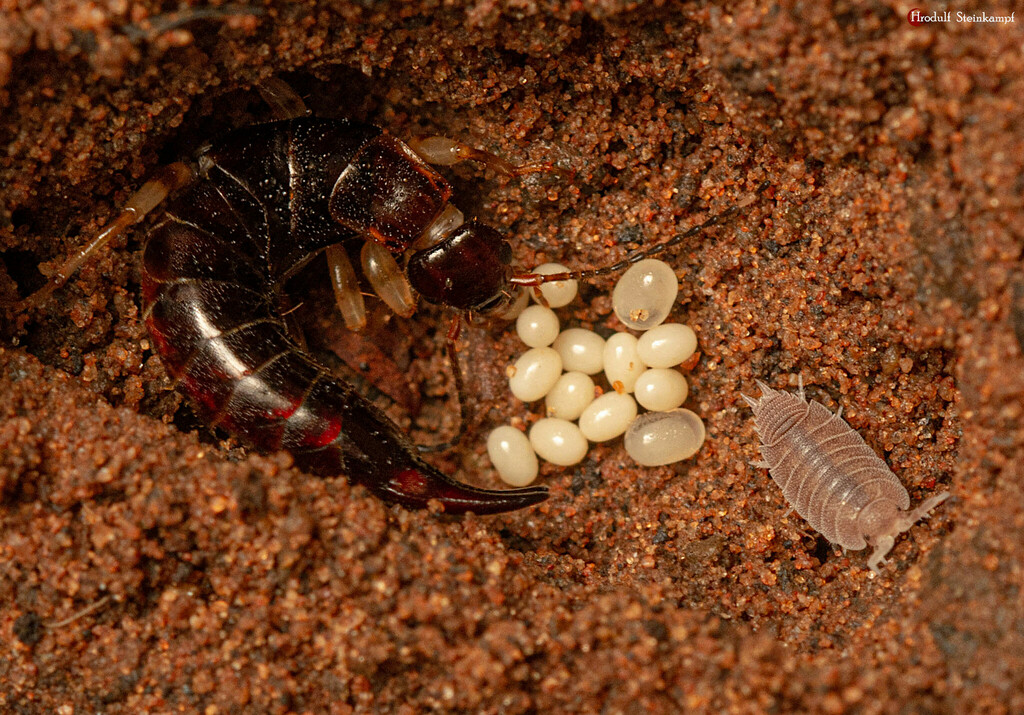
!Is the ring-legged earwig dangerous?
No. Not venomous or disease vectors. Can pinch with cerci; pinch may be painful and rarely break skin but serious injury is uncommon. Wash and clean any wound; seek medical care if there are signs of infection or persistent pain.
Pets
Not toxic to pets. A pinch could annoy small animals but the species does not pose a health threat to pets.
📖Overview
Euborellia annulipes is a medium-sized earwig found in warm temperate to tropical regions worldwide. Adults are generally active at night, hiding by day in soil crevices, under bark, stones, mulch and in damp basements or garden debris. They are omnivores and opportunistic predators, feeding on small invertebrates, plant material and decaying organic matter. Females show maternal care common to many earwigs, guarding eggs and young nymphs.
This species tolerates disturbed and synanthropic habitats, which is why it is often encountered in and around homes, greenhouses and gardens. It is not dangerous to people or pets: the pincers (cerci) are used for defense and handling prey, not for biting or injecting venom.
🔍How to identify a ring-legged earwig
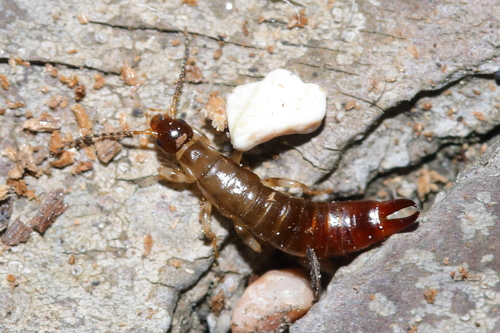
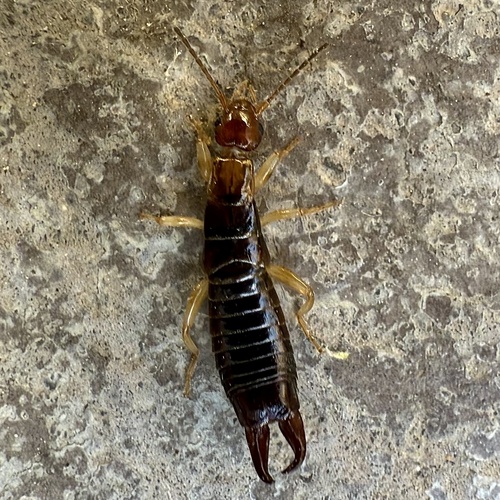
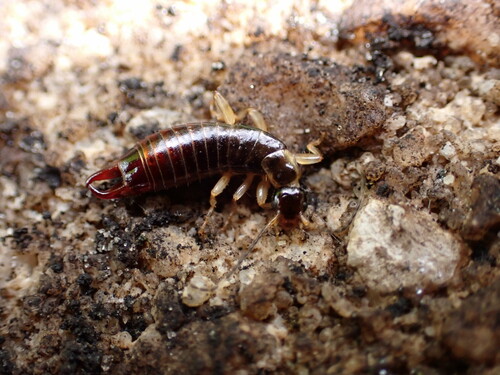
Adults are elongated, somewhat flattened insects 10-25 mm long with forceps-like cerci at the rear. They are usually uniformly dark brown to black on the body with pale yellowish legs that show a dark ring on the femur and tibia (hence the common name 'ring-legged'). Wings are either absent or highly reduced; adults typically do not fly. Males and females differ slightly in shape of the cerci (males often have more curved or clamped cerci). Nymphs resemble small, paler adults and go through several molts before reaching maturity.
- Body 10-25 mm, elongated and flattened with prominent forceps-like cerci at rear
- Pale yellowish legs with dark rings (bands) on the femora and tibiae, contrasting with the dark brown to black body
- Wings absent or very reduced (typically does not fly), unlike some other earwig species
- Nocturnal habit and preference for moist, sheltered microhabitats
Lookalikes
Common earwig Forficula auricularia
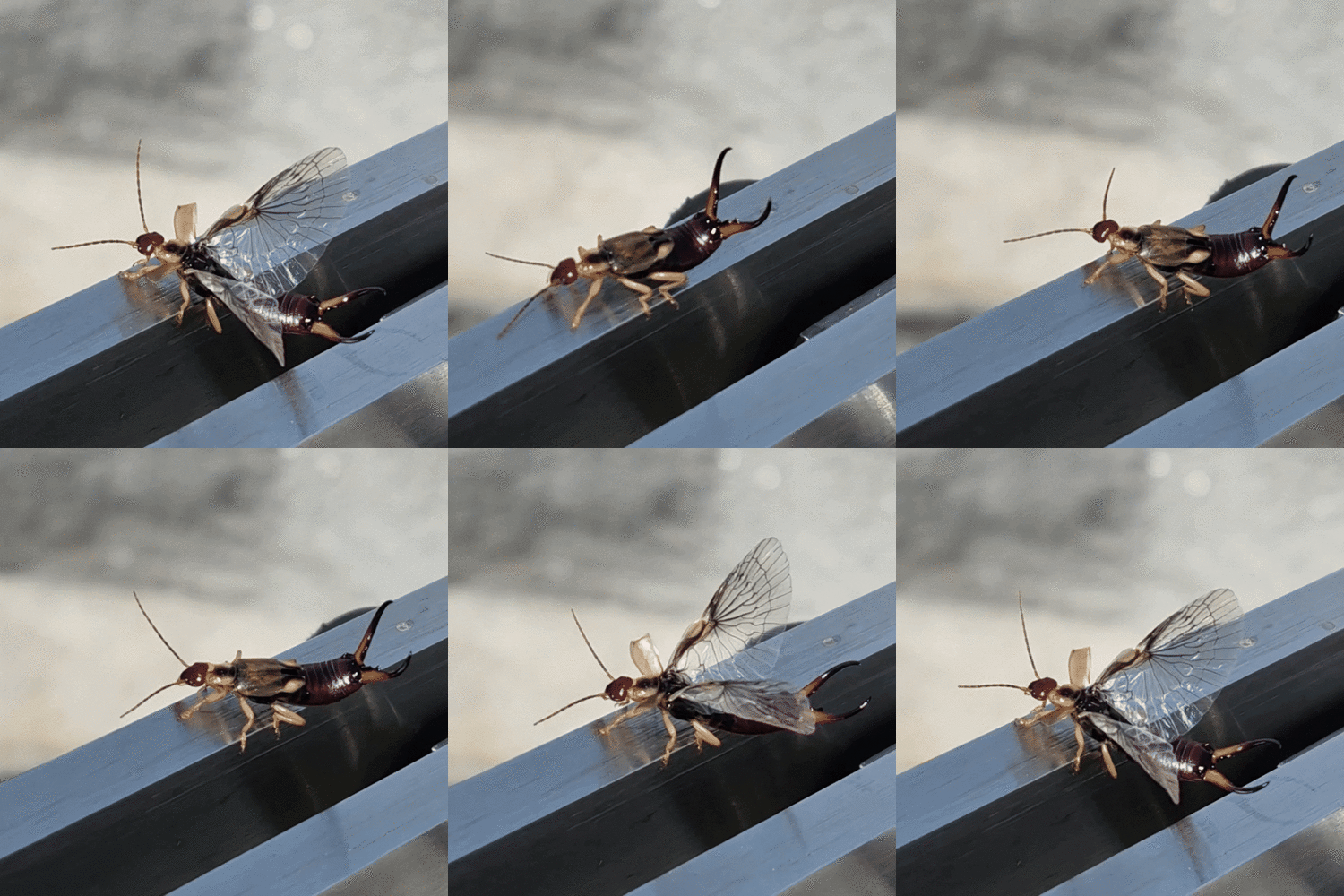
Forficula auricularia usually has fully formed wings, a paler reddish-brown body and plain, unbanded legs; its forceps are broader at the base, strongly curved in males.
Maritime earwig Anisolabis maritima
Also wingless and dark, but larger (up to about 30 mm), usually found on seashores under debris, and its legs lack the distinct dark rings.
↻Life cycle
Egg
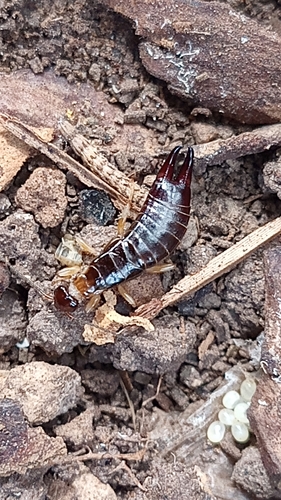
Females lay eggs in an underground or sheltered nest and guard them; eggs are clustered and kept clean by the female.
Nymph (juvenile)
Nymphs emerge from eggs and resemble small adults, undergoing several molts (instars) while the female may continue to guard them.
Adult
Sexually mature adults with forceps-like cerci; reproduce and continue the species' lifecycle. Adults may overwinter in temperate regions in sheltered sites.
🍃Diet and predators
Young eat
Small invertebrates, decaying organic matter and plant material
Adults eat
Omnivorous: predators of small arthropods, scavenger of decaying plant material, and occasional feeder on soft plant tissue or fruit
Predators of the young
Ground predators such as spiders, ants, ground beetles, birds and small mammals
Predators of adults
Same as juveniles; also larger predatory insects and nocturnal birds or mammals
🌱Effect on plants and gardens
Feeds opportunistically on decaying plant matter and occasionally soft fruits or seedlings; typically not a major garden pest but can nibble tender seedlings or soft fruit under certain conditions.
How to get rid of ring-legged earwigs
Reduce outdoor moisture and hiding places: remove piles of mulch, leaf litter, stacked wood and stones near foundations. Seal cracks and gaps around doors, windows and foundations. Use sticky traps or rolled newspaper traps near infestations at night. In severe cases, targeted insecticide perimeter treatments can reduce numbers; follow label directions and consider a pest-management professional for large infestations.
📍Where and when to find it
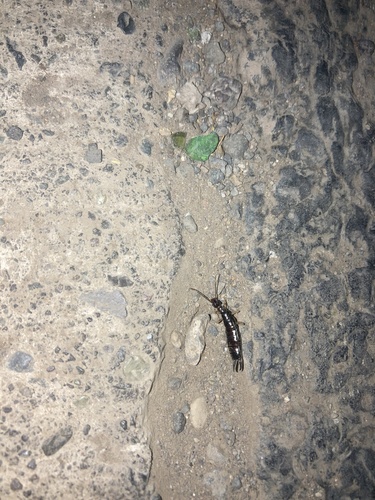
Look under stones, logs, bark, leaf litter, in mulch and in damp basements or sheds. At night, check walls, potted-plant soil and window wells.
Best time
Spring through autumn in temperate areas; nocturnal activity is highest after rain or in humid conditions.
Observation tips
Search at night with a flashlight and gently disturb sheltering material. A shallow container with damp rolled paper can act as a trap for photographing or collecting.
✨Fun facts
- Earwig mothers commonly guard eggs and newly hatched young — a rare example of parental care in insects.
- Despite myths, earwigs do not crawl into human ears to nest; they prefer dark, moist crevices.
- Many Euborellia species are wing-reduced or wingless, adapted to a ground-dwelling lifestyle.
?Frequently asked questions
Do ring-legged earwigs bite or sting?
No venomous bite or sting. They can pinch with their cerci; this may hurt but is not medically dangerous for most people.
Why is an earwig in my house?
They enter seeking moisture and shelter, especially in basements, bathrooms, kitchens, potted plants, or after heavy rain.
Are ring-legged earwigs harmful to gardens?
Usually not a major pest — they mostly scavenge and eat small insects, but they can nibble seedlings or soft fruit in high numbers.
How do I get rid of earwigs in my home?
Reduce moisture and remove debris near foundations, seal entry points, use traps (rolled newspaper or sticky traps) placed at night, and consider targeted perimeter treatments for heavy infestations.
Are ring-legged earwigs common worldwide?
Yes — they are widely established in warm temperate and tropical regions and often live near human habitation.
📷Photos of the ring-legged earwig
More earwigs
This guide was written with AI assistance and fact-checked, last updated 2026-10-10. Identification from photos is never certain: don't handle insects you can't identify, and get medical advice for bites, stings or allergic reactions. More about the ring-legged earwig: iNaturalist, Wikipedia.