
European earwig vs Ring-legged earwig
These two are easy to mix up. Here's how to tell an European earwig from a ring-legged earwig, and whether either one bites or stings.
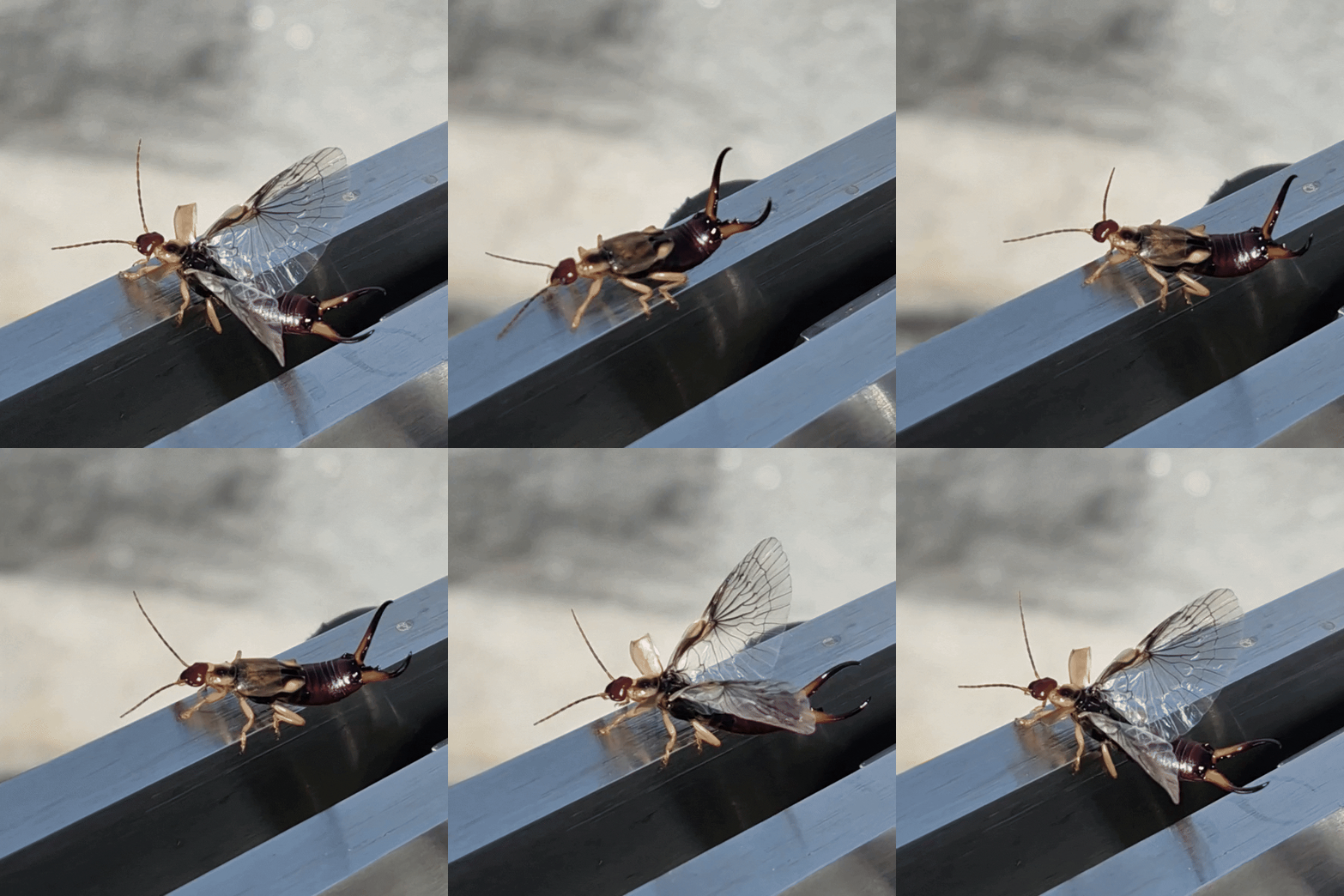
European earwig
Forficula auricularia
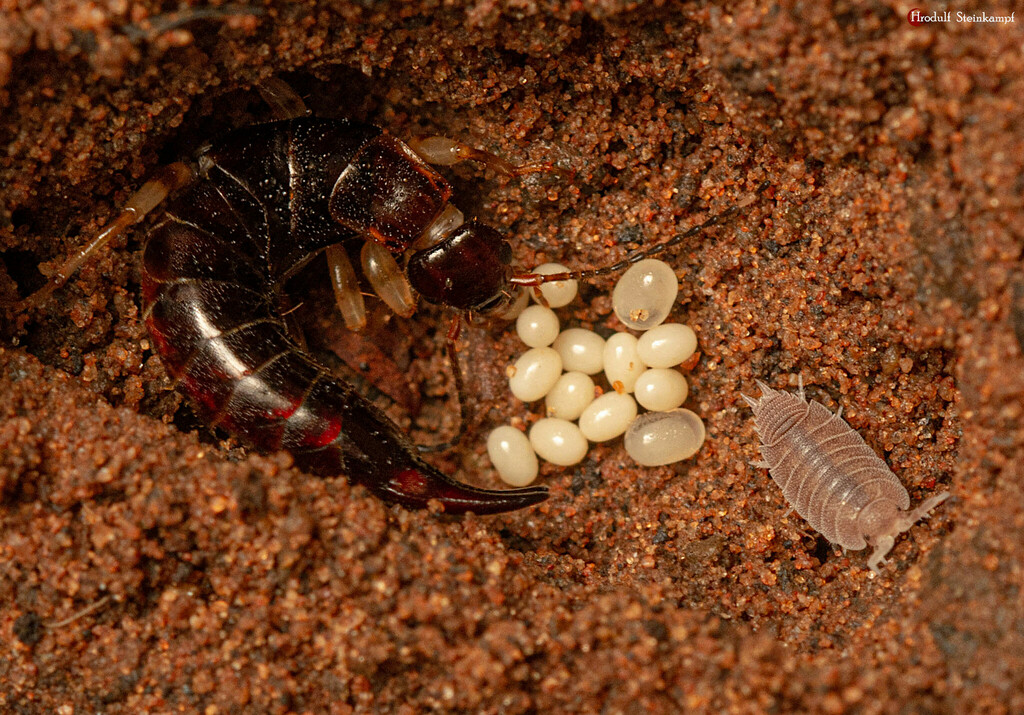
Ring-legged earwig
Euborellia annulipes
≠The key differences
Generally wingless, darker and with less pronounced tegmina; this genus is more common in warmer regions and differs in leg banding.
Forficula auricularia usually has fully formed wings, a paler reddish-brown body and plain, unbanded legs; its forceps are broader at the base, strongly curved in males.
⚖︎Side by side
| European earwig | Ring-legged earwig | |
|---|---|---|
| To humans | Non-toxic pinch | Non-toxic |
| Size | 12-15 mm body length | 10-25 mm body length |
| Colours | Reddish brown, Dark brown, Yellowish tan, Black (antennae and tips) | Dark brown, Black, Pale yellowish (legs) |
| Family | Forficulidae | Anisolabididae |
| Habitat | Moist, sheltered microhabitats: under bark, stones, leaf litter, garden mulch, compost heaps, and occasionally in basements, bathrooms or cracks inside houses. | Moist, sheltered microhabitats: soil, leaf litter, under bark and stones, compost, basements, sheds and greenhouses |
| Range | Native to Europe; introduced and established across North America, parts of South America, Australia, New Zealand and other temperate regions. | Originally from warmer regions but now broadly cosmopolitan in tropical and warm temperate areas; often established near human habitation worldwide |
| Active | Mostly nocturnal; active spring through autumn in temperate regions, with peak activity in warm months and at night. | Primarily nocturnal; active spring to autumn in temperate regions, year-round in warm climates |
| Pest? | Yes | Yes |
🔍How to spot an European earwig
- Look for a 12-15 mm elongated, flattened brown insect with visible forceps-like cerci at the rear.
- Males have more curved and robust cerci; females have straighter, shorter cerci.
- Short leathery forewings and a generally shiny, reddish-brown body distinguish earwigs from beetles or roaches.
- Active at night; inspect under bark, stones, pots and mulch to find hiding earwigs.
🔍How to spot a ring-legged earwig
- Body 10-25 mm, elongated and flattened with prominent forceps-like cerci at rear
- Pale yellowish legs with dark rings (bands) on the femora and tibiae, contrasting with the dark brown to black body
- Wings absent or very reduced (typically does not fly), unlike some other earwig species
- Nocturnal habit and preference for moist, sheltered microhabitats
?Frequently asked questions
What is the difference between an European earwig and a ring-legged earwig?
Generally wingless, darker and with less pronounced tegmina; this genus is more common in warmer regions and differs in leg banding. Forficula auricularia usually has fully formed wings, a paler reddish-brown body and plain, unbanded legs; its forceps are broader at the base, strongly curved in males.
Is an European earwig or a ring-legged earwig more dangerous?
European earwig: Non-toxic pinch. Ring-legged earwig: Non-toxic. European earwigs are not venomous and do not transmit disease. Not venomous or disease vectors.
Identification from photos is never certain: don't handle insects you can't identify, and get medical advice for bites, stings or allergic reactions.