
Shore earwig
Labidura riparia · Earwigs
A relatively large, nocturnal earwig found on riverbanks, coasts and damp habitats; a beneficial predator that can pinch but is not dangerous to humans.
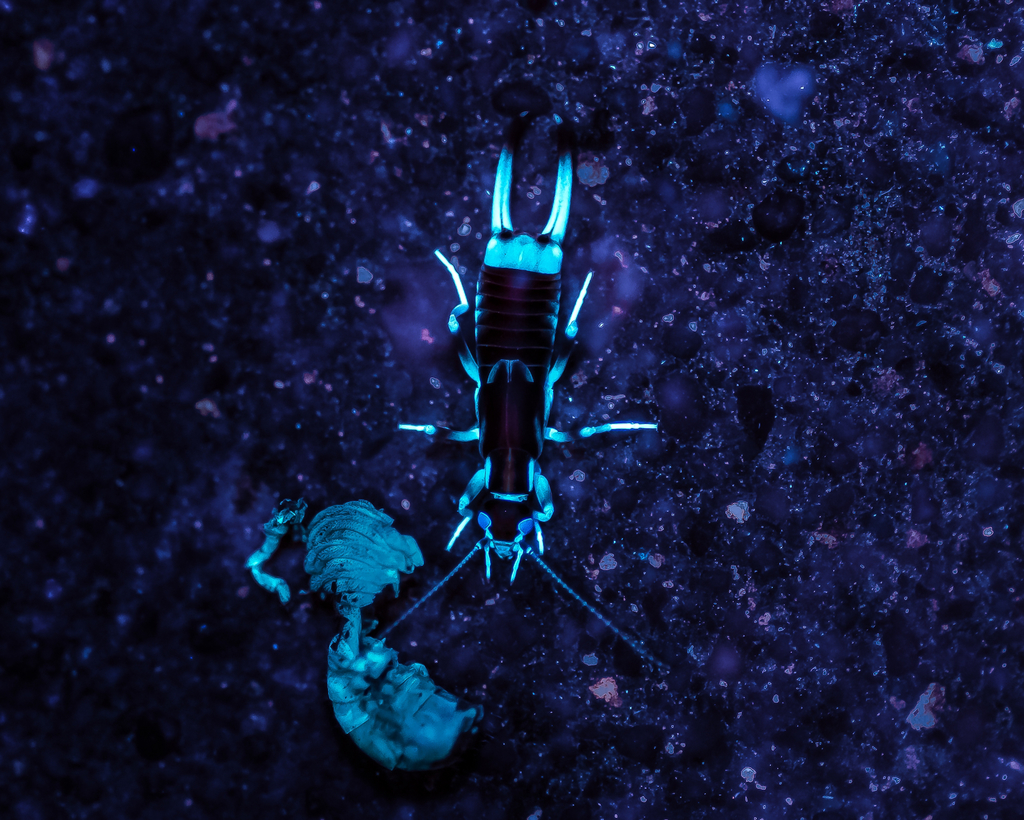
!Is the shore earwig dangerous?
Only mildly. Not venomous. Adults can deliver a pinch with their cerci (forceps) if handled or trapped; this can be painful but is not medically dangerous. Clean any break in skin and apply normal first aid. Seek medical care if a wound becomes red, swollen or shows signs of infection.
Pets
Generally harmless to pets. A bite/pinch is unlikely to break skin on medium or large pets; dogs or cats may try to eat them but earwigs are not known to be toxic to pets.
📖Overview
Labidura riparia is a medium-to-large earwig commonly found in moist, open habitats such as river and lake shores, marsh edges, wet grassland and coastal dunes. It is largely nocturnal and shelters in soil cracks, under stones, wood and vegetation during the day. Adults are predatory, feeding on small invertebrates and carrion, and help control pests in their habitat. They can move quickly and are capable fliers but usually stay close to ground-level refuges.
This species is widespread in Europe, parts of Asia, Africa and has been recorded in other regions through human activity. It is not considered dangerous: adults can pinch with their forceps-like cerci if handled, which can be painful but not medically significant. They are not venomous and do not transmit disease to humans.
🔍How to identify a shore earwig
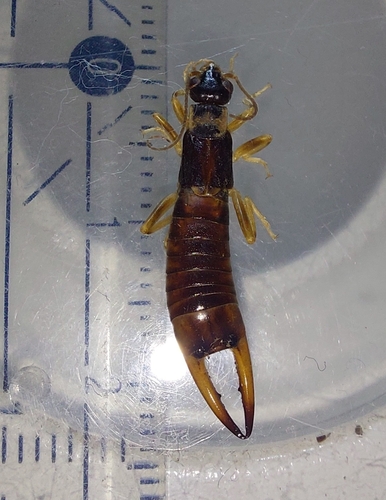
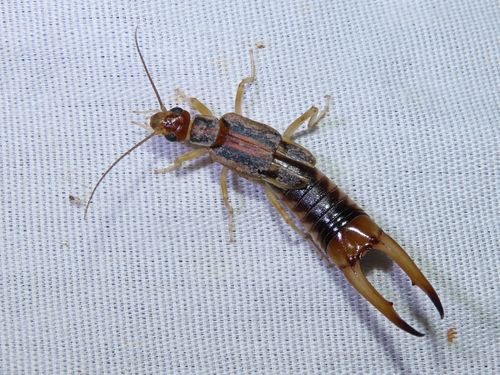
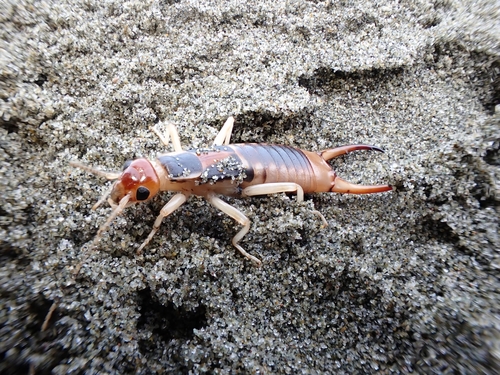
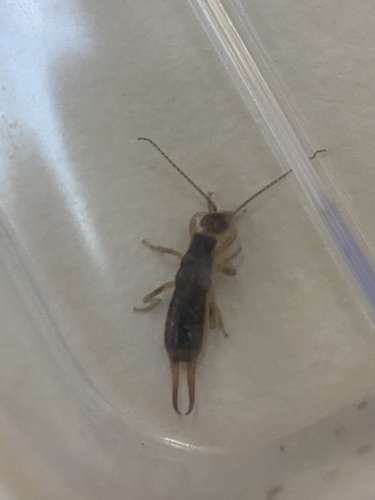
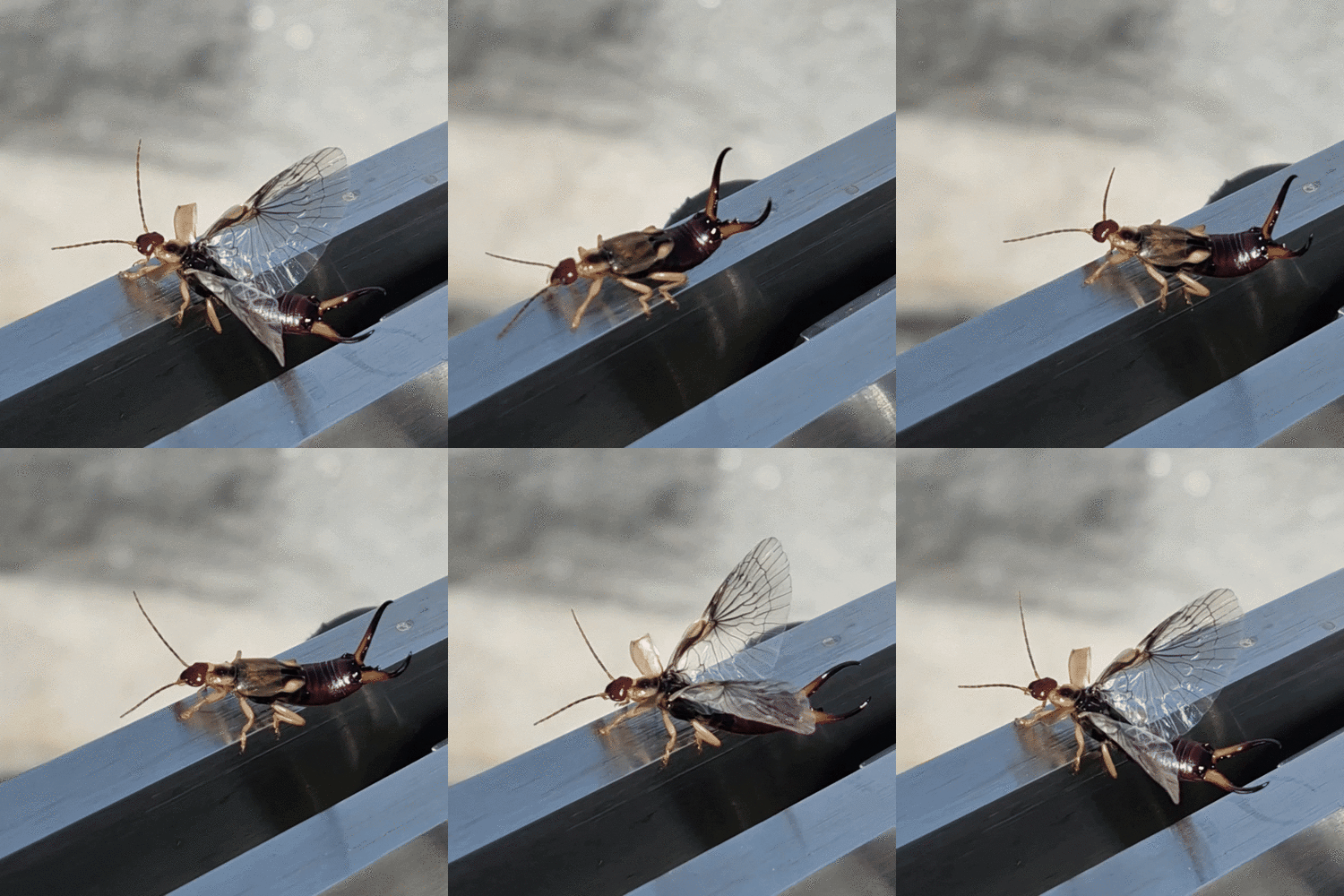
Adults are relatively large for earwigs, typically long and slightly flattened with forceps-like cerci at the tail end. The body is pale yellowish-brown to reddish-brown, usually with darker brown stripes or patches on the pronotum and wing covers, and pale yellowish legs; antennae are long and threadlike. The wings are folded beneath short leathery forewings; adults can fly on occasion. Sexual dimorphism is visible in the shape of the forceps: males have more curved and robust cerci while females have straighter, finer forceps.
- Relatively large earwig, 18-30 mm body length, with distinct forceps (cerci) at rear
- Pale yellowish-brown to reddish-brown body, usually with darker brown stripes on the pronotum and wing covers; legs pale
- Found in damp open habitats such as riverbanks and marsh edges, hiding under stones and debris during day
- Males have more curved, robust forceps while females have straighter, finer ones
Lookalikes
Common earwig Forficula auricularia
Forficula auricularia is generally smaller and more strongly reddish-brown with different body proportions; Forficula commonly occurs in gardens and houses, while Labidura riparia prefers open damp sites.
Maritime earwig Anisolabis maritima
Anisolabis maritima shares coastal habitats but is wingless and uniformly dark brown to black, with a squat, robust body and slightly different cerci shape; geographic range and habitat specifics help separate them.
↻Life cycle
Egg
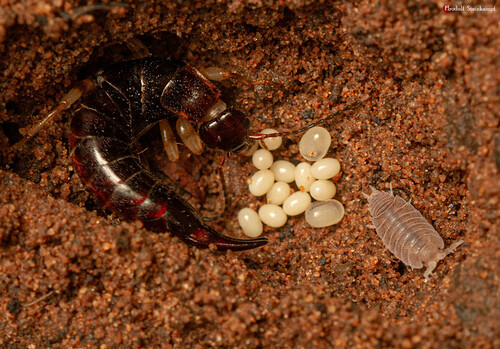
Laid in underground chambers or crevices; females often tend eggs until they hatch.
Nymph
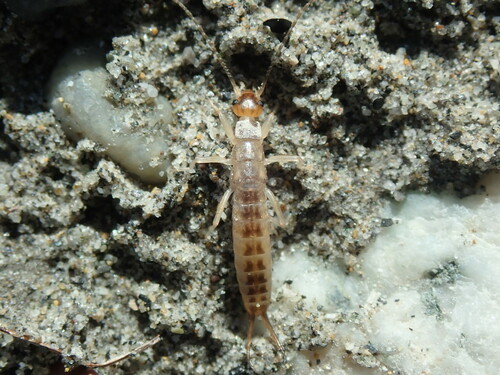
Several nymphal instars resembling small adults; nymphs are wingless and develop through molts in the shelter.
Adult
Winged (but not always flying) adults with fully formed forceps; reproduce and continue the cycle.
🍃Diet and predators
Young eat
Small invertebrates, insect eggs, and detritus
Adults eat
Predatory on insects and other small arthropods, scavenges dead animals and occasionally eats soft plant material
Predators of the young
Ground beetles, spiders, small vertebrates, birds
Predators of adults
Birds, small mammals, amphibians, larger predatory insects and spiders
🌱Effect on plants and gardens
Adults and nymphs prey on small invertebrates and scavenged material; they rarely damage healthy plants and can help reduce pest numbers. Occasionally they may nibble soft fruit or seedlings but this is uncommon.
📍Where and when to find it
Look under stones, logs, boards, seaweed and debris along river and lake shores, marsh edges and damp grassland. Nymphs and adults occupy the same sheltered microhabitats.
Best time
Spring to autumn, at night or in the hour after dusk when they are most active.
Observation tips
Search with a torch after dark and gently turn stones or debris. Photograph quickly: they run fast and will retreat into tight crevices.
✨Fun facts
- Females tend and protect eggs and young nymphs, showing parental care uncommon in many insects.
- Labidura riparia can sometimes fly, unlike many earwig species that rarely use their wings.
- They are swift runners and are often seen dashing into crevices when disturbed at night.
?Frequently asked questions
Do shore earwigs bite?
They do not bite in the normal sense, but adults can pinch with their cerci if handled or trapped. This can be painful but is not venomous.
Are shore earwigs dangerous to humans?
Only mildly — they are not poisonous and do not spread disease. The main risk is a painful pinch and the small risk of a secondary infection if skin is broken.
Why is a shore earwig in my house?
They wander indoors at night in search of shelter or prey, especially homes near water, damp basements or garages. They hide in cracks, under debris and in damp areas.
How do I get rid of shore earwigs?
Reduce moisture and remove harbourage: seal gaps, fix leaks, clear debris and trim vegetation near foundations. Use sticky traps or shallow pans of soapy water placed near likely entry points at night. Chemical controls are rarely necessary for outdoors and should be used cautiously.
Where does the shore earwig live?
Typically on riverbanks, lake shores, marsh edges, coastal dunes and other damp open habitats; it shelters under stones, logs, in soil cracks and plant debris during the day.
📷Photos of the shore earwig
More earwigs
This guide was written with AI assistance and fact-checked, last updated 2026-10-10. Identification from photos is never certain: don't handle insects you can't identify, and get medical advice for bites, stings or allergic reactions. More about the shore earwig: iNaturalist, Wikipedia.