
Clover mite
Bryobia praetiosa · Mites
Tiny bright red plant-feeding mite that often invades windows, walls and curtains in large numbers and leaves red stains when crushed.
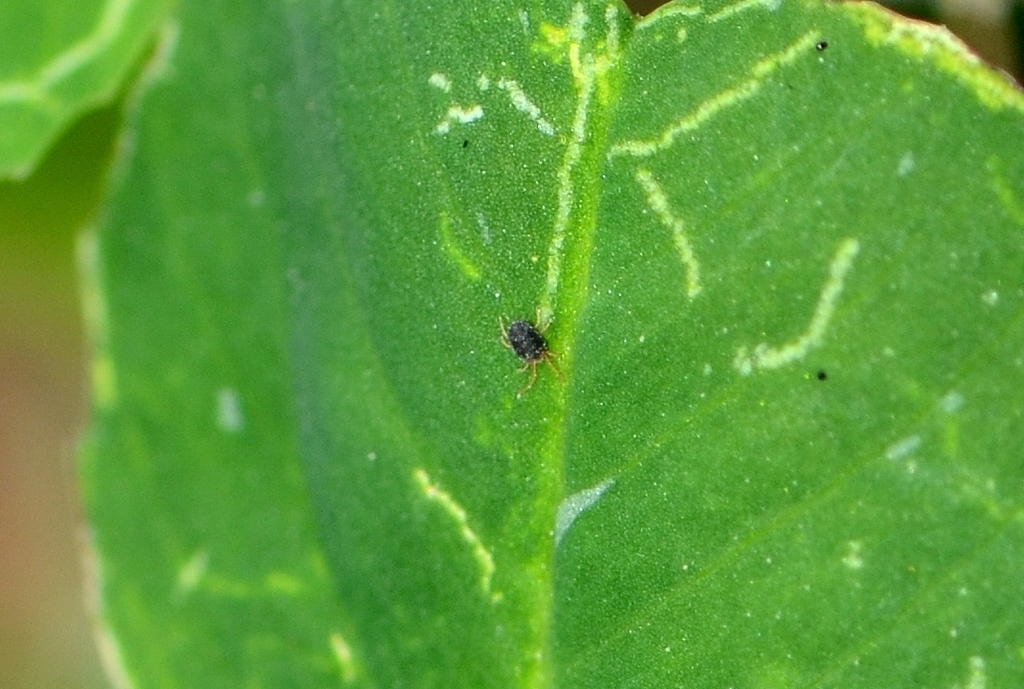
!Is the clover mite dangerous?
No. Clover mites do not bite or sting. They are non-venomous. If crushed on skin they can leave a red stain; some people report mild skin irritation if a large number are trapped against the skin, but this is mechanical/irritant rather than a bite. Clean skin gently with soap and water if stained or irritated.
Pets
Generally harmless to pets. Pets may pick them up on fur and transfer red stains to upholstery when rubbed; remove mites by bathing or brushing and clean fabrics promptly.
📖Overview
Bryobia praetiosa, the clover mite, is a very small, plant-feeding mite commonly found on lawns, gardens and low-growing vegetation. In warm months they can appear in large numbers and wander onto buildings, windows and into homes where they are a nuisance but not medically dangerous. They feed on plant sap and can cause stippling on leaves, but they rarely cause serious plant damage. Large indoor aggregations usually indicate outdoor populations nearby.
🔍How to identify a clover mite
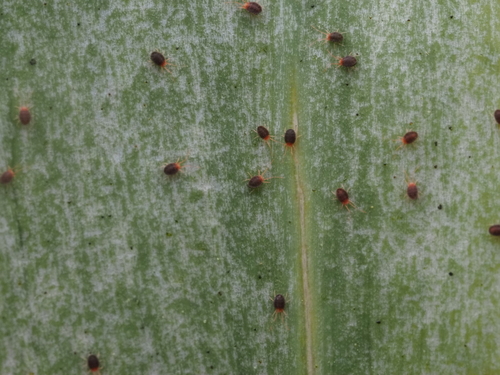
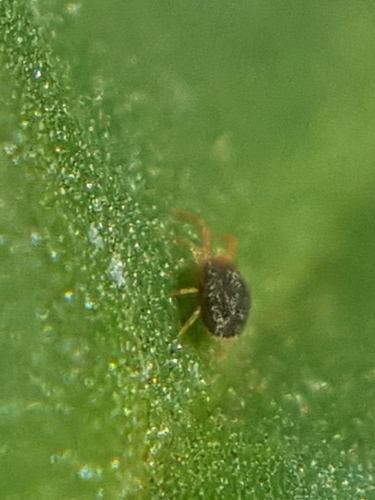
Adults are tiny (about 0.75 mm, roughly the size of a pinhead), oval and flattened. They are reddish-brown to dark olive-green, while eggs and young stages are bright red. A key feature is the very long front pair of legs, which are held forward and are often mistaken for antennae. They move quickly for their size, and when crushed they leave a characteristic red stain. All clover mites are females that reproduce without mating.
- Very small size (about 0.75 mm) with very long front legs; often need a magnifier to see details and appear as tiny red-brown dots.
- Reddish-brown to bright red colour that leaves a red stain when crushed.
- Tend to congregate on sunny sides of buildings, window sills and around door frames in large numbers.
- Found mainly on low vegetation outdoors (clover, grass, dandelions) rather than high plants or trees.
Lookalikes
Red velvet mite Trombidium spp.
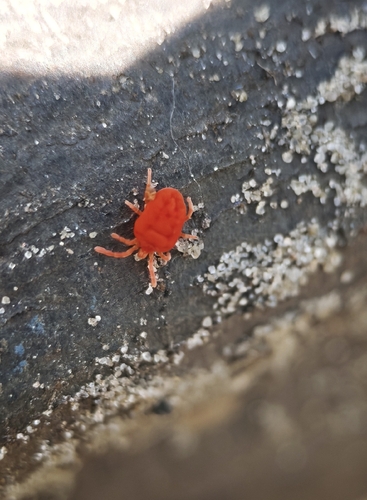
Red velvet mites are larger (visible to the naked eye as distinct mites several mm long) and usually found in soil or leaf litter rather than on windows and in grass.
Two-spotted spider mite Tetranychus urticae
Two-spotted spider mites are typically smaller and pale with two dark spots; they often create webbing on plant undersides, which clover mites do not produce.
Chiggers (harvest mites) Trombiculidae family
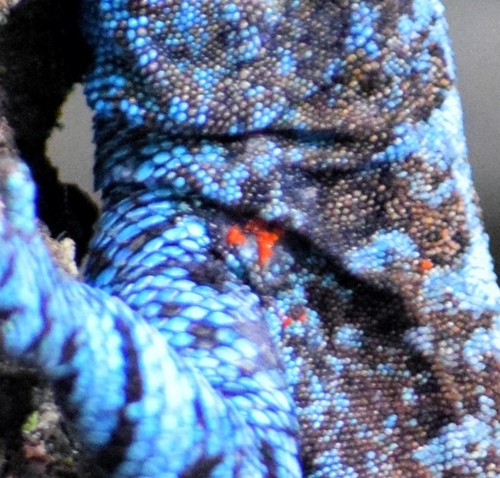
Chigger larvae can bite and cause itchy welts; they are usually found in grassy or bushy areas and behavior and medical effects differ — clover mites do not bite.
↻Life cycle
Egg
Females lay tiny eggs on plant surfaces; eggs overwinter in many regions and hatch in spring.
Larva and nymphs
Six-legged larvae hatch first, then pass through two eight-legged nymphal stages, molting between each while feeding on plant sap; they look like smaller, brighter red versions of the adults.
Adult
Adults are all females that lay eggs without mating; populations build quickly in cool spring and autumn weather.
🍃Diet and predators
Young eat
Plant sap from leaves of grasses, clover, dandelions and other low plants.
Adults eat
Plant sap from similar low-growing vegetation; they use piercing-sucking mouthparts.
Predators of the young
Predatory mites, small insects and generalist predators such as lacewing larvae and some predatory beetles.
Predators of adults
Predatory mites and other small arthropod predators; birds and larger insects may incidentally consume them.
🌱Effect on plants and gardens
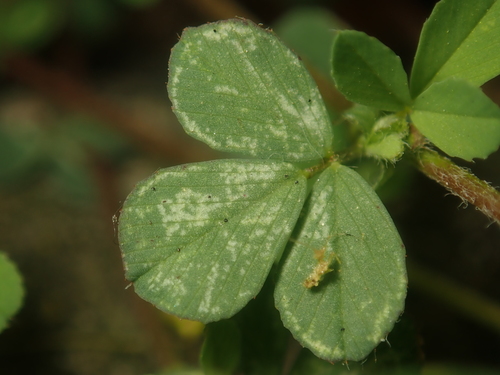
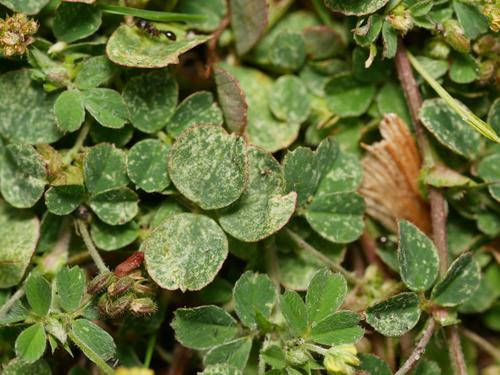
Feeds on plant sap from grasses, clover, dandelions and many low-growing garden plants. Heavy local populations can cause stippling, bronzing or discoloration of leaves but serious long-term damage is uncommon.
How to get rid of clover mites
Reduce vegetation and clover close to foundations, create a vegetation-free barrier (gravel or mulch) around the building, seal cracks and gaps around windows and doors, screen vents, and use a vacuum to remove indoors (avoid crushing). For outdoor perimeter control, insecticidal sprays labeled for mites (applied by professionals or following label directions) can reduce populations; professional pest control can apply residual perimeter treatments if infestations are persistent.
📍Where and when to find it
Outdoors on low-growing plants such as clover, grasses and dandelions; on buildings they congregate on sunny walls, window sills and around door and window frames. Indoors they appear along windows, curtains and near entry points.
Best time
Best observed in spring and autumn on cool, sunny days, especially when they are active on sunlit walls and windows.
Observation tips
Use a 10x magnifier to see individual mites, photograph congregations for scale, and vacuum rather than crush to remove them without staining.
✨Fun facts
- Clover mites are so small that hundreds can appear to be a reddish dust from a distance.
- They are often most noticeable on sunny days because they prefer warm, bright surfaces and move toward light.
- Crushing a clover mite leaves a red stain because their body pigment is red; vacuuming rather than crushing prevents staining.
?Frequently asked questions
Do clover mites bite?
No. Clover mites do not bite or feed on blood. They may cause mild skin irritation if many get trapped against skin, but they do not pierce skin to feed.
Are clover mites dangerous to humans or pets?
No. They are not venomous and do not transmit disease. The main problem is staining when crushed and nuisance infestations inside buildings.
Why are clover mites in my house?
They wander inside from nearby vegetation, especially on sunny walls and window frames. Overgrown lawns, clover patches and plants touching the building encourage entry.
How do I get rid of clover mites?
Remove or trim vegetation near foundations, create a vegetation-free barrier, seal cracks and gaps, use screens, and vacuum indoor sightings. For heavy outdoor populations, consult professional pest control for labeled mite treatments.
Will clover mites harm my plants?
They feed on plant sap and can cause stippling or minor discoloration, but they rarely cause serious long-term harm to healthy plants.
How can I clean red stains from clover mites?
Clean surfaces promptly with soapy water or a household cleaner. Avoid rubbing crushed mites into fabrics; use a vacuum first when possible and launder stained fabrics according to label instructions.
📷Photos of the clover mite
More mites & chiggers
This guide was written with AI assistance and fact-checked, last updated 2026-10-10. Identification from photos is never certain: don't handle insects you can't identify, and get medical advice for bites, stings or allergic reactions. More about the clover mite: iNaturalist, Wikipedia.