
Clover mite vs Velvet mite
These two are easy to mix up. Here's how to tell a clover mite from a velvet mite, and whether either one bites or stings.
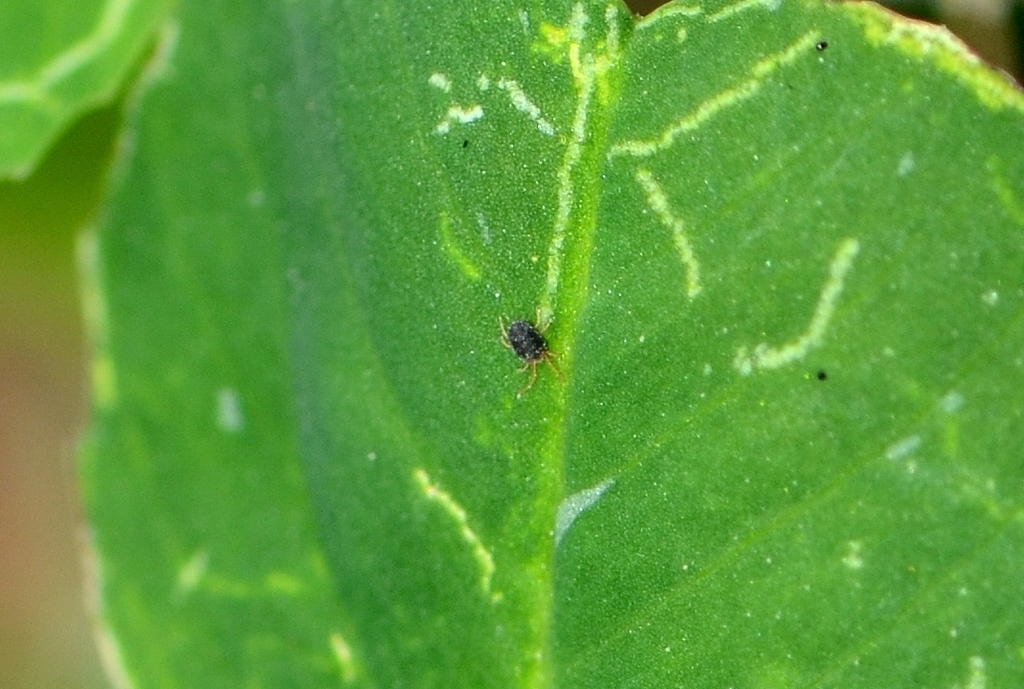
Clover mite
Bryobia praetiosa
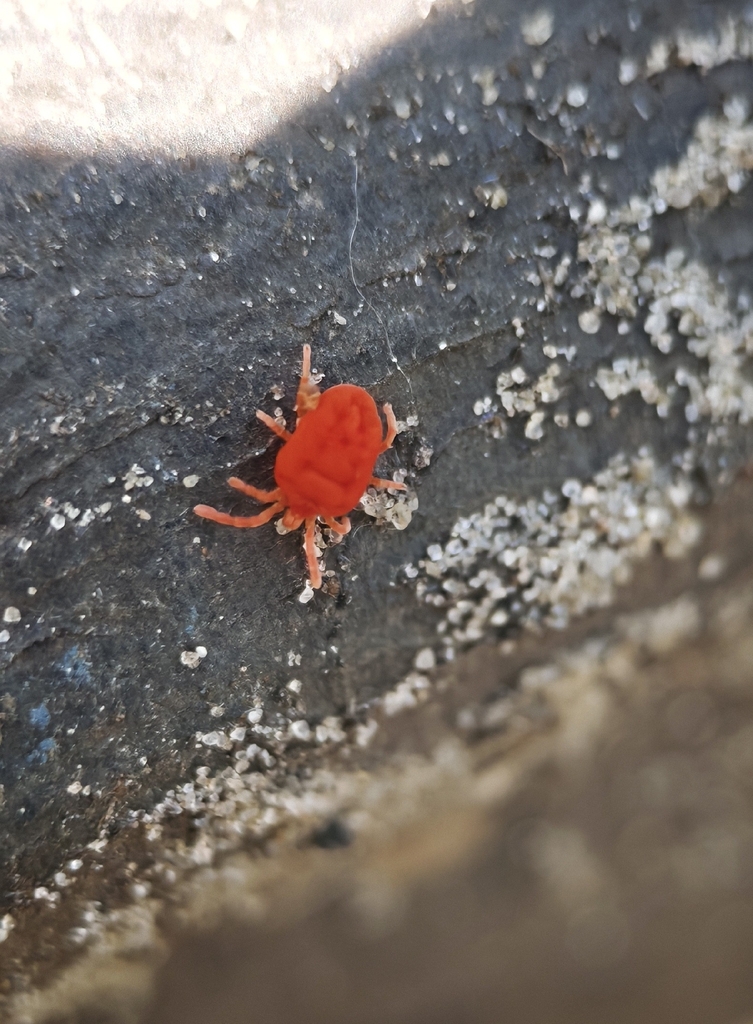
Velvet mite
Trombidium holosericeum
≠The key differences
Red velvet mites are larger (visible to the naked eye as distinct mites several mm long) and usually found in soil or leaf litter rather than on windows and in grass.
Clover mites are much smaller (under 1 mm), reddish-brown, not velvety, and often swarm on sunny walls and windowsills; they feed on plants rather than hunting.
⚖︎Side by side
| Clover mite | Velvet mite | |
|---|---|---|
| To humans | Non-toxic | Non-toxic |
| Size | about 0.75 mm long (less than 1 mm) | About 2-4 mm long |
| Colours | Bright red, Dark red, Reddish brown | Bright red, Orange-red, Pale orange (larva) |
| Family | Tetranychidae | Trombidiidae |
| Habitat | Low vegetation, lawns, gardens, clover patches, dandelions; often on sunny sides of buildings and around window frames where they congregate. | Soil, leaf litter, moss, under stones, low vegetation and flowers in moist, disturbed or grassy places |
| Range | Widespread in temperate regions worldwide: North America, Europe, Asia and Australia where host plants and suitable climates occur. | Widespread in the Palearctic region: Europe and parts of Asia; local abundance varies with habitat and climate |
| Active | Mainly spring and autumn; most active in cool, sunny weather, while hot summers and cold winters are usually passed as eggs. | Primarily spring and early summer; active on warm, sunny days after rain, mostly diurnal |
| Pest? | Yes | No |
🔍How to spot a clover mite
- Very small size (about 0.75 mm) with very long front legs; often need a magnifier to see details and appear as tiny red-brown dots.
- Reddish-brown to bright red colour that leaves a red stain when crushed.
- Tend to congregate on sunny sides of buildings, window sills and around door frames in large numbers.
- Found mainly on low vegetation outdoors (clover, grass, dandelions) rather than high plants or trees.
🔍How to spot a velvet mite
- Bright, velvety red to orange-red body, round to oval and soft-bodied.
- Adults about 2-4 mm long and covered with dense fine hairs giving a plush texture.
- Larvae are tiny (sub-millimetre) and have only six legs; nymphs and adults have eight legs.
- Typically found on soil, leaf litter, low vegetation or flowers in spring after wet weather.
?Frequently asked questions
What is the difference between a clover mite and a velvet mite?
Red velvet mites are larger (visible to the naked eye as distinct mites several mm long) and usually found in soil or leaf litter rather than on windows and in grass. Clover mites are much smaller (under 1 mm), reddish-brown, not velvety, and often swarm on sunny walls and windowsills; they feed on plants rather than hunting.
Is a clover mite or a velvet mite more dangerous?
Clover mite: Non-toxic. Velvet mite: Non-toxic. Clover mites do not bite or sting. Adults do not bite people and are non-venomous.
Identification from photos is never certain: don't handle insects you can't identify, and get medical advice for bites, stings or allergic reactions.