
Meadow spittlebug vs Two-lined spittlebug
These two are easy to mix up. Here's how to tell a meadow spittlebug from a two-lined spittlebug, and whether either one bites or stings.
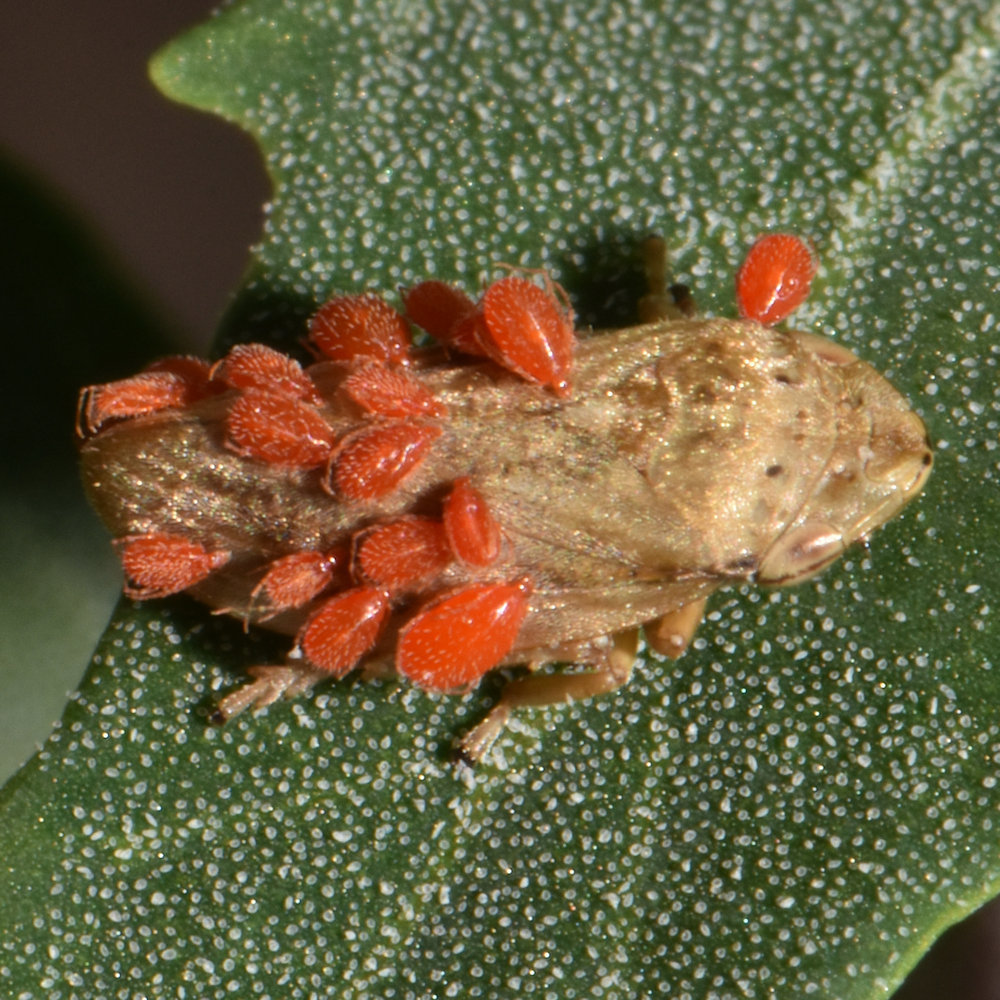
Meadow spittlebug
Philaenus spumarius
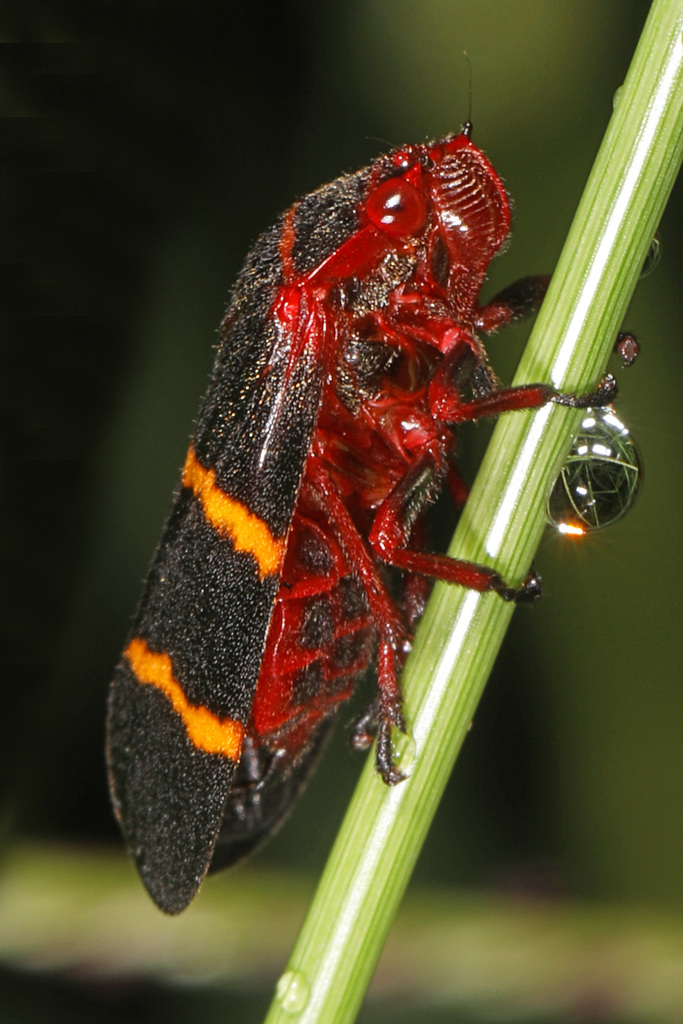
Two-lined spittlebug
Prosapia bicincta
≠The key differences
Philaenus spumarius (common in Europe and also introduced in North America) usually lacks the pair of bold red/orange lines and has more variable mottled coloration; its spittle masses may look similar but adult wing pattern differs.
⚖︎Side by side
| Meadow spittlebug | Two-lined spittlebug | |
|---|---|---|
| To humans | Non-toxic | Non-toxic |
| Size | 5-7 mm body length | About 8-11 mm long |
| Colours | Brown, Gray, Black, White, Orange | Dark brown / black, Orange-red, Pale yellow-green (nymph) |
| Family | Aphrophoridae | Cercopidae |
| Habitat | Meadows, grasslands, hedgerows, gardens, arable fields and other areas with low vegetation. | Grassy places: lawns, sod farms, pastures, meadows, road verges and other turf or grass-dominated sites |
| Range | Native to Europe and parts of Asia; established in North America and other temperate regions. Widespread in temperate climates. | Eastern and central United States, from New England to Florida and west to the Great Plains; introduced to Hawaii |
| Active | Active spring through autumn; nymphs most visible in spring and early summer; adults present from spring into late summer depending on region. | Late spring through summer into early fall; active during daylight hours, warm weather |
| Pest? | Yes | Yes |
🔍How to spot a meadow spittlebug
- Look for white frothy 'cuckoo spit' on stems and leaves in spring — nymphs hide inside this foam.
- Adults 5-7 mm, wedge-shaped with large hind legs and highly variable mottled coloration.
- Rapid, strong jumping behavior when disturbed; adults rest with wings roof-like over the body.
🔍How to spot a two-lined spittlebug
- Two distinct orange-red bands across the wings of a dark brown to black adult
- Adults about 8-11 mm long with wedge-shaped body and strong hind legs for jumping
- Nymphs hidden in white, foamy spittle masses attached to grass stems or leaf sheaths
- Damage appears as patchy yellowing or browning of turf where large numbers are feeding
?Frequently asked questions
What is the difference between a meadow spittlebug and a two-lined spittlebug?
Philaenus spumarius (common in Europe and also introduced in North America) usually lacks the pair of bold red/orange lines and has more variable mottled coloration; its spittle masses may look similar but adult wing pattern differs.
Is a meadow spittlebug or a two-lined spittlebug more dangerous?
Meadow spittlebug: Non-toxic. Two-lined spittlebug: Non-toxic. Meadow spittlebugs do not bite or sting people. Two-lined spittlebugs are not venomous and do not bite or sting people.
Identification from photos is never certain: don't handle insects you can't identify, and get medical advice for bites, stings or allergic reactions.