
Common walkingstick
Diapheromera femorata · Stick insects
A slender, stick-like leaf-eating insect of eastern North America that relies on camouflage and is harmless to humans.
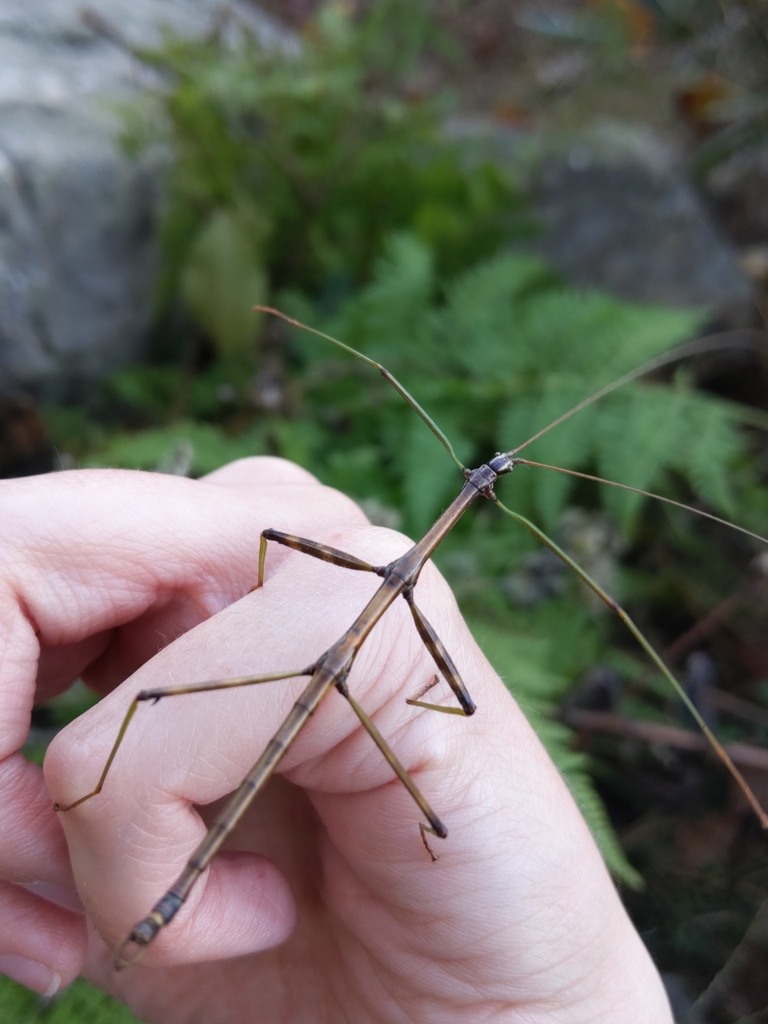
!Is the common walkingstick dangerous?
No. Not venomous and not aggressive. They do not sting; a rare pinch from the mandibles can cause a minor, momentary nip but no lasting harm. Handle gently to avoid stressing or injuring the insect.
Pets
Generally harmless to pets. Pets that chew or eat insects can occasionally get mild stomach upset; avoid allowing pets to eat large numbers of any wild insect.
📖Overview
Diapheromera femorata is a medium-sized stick insect found across much of eastern North America. Adults are slow-moving, sticklike herbivores that feed on the leaves of deciduous trees and shrubs. They depend on excellent camouflage to avoid birds and other predators. Females are generally larger and heavier-bodied than males and lay eggs in leaf litter or on the ground where they overwinter and hatch the following spring or early summer.
🔍How to identify a common walkingstick
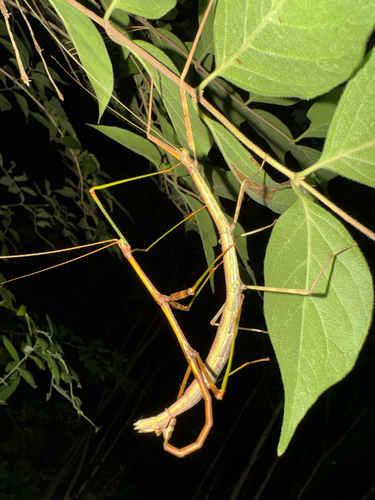
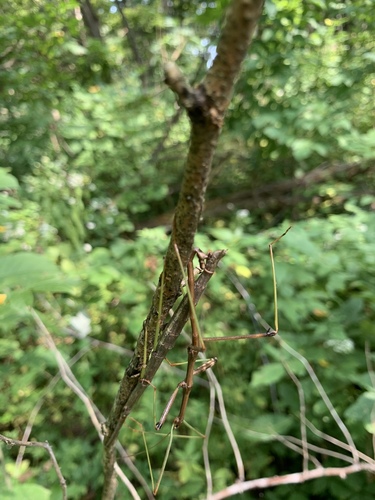
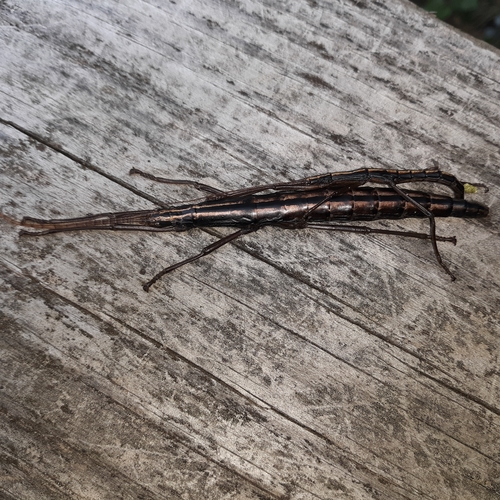
Adults are elongated and cylindrical, resembling a twig or small branch. They lack functional wings and have long, slender legs. Males are more slender and usually smaller than females. The head is small with chewing mouthparts; antennae are long and thread-like, about two-thirds of the body length. Nymphs resemble miniature adults and become progressively larger through several molts.
- Long, stick-like body with no functional wings and very slender legs
- Cryptic brown, tan or olive-green coloration matching twigs and stems
- Females noticeably stouter and larger than males
- Slow, swaying motion when disturbed (mimics a twig in the breeze)
Lookalikes
Two-striped walkingstick Anisomorpha buprestoides
Two-striped walkingstick is shorter, broader and can spray a defensive chemical; Diapheromera femorata is more slender and lacks this spray.
Giant walkingstick Megaphasma denticrus
Much larger (often 12-15 cm or more) and found mainly in the central and southern United States; D. femorata is smaller and more slender.
Indian stick insect (commonly kept pet) Carausius morosus
Carausius morosus (often captive) is smaller and usually a uniform green or brown and is not native to North America; D. femorata is native and typically larger.
↻Life cycle
Egg
Females drop eggs from the tree canopy onto the leaf litter below. Eggs overwinter and hatch in spring to early summer.
Nymph (juvenile)
Nymphs resemble small adults and go through multiple molts, gradually increasing in size until maturity.
Adult
Wingless adults appear in mid to late summer; adults mate and females lay eggs before dying by the end of the season.
🍃Diet and predators
Young eat
Leaves of deciduous trees and shrubs (same host plants as adults)
Adults eat
Leaves of oak, maple, hazel, cherry and other deciduous woody plants
Predators of the young
Birds, small mammals, predatory insects and spiders
Predators of adults
Birds, small mammals, predatory wasps and opportunistic predators; camouflage is the primary defense
🌱Effect on plants and gardens
Feeds on leaves of deciduous trees and shrubs such as oak, maple, hazel, cherry and others. Small populations cause little damage; localized outbreaks can cause noticeable defoliation but rarely kill healthy mature trees.
📍Where and when to find it
Look on the foliage of deciduous trees and shrubs, at night on leaves and branches; eggs are in leaf litter on the forest floor.
Best time
June to August; nighttime or early morning for easier spotting.
Observation tips
Search slowly and look for a sticklike silhouette along twigs and stems. Use a flashlight at night and scan foliage methodically; photographing from several angles helps show the body outline against branches.
✨Fun facts
- Walkingsticks are masters of camouflage and often align their bodies with twigs and stems to avoid detection.
- Females simply drop their seed-like eggs from the treetops; during outbreaks the falling eggs can sound like light rain.
- They are primarily nocturnal feeders — daytime sightings often reveal their excellent disguise rather than active movement.
?Frequently asked questions
Do walkingsticks bite?
They have chewing mouthparts but are not aggressive; a rare bite might pinch but is not venomous and causes no medical concern.
Are common walkingsticks harmful to my trees?
Small populations usually cause little harm. Large localized outbreaks can cause noticeable defoliation but rarely kill healthy mature trees.
Why is a walkingstick in my house?
They may wander indoors at night or be accidentally brought in on firewood, plants or clothing. They do not infest homes and will not reproduce indoors.
How do I get rid of walkingsticks?
For a few insects, handpicking at night or relocating them outdoors is effective. For serious garden damage, use physical barriers or consult local extension for targeted control options.
When will I see them?
Adults are most easily seen in summer (June to August), often at night when they feed; nymphs appear after spring hatching.
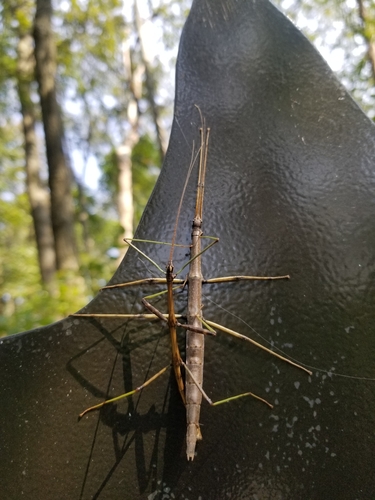
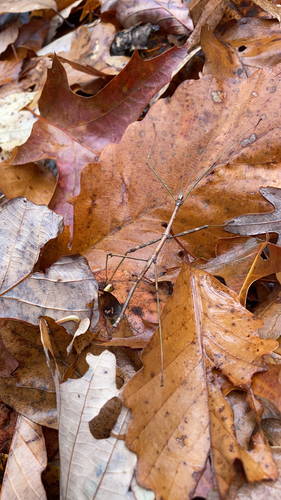
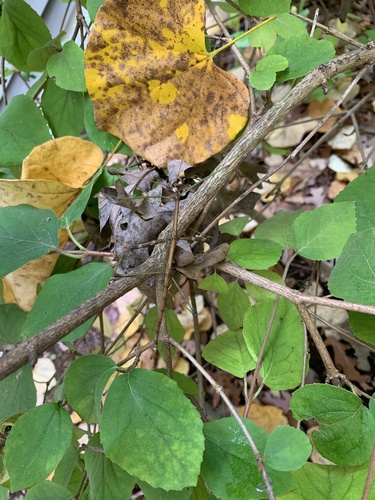
📷Photos of the common walkingstick
More stick & leaf insects
This guide was written with AI assistance and fact-checked, last updated 2026-10-10. Identification from photos is never certain: don't handle insects you can't identify, and get medical advice for bites, stings or allergic reactions. More about the common walkingstick: iNaturalist, Wikipedia.