
Common walkingstick vs Two-striped walkingstick
These two are easy to mix up. Here's how to tell a common walkingstick from a two-striped walkingstick, and whether either one bites or stings.
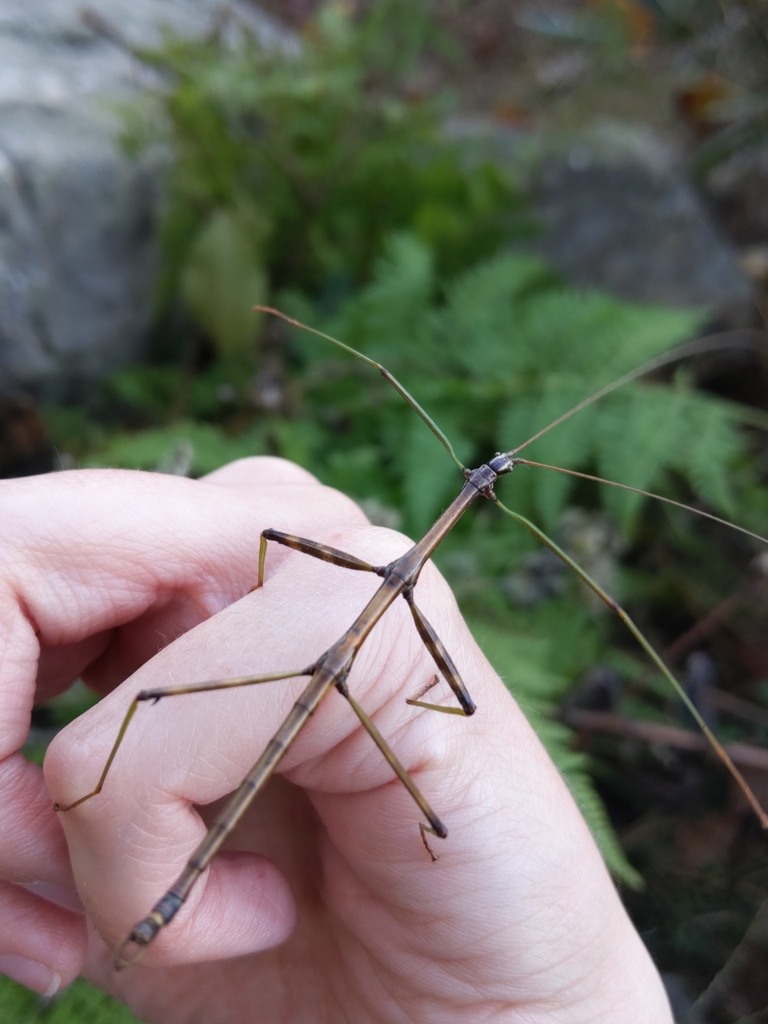
Common walkingstick
Diapheromera femorata
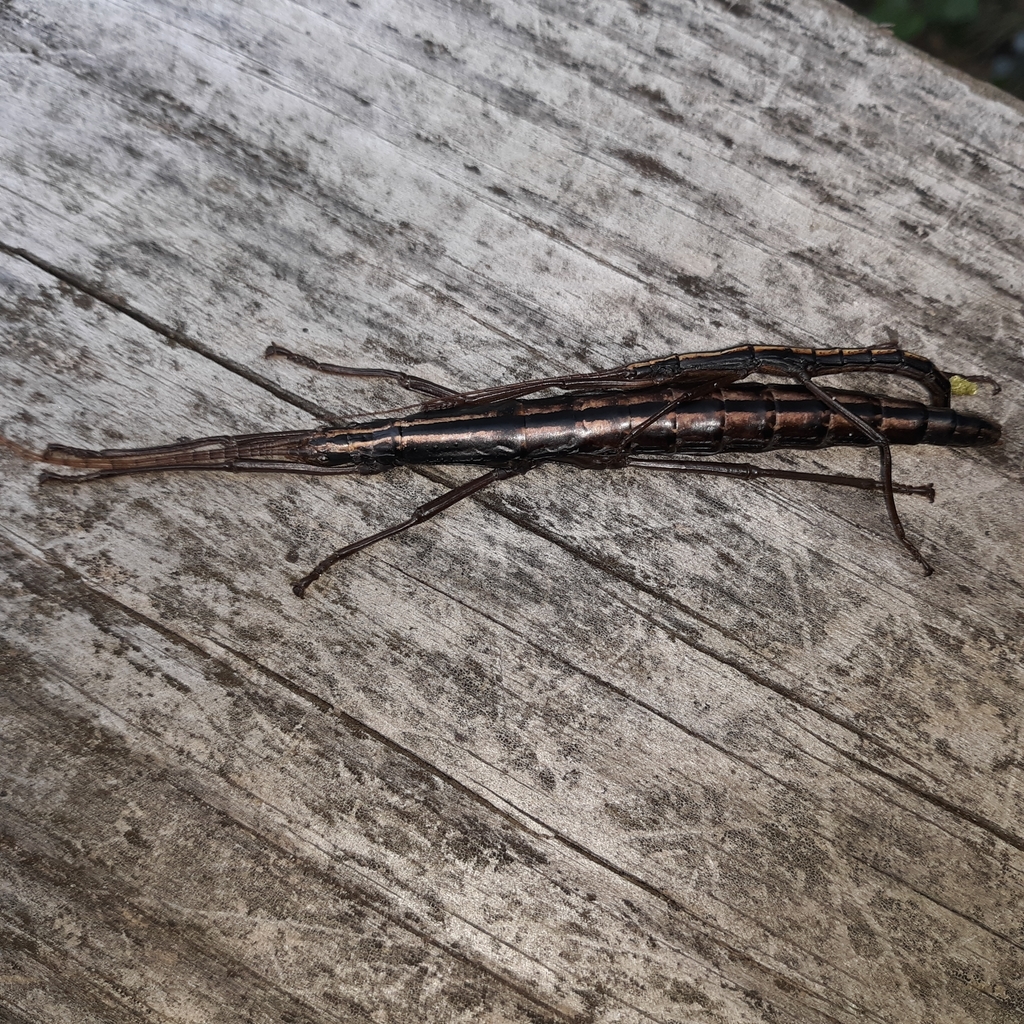
Two-striped walkingstick
Anisomorpha buprestoides
≠The key differences
Two-striped walkingstick is shorter, broader and can spray a defensive chemical; Diapheromera femorata is more slender and lacks this spray.
Diapheromera femorata is longer and much more slender with no prominent paired dorsal stripes and lacks the same defensive spray behavior noted for Anisomorpha.
⚖︎Side by side
| Common walkingstick | Two-striped walkingstick | |
|---|---|---|
| To humans | Non-toxic | Irritating spray |
| Size | About 7-10 cm body length (females larger) | 40-70 mm body length (about 4-7 cm) |
| Colours | Brown, Tan, Olive green | Dark brown, Black, Cream |
| Family | Diapheromeridae | Pseudophasmatidae |
| Habitat | Deciduous woodlands, forest edges, hedgerows and gardens with shrubs and trees | Woody edges, shrubby areas, gardens and forest understory; found on host shrubs and small trees |
| Range | Eastern and central North America, from southern Canada through much of the eastern United States | Southeastern United States, especially Florida, Georgia and the Gulf Coast states |
| Active | Mainly active in summer (June to August); primarily nocturnal but may be seen by day | Primarily nocturnal; active in warm months (spring to early autumn) in its range |
| Pest? | No | No |
🔍How to spot a common walkingstick
- Long, stick-like body with no functional wings and very slender legs
- Cryptic brown, tan or olive-green coloration matching twigs and stems
- Females noticeably stouter and larger than males
- Slow, swaying motion when disturbed (mimics a twig in the breeze)
🔍How to spot a two-striped walkingstick
- Stout, cylindrical stick insect 40-70 mm long rather than extremely slender
- Bold dark longitudinal stripes along the back (pale-striped color forms occur locally)
- Robust short legs and lack of well-developed wings
- If disturbed, may curve body and spray a milky defensive secretion from thoracic glands
?Frequently asked questions
What is the difference between a common walkingstick and a two-striped walkingstick?
Two-striped walkingstick is shorter, broader and can spray a defensive chemical; Diapheromera femorata is more slender and lacks this spray. Diapheromera femorata is longer and much more slender with no prominent paired dorsal stripes and lacks the same defensive spray behavior noted for Anisomorpha.
Is a common walkingstick or a two-striped walkingstick more dangerous?
Common walkingstick: Non-toxic. Two-striped walkingstick: Irritating spray. Not venomous and not aggressive. Not venomous and does not bite or sting.
Identification from photos is never certain: don't handle insects you can't identify, and get medical advice for bites, stings or allergic reactions.