
Giant mayfly
Hexagenia limbata · Mayflies
A large, short-lived mayfly native to North American lakes and slow rivers whose mass emergences can form spectacular but harmless swarms.
!Is the giant mayfly dangerous?
No. Giant mayflies do not bite or sting and are not poisonous. The main nuisance is large numbers of fragile dead insects that can smear on cars, sidewalks and buildings; cleanup can be slippery. If you have respiratory allergies, heavy emergences can aggravate symptoms through inhaled insect fragments, but this is uncommon.
Pets
Not toxic to pets. Pets may eat adults; this is generally harmless though a large intake could upset digestion.
📖Overview
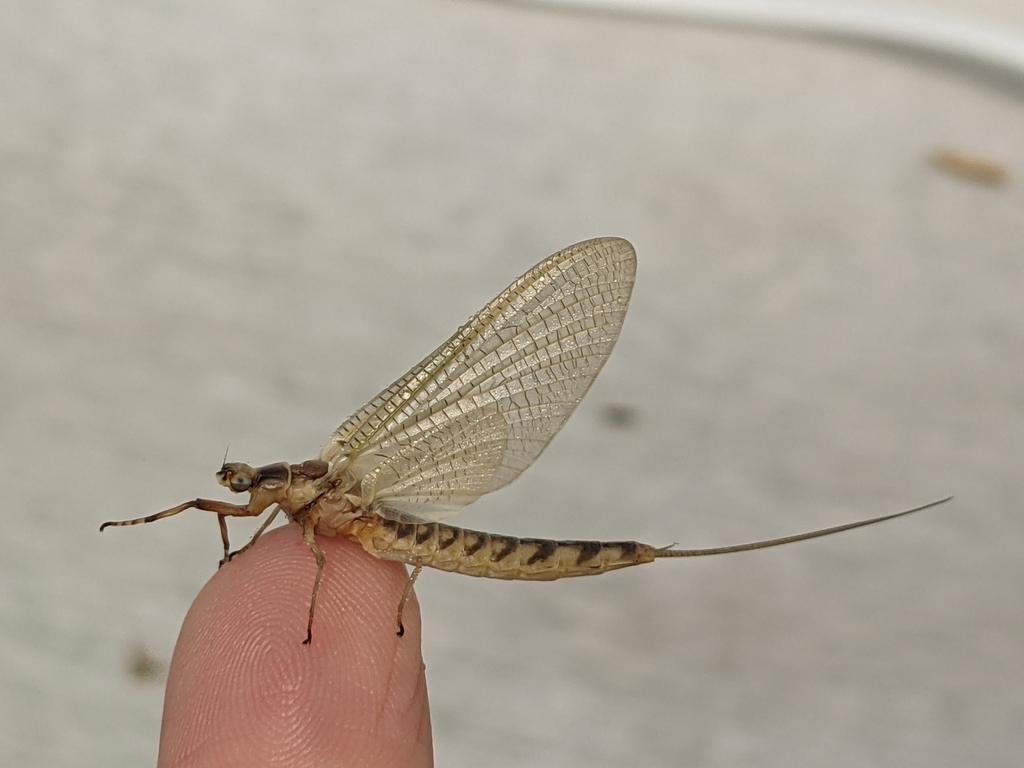
Hexagenia limbata is one of the largest and most familiar mayflies in North America. Nymphs live buried in fine silt of lakes and slow-moving rivers, feeding on detritus; adults emerge en masse in synchronised swarms that may include thousands of individuals. Adults are fragile, have upright triangular forewings and long trailing tails, and live only long enough to mate and lay eggs.
Emergences are ecologically important as a pulse of food for fish, birds and bats, and they can be a nuisance to people when adults accumulate on lakeshores, roads or buildings. Adults do not feed and do not bite or sting; their mouthparts are vestigial. The species is widespread and not considered threatened.
🔍How to identify a giant mayfly
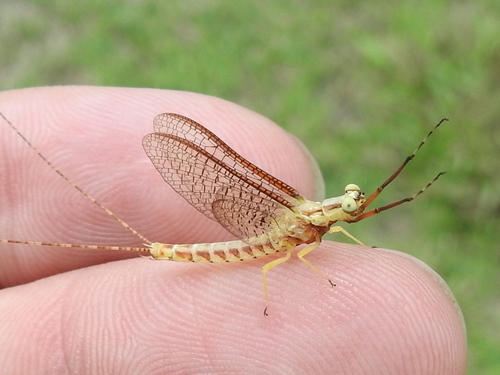
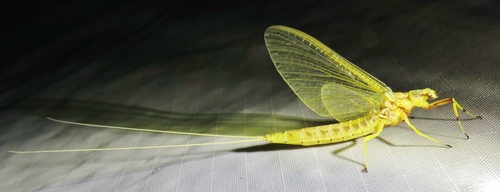
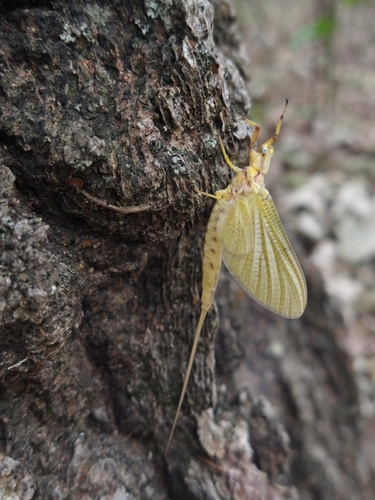
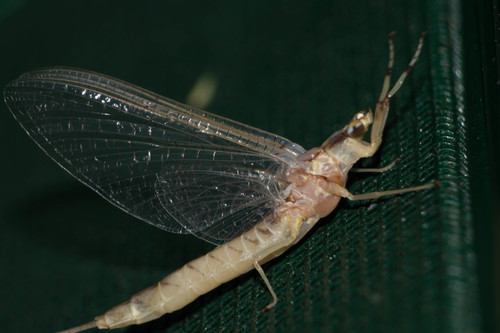
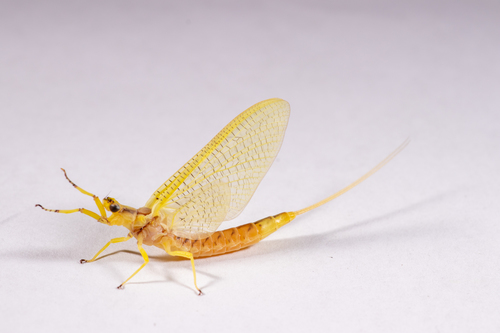
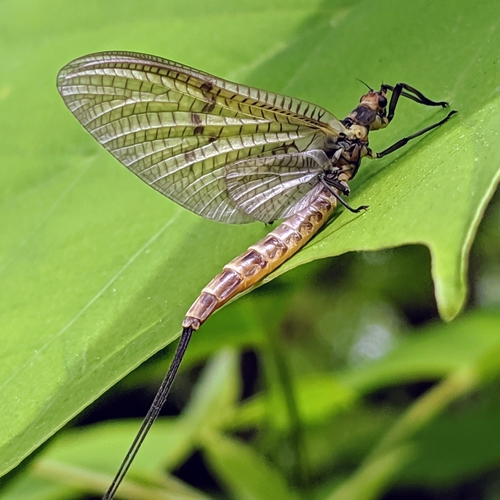
Adults are relatively large for mayflies: delicate-bodied with two very long tails (cerci) trailing behind, large upright forewings and much smaller hindwings. Wings are translucent with visible venation; body color ranges from pale yellow to brownish. Nymphs are elongate, flattened and adapted for burrowing: they have gills along the abdomen and a rounded head with strong forelegs for digging in silt.
- Large size for a mayfly: body commonly 20-40 mm with wingspan often 40-60 mm
- Two very long tail filaments (cerci), sometimes with a third median filament
- Forewings upright and triangular, translucent with distinct venation; hindwings much smaller
- Nymphs flattened, with abdominal gills and adapted for burrowing in silty substrates
Lookalikes
Small minnow mayflies Baetis spp.
Baetis species are much smaller (few millimetres to about 10 mm), with different wing venation and shorter tails; Hexagenia is noticeably larger and more robust.
Other Hexagenia species Hexagenia spp.
Closely related Hexagenia species are similar in appearance; distinguishing species often requires examination of subtle anatomical details or locality and timing of emergence.
↻Life cycle
Egg
Laid on the water surface; eggs sink to the bottom and hatch into nymphs over days to weeks depending on temperature.
Nymph (aquatic)
Burrowing nymph lives in silty substrates for 1-2 years, feeding on detritus and algae and swimming up to the surface to molt during emergence.
Subimago (dun)
A winged, short-lived stage unique to mayflies: the subimago emerges from the water, flies to nearby vegetation, then molts again to the adult imago.
Imago (adult)
Sexually mature, non-feeding adult with delicate wings and long tails; lifespan ranges from a few hours to about a day and exists only to mate and lay eggs.
🍃Diet and predators
Young eat
Detritus, algae and organic matter in sediment
Adults eat
Do not feed (vestigial mouthparts)
Predators of the young
Fish, aquatic insects and other benthic predators
Predators of adults
Fish (during emergence), swifts, swallows, bats, shorebirds and spiders
🌱Effect on plants and gardens
Nymphs feed on detritus and algae in sediment and do not damage aquatic plants in a way that is typically harmful.
How to get rid of giant mayflies
There is no practical large-scale control of emergences. For local nuisance reduction: turn off or shield outdoor lights at night during known emergence periods, use window and door screens, park vehicles in a garage, and hose or sweep accumulated insects from surfaces promptly to avoid slippery residues. Chemical control is neither practical nor recommended because emergences are short-lived and ecologically important.
📍Where and when to find it
Look for adults near lake and slow-river shorelines, on docks, boats and near artificial lights. Nymphs are found in fine silty sediment of bottoms; sampling with an aquatic net or sediment core is needed.
Best time
Warm months (regional summer); many emergences occur at dusk or at night. Local emergence dates vary year to year.
Observation tips
To photograph swarms, use low-angle light at dusk and protect your camera from sticky insects. Approach quietly: emergences are often short-lived and concentrated at specific shoreline spots.
✨Fun facts
- Mass emergences of Hexagenia limbata can involve millions of adults, sometimes dense enough to show up on weather radar, and are an important food pulse for fish and birds.
- Mayflies are among the few insects with a winged subadult stage (the subimago) that molts again into the final adult.
- Despite their short adult life, nymphs may spend one to two years developing underwater before emergence.
?Frequently asked questions
Do giant mayflies bite?
No. Adults have vestigial mouthparts and do not bite or feed; nymphs are aquatic detritivores and also do not bite humans.
Are giant mayflies dangerous?
No. They are not venomous and pose no direct health threat. The main issue is nuisance from large swarms and slippery insect residues.
Why are giant mayflies in my house or on my car?
Adults are attracted to lights and congregate near water. During emergences they can accumulate on buildings, cars and roads close to lakeshores.
How can I get rid of giant mayflies?
You cannot stop natural emergences. Reduce local nuisance by turning off or shielding outdoor lights, using screens, parking vehicles in garages, and cleaning accumulated insects with water and detergent.
Where do giant mayflies live?
Nymphs live buried in fine silt of lakes, ponds and slow rivers; adults remain near the water where they emerged and nearby lights.
📷Photos of the giant mayfly
More mayflies, stoneflies & caddisflies
This guide was written with AI assistance and fact-checked, last updated 2026-10-10. Identification from photos is never certain: don't handle insects you can't identify, and get medical advice for bites, stings or allergic reactions. More about the giant mayfly: iNaturalist, Wikipedia.